

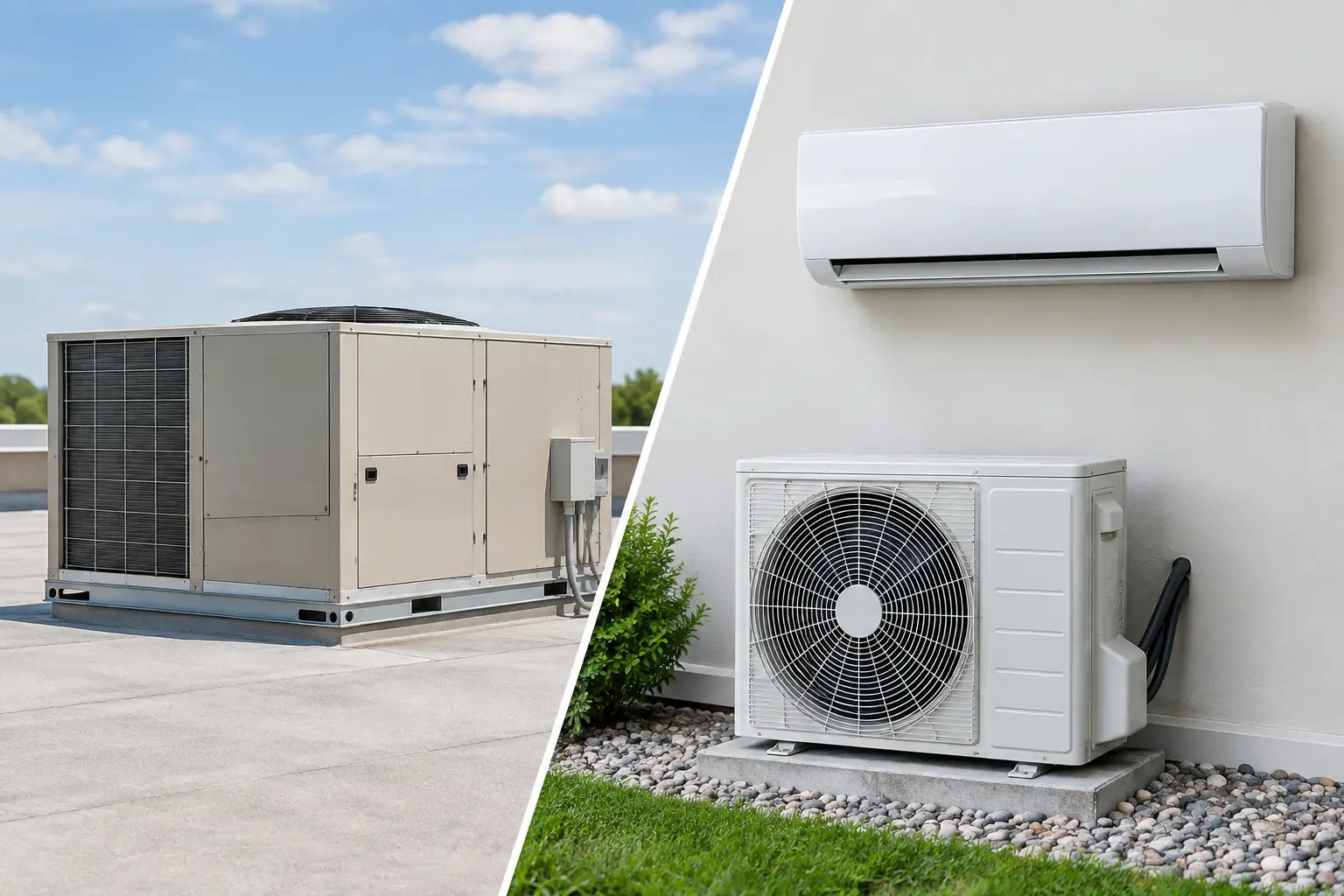
A packaged versus split HVAC systems decision is not just about which unit costs less on installation day. The right answer depends on your building layout, available equipment space, ductwork, comfort needs, and how easily the system can be serviced over time. A system that looks like a bargain can become expensive if it is poorly matched to the property or difficult to maintain.
For Charlotte-area homes and businesses, both designs can provide dependable heating and cooling. The better choice comes from an honest assessment of the building, not a one-size-fits-all equipment recommendation.
What Is a Packaged HVAC System?
A packaged HVAC system contains most or all of its major heating and cooling components in one outdoor cabinet. Depending on the model, that cabinet may include the compressor, evaporator coil, blower, and a gas furnace or electric heat strips. It is often installed on a roof, a concrete pad beside the building, or occasionally in a mechanical area.
Packaged units are common on small commercial buildings, restaurants, retail spaces, and homes with limited indoor mechanical space. Air moves from the unit into the building through ductwork, while the entire system remains outside.
This setup can be practical when there is no attic, closet, basement, or utility room available for an indoor air handler or furnace. It also keeps much of the equipment out of occupied space, which can simplify certain building layouts.
The trade-off is exposure. A packaged unit sits outdoors year-round, dealing with heat, rain, humidity, pollen, leaves, and storm debris. Good installation practices and regular maintenance matter because a neglected outdoor cabinet can develop corrosion, drainage problems, electrical issues, and airflow restrictions faster than equipment protected indoors.
What Is a Split HVAC System?
A split HVAC system separates the major components between an outdoor unit and an indoor unit. The outdoor condenser or heat pump handles heat transfer with the outside air. Inside, an evaporator coil works with a furnace or air handler to circulate conditioned air through the duct system.
Most traditional central air systems in residential properties are split systems. A gas furnace paired with an air conditioner is a common example. A heat pump paired with an air handler or furnace is another. The word “split” refers to the physical separation of the equipment, not to whether the system provides heating, cooling, or both.
Because the blower and indoor coil are located inside the building, technicians can often access key components without working in the weather or climbing to a roof. Split systems also offer a wide range of equipment combinations, efficiency ratings, and indoor air quality upgrades.
They do require dedicated indoor space. The air handler, furnace, drain line, refrigerant lines, electrical connections, and duct transitions all need to be installed correctly. Poor airflow, an improperly sized return, or a badly routed condensate drain can cause comfort problems even when the new equipment itself is high quality.
Packaged Versus Split HVAC Systems: The Real Differences
Neither design automatically wins. The practical differences show up in space, maintenance access, efficiency options, installation conditions, and future repair costs.
Space and building layout
Packaged equipment is often the clear choice when indoor mechanical space is limited. Many commercial spaces need every square foot for customers, inventory, or operations. A rooftop packaged unit can preserve valuable interior space and keep equipment out of sight.
For homes, a split system often fits naturally when there is an existing furnace closet, attic platform, crawlspace, or utility room. Replacing an existing split system with another properly sized split system may also be less disruptive than redesigning ductwork and relocating equipment.
Do not assume that one system can be swapped for the other without changes. Converting from packaged to split, or split to packaged, can require major ductwork, electrical, gas, and structural modifications. The least expensive proposal is not always the least expensive project once those changes are counted.
Efficiency and comfort options
Both packaged and split systems are available in efficient heat pump and air conditioning configurations. However, split systems generally provide more choices at the highest efficiency levels. They can also be paired with variable-speed blowers, communicating controls, whole-home dehumidification, advanced filtration, and zoning when the home and duct system are suitable.
That does not mean every property needs premium equipment. In a small business with straightforward comfort needs, a properly installed packaged unit may deliver exactly the performance required. In a home with humidity concerns, uneven temperatures, or sensitive indoor air quality needs, a split system may offer more room to tailor the solution.
Equipment efficiency ratings matter, but they are only part of the picture. An oversized unit can short cycle, remove less humidity, and wear components unnecessarily. An undersized unit may run constantly on Charlotte’s hottest days. Proper load calculations and duct evaluation should come before selecting a model.
Maintenance and repair access
A packaged unit puts more components in one cabinet, which can make the equipment layout straightforward. Yet rooftop units may require ladder access, roof safety procedures, and additional time for service. Outdoor exposure can also affect coils, wiring, cabinets, and drain systems.
Split systems divide the service work between indoor and outdoor equipment. The outdoor condenser remains exposed, but the indoor furnace, air handler, blower, and evaporator coil are protected. Access varies widely. A unit in a clean, well-lit utility closet is easy to maintain. An air handler buried in a tight attic may not be.
In either design, simple maintenance prevents many expensive calls. Filters must be changed on schedule, condensate drains need attention, outdoor coils should stay clear of debris, and electrical components should be inspected before a small issue becomes a no-cooling emergency.
Installation and replacement cost
A packaged system can be cost-effective when a building is already set up for one, especially if the existing curb, ducts, electrical service, and gas connections are in good condition. A direct replacement is usually more predictable than a conversion.
Likewise, replacing an existing split system may be the sensible route when the indoor and outdoor equipment locations work well and the duct system can support the new unit. Cost rises when installation requires duct repairs, a new electrical circuit, crane access, roof curb changes, gas piping work, or major drainage corrections.
Be cautious with quotes that focus only on the equipment brand and tonnage. A complete proposal should address system capacity, airflow, electrical requirements, drainage, duct connections, thermostat compatibility, permits, and removal of the old equipment. Those details affect reliability as much as the name on the cabinet.
Which System Makes Sense for Your Property?
A packaged unit often makes sense for a commercial building with rooftop access, limited interior space, and a simple duct layout. It can also work well for certain homes designed around outdoor equipment. It is not automatically the lower-maintenance option, but it can be the most practical configuration.
A split system is often a strong fit for homes with an existing indoor furnace or air handler location. It may be the better choice when you want more equipment options, better humidity control, or the ability to add indoor air quality accessories. It is also usually easier to adapt to different heating sources, including gas furnaces and heat pumps.
For a property with frequent breakdowns, do not jump straight to replacement based on the system type alone. A failed capacitor, contactor, drain safety switch, blower motor, thermostat, or refrigerant leak does not automatically mean the entire system is finished. Age, repair history, condition of the compressor or heat exchanger, efficiency, and the cost of the specific repair should guide that decision.
Start With a Building Assessment, Not a Sales Pitch
The right HVAC system should fit the building before it fits a sales package. A qualified technician should inspect the existing equipment, ductwork, airflow, insulation concerns, electrical service, drainage, and the areas that are actually uncomfortable. For commercial properties, occupancy patterns, operating hours, and equipment heat loads matter too.
DDL Services approaches replacement decisions by looking for the real cause of the problem first. Sometimes the sensible recommendation is a repair and a maintenance plan. When replacement is warranted, the goal is properly matched equipment that performs reliably, not more equipment than the property needs.
If you are comparing packaged and split options, ask for clear explanations of what must change in your building and why. The best system is the one that can be installed correctly, serviced safely, and keep your home or business comfortable without creating avoidable costs later.