

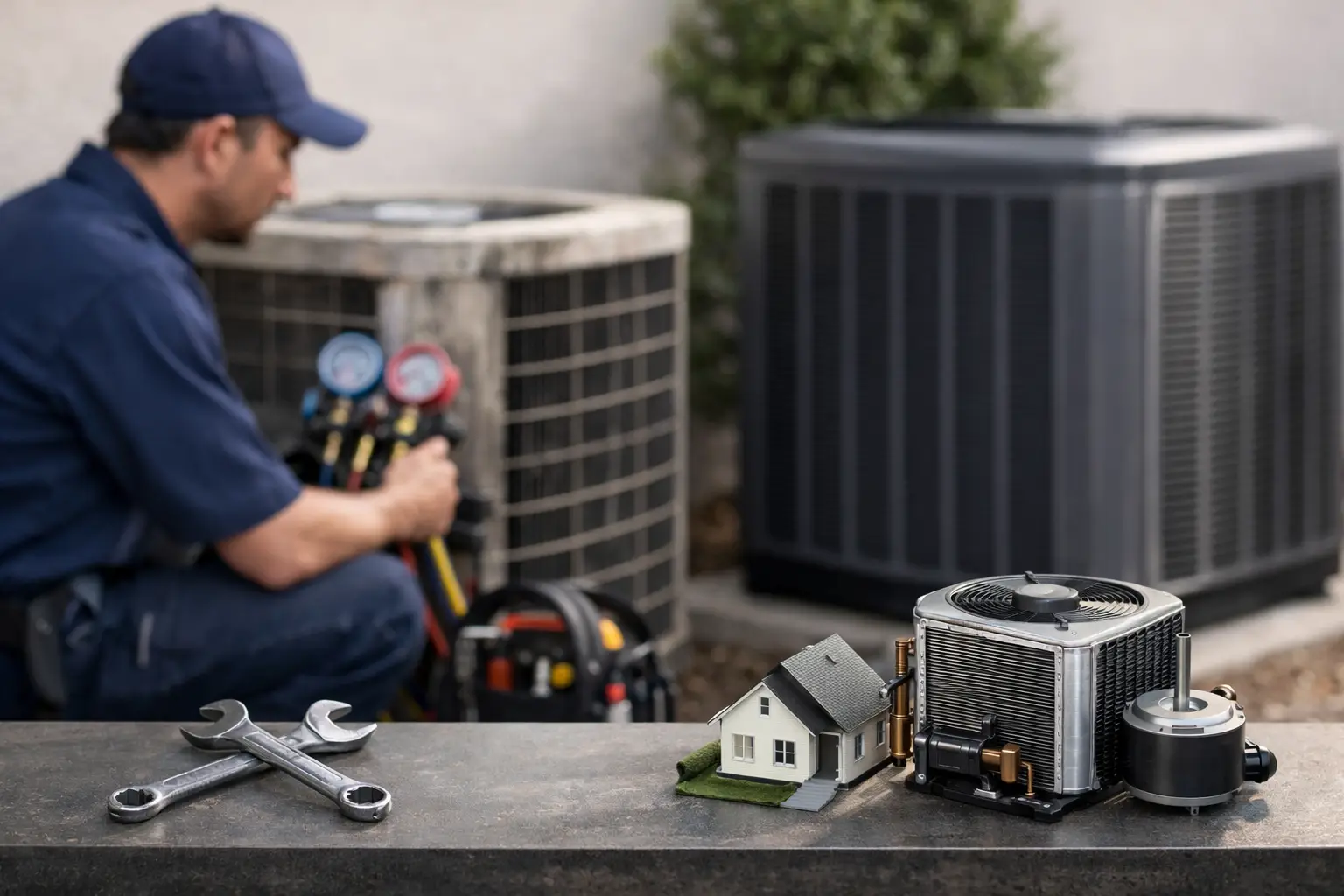
When your AC quits in the middle of a Charlotte summer, the last thing you want is a sales pitch disguised as a diagnosis. That is why the ac repair vs replacement question should always start with one thing: what is actually wrong with the system. Not what might be sold, not what sounds dramatic, but what a licensed technician finds after a real inspection.
A lot of homeowners and property managers have had the same frustrating experience. The unit stops cooling, a contractor takes a quick look, and suddenly the only option on the table is a full replacement. Sometimes replacement really is the right call. Sometimes it is not. The difference comes down to system condition, repair history, operating cost, and whether the problem is isolated or part of a bigger pattern.
AC repair vs replacement starts with diagnosis
Before anyone can give you an honest answer, the system needs to be checked properly. A frozen coil, bad capacitor, failed contactor, blower motor issue, thermostat problem, clogged drain, or low refrigerant charge can all cause major cooling problems. Those are not small details. They are the difference between a manageable repair and spending thousands of dollars you may not need to spend.
This is where a technician-first approach matters. Accurate diagnostics tell you whether the issue is a single failed component, a neglected maintenance problem, or a system that is simply wearing out across the board. If the diagnosis is weak, the recommendation will be weak too.
That matters for commercial spaces as much as homes. If you manage a small office, retail location, or rental property, downtime costs money. But rushing into replacement without understanding the failure can still be the expensive move.
When AC repair makes more sense
Repair is usually the better choice when the system has been dependable, the problem is specific, and the cost is reasonable compared to the value you will get from keeping the equipment running.
If your AC is under 10 years old and has not needed frequent service, a repair often makes sense. Many cooling issues come from parts that wear out over time, not from the entire system being bad. Capacitors fail. Fan motors go out. Electrical components wear down. Sensors misread. Drain lines clog. Refrigerant leaks can sometimes be repaired, depending on where the leak is and the overall condition of the equipment.
Repair also makes sense when airflow, comfort, and humidity have been good overall. If the system has done its job well and this is the first real problem, replacing everything may be excessive.
The same logic applies if the repair addresses a known issue without revealing larger problems. A failed condenser fan motor on an otherwise healthy system is very different from a unit with compressor problems, corrosion, poor airflow, and a history of repeated breakdowns.
For many customers, the real question is financial. If a repair is affordable and gives you more dependable years from the unit, it can be the practical move. Honest HVAC service means saying that clearly.
When replacement is the smarter move
There are also times when replacing the system is not upselling. It is just the more responsible recommendation.
If your AC is 12 to 15 years old or older, replacement deserves a serious look, especially if repair calls have become more frequent. Age alone does not automatically mean the system is done, but older units tend to lose efficiency, become less reliable, and cost more to keep alive.
Recurring refrigerant leaks are another warning sign. So is compressor failure. A compressor is one of the most expensive components in the system, and when it fails on an older unit, replacement may be more sensible than putting major money into aging equipment.
Replacement may also be the better choice if your utility bills have climbed while comfort has dropped. If your system runs constantly, struggles to cool certain rooms, or cannot keep up during normal summer heat, the issue may be bigger than one failed part. In some cases, the equipment is mismatched, improperly sized, or worn down enough that repairs only buy short-term relief.
Then there is refrigerant type. Older systems that use R-22 can become more expensive to repair because that refrigerant is phased out and harder to source. If an older R-22 unit has a major leak or other large repair need, replacing it is often the smarter long-term decision.
The cost question everyone asks
People want a simple rule, but there is no honest one-size-fits-all answer. You may have heard that if a repair costs more than half the price of a new system, you should replace it. That can be a useful reference point, but it is not the whole story.
A higher repair cost on a fairly new system may still be worth it. A lower repair cost on a system that breaks down every summer may not be worth it at all. What matters is not just today’s invoice. It is what you are likely to spend next.
A good recommendation should weigh the repair cost against the system’s age, reliability, energy use, and overall condition. It should also account for your plans. If you are trying to get two more years out of the system before a renovation or property sale, a repair may fit your situation even if replacement would be more efficient long term. If this is your forever home or a business that cannot afford repeated downtime, replacement may make more sense sooner.
Signs you are being pushed instead of advised
Most customers are not HVAC experts, and they should not have to be. But there are a few red flags that can help you tell the difference between an honest recommendation and a rushed sales job.
Be careful if someone recommends replacement without explaining the actual failure. Be cautious if there is no discussion of repair options, remaining system life, or what caused the problem. And if the conversation jumps straight to financing before a real diagnosis, that should tell you something.
A trustworthy technician should be able to show you what failed, explain what the repair would address, and tell you where the uncertainty is. Sometimes the honest answer is, “We can repair this, but you need to know the system is showing its age.” Other times it is, “This part failed, but the rest of the equipment looks solid.” That kind of plainspoken guidance builds trust because it is based on condition, not pressure.
AC repair vs replacement for older systems
Older systems are where this decision gets harder. A 14-year-old unit might still be repairable, but repairable and worth repairing are not always the same thing.
If the unit has been maintained well, has strong airflow, and only recently developed its first major issue, a repair may still be reasonable. But if the cabinet is rusted, the coil is corroded, the compressor is noisy, and the system has struggled for a while, spending more money on it can feel like patching a roof that should have been replaced seasons ago.
This is where a balanced opinion matters. Some companies push replacement too early. Others keep repairing systems that should have been retired. Neither approach helps the customer. The right call depends on whether the repair solves the real problem or just delays the next one.
Comfort, efficiency, and peace of mind matter too
This decision is not only about mechanical failure. It is also about how well the system serves your home or building.
If some rooms stay hot, humidity stays high, and the AC seems to run nonstop, replacement may improve more than just reliability. A properly sized, properly installed system can improve comfort, lower energy use, and reduce the stress of wondering when the next breakdown will happen.
That said, not every comfort problem means you need a new unit. Sometimes duct issues, thermostat problems, dirty coils, blower performance, or neglected maintenance are the real cause. That is another reason real diagnostics matter so much. You want the actual problem fixed, not the most expensive item sold.
At DDL Services, that is the whole point. Real HVAC solutions are based on what the system needs, not what creates the biggest ticket.
What to ask before you decide
If you are choosing between repair and replacement, ask a few direct questions. What exactly failed? Is this repair likely to solve the issue completely? Are there signs of larger system wear? How old is the equipment in HVAC terms, not just calendar years? What would you do if this were your building?
Those questions cut through a lot of noise. They bring the conversation back to facts, which is where it belongs.
A good HVAC company should be comfortable giving you a straight answer, even when that answer is not the most profitable one. Sometimes the right move is a repair that gets your cooling back on fast without overcomplicating the job. Sometimes replacement is the smarter investment because the system is costing you too much in repairs, energy, and lost reliability.
You do not need a sales pitch when your AC is down. You need someone to tell you what failed, what it will take to fix it, and whether fixing it is still the smart move.