

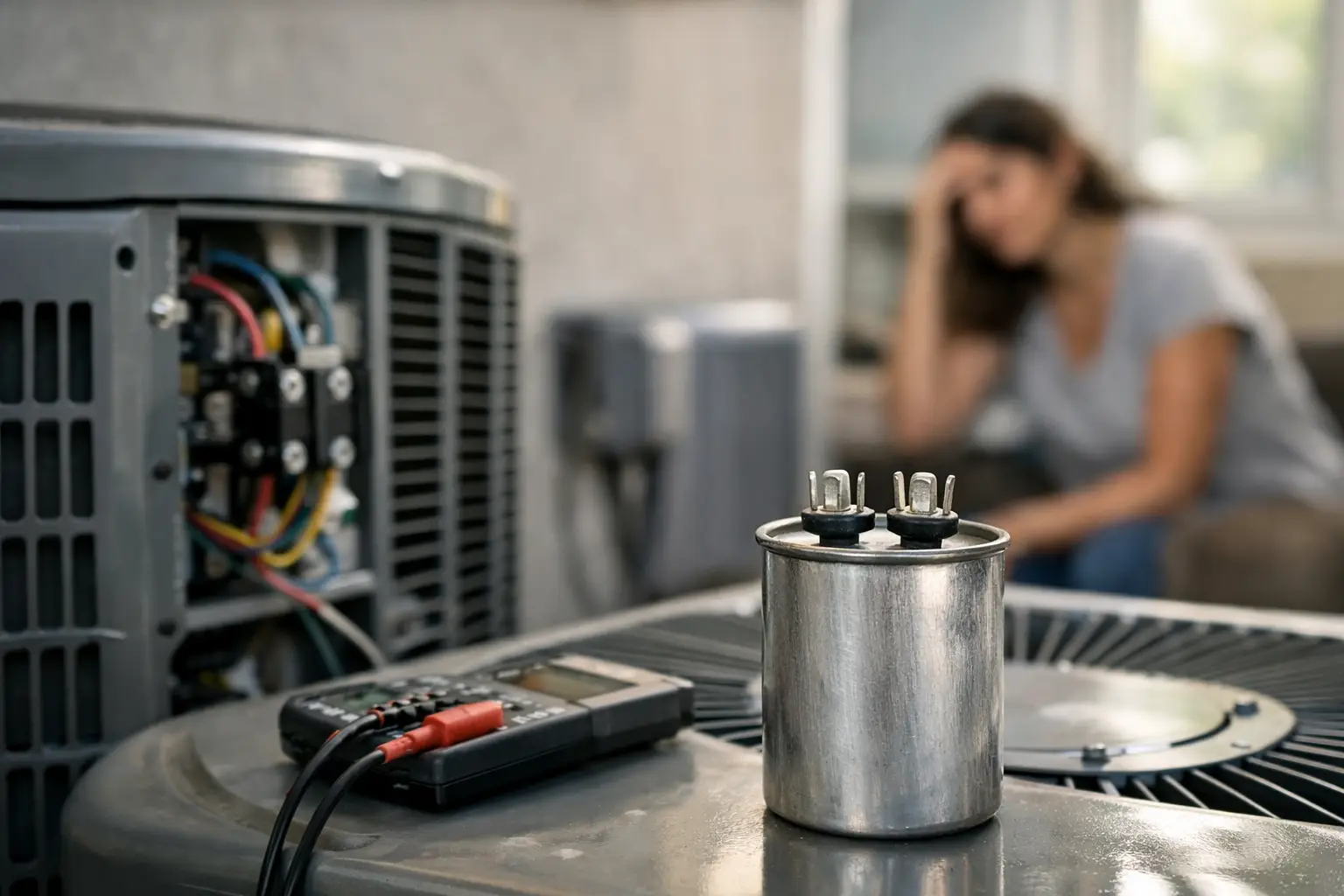
When an air conditioner suddenly hums but will not start, or it takes longer than usual to kick on during a hot Charlotte afternoon, a failing capacitor is high on the suspect list. AC capacitor failure symptoms often show up before the system completely quits, but they are easy to miss if you do not know what you are hearing, seeing, or feeling.
A capacitor is a small electrical component with a big job. It stores and releases energy to help the compressor, blower motor, and outdoor fan motor start and run properly. When it weakens, your system may still operate for a while, but it usually does so poorly and under extra strain. That is why this is one of those repairs that should be diagnosed early instead of ignored until the unit stops cold.
Common AC capacitor failure symptoms
The most obvious symptom is an AC unit that struggles to start. You may hear a humming sound from the outdoor unit while the fan does not spin or the compressor never fully engages. In some cases, the system will start after a delay. In others, it will try several times and fail.
Another common sign is weak or inconsistent cooling. The thermostat may be set correctly, but the house feels warmer than it should. The AC might run longer cycles, cool unevenly, or fall behind during the hottest part of the day. A capacitor problem can interfere with normal motor operation, which affects the system’s ability to move refrigerant and air the way it should.
Higher electric bills can also point to a failing capacitor. If a motor is having trouble starting or running efficiently, it draws more power and creates more wear. That does not always mean the capacitor is the only issue, but it is one of the first things a technician should check.
You might also notice the outdoor fan stopping and starting unpredictably. Sometimes the compressor is trying to run while the fan is not keeping up. That is a serious situation because poor airflow across the condenser can lead to overheating and additional damage.
In some cases, the system shuts itself off unexpectedly. That can happen when the equipment overheats or when safety controls interrupt operation. Homeowners often describe this as an AC that works for a while, then quits, then comes back later. It is not always a capacitor, but capacitor failure belongs on the shortlist.
What a bad capacitor sounds and looks like
Not every capacitor issue is visible from the outside, but there are a few signs that can help point you in the right direction. A struggling system may make a low humming noise without starting properly. That hum is often the motor trying to engage without getting the boost it needs.
If a technician opens the panel and finds a swollen or bulging capacitor, that is a clear sign of failure. Leaking oil, corrosion, or a split casing can also show up. Those are not gray-area symptoms. They indicate the component is damaged and should be replaced with the correct part.
The tricky part is that some bad capacitors look normal. They can test below spec even when there is no obvious outward damage. That is one reason accurate diagnostics matter. Guessing based on sound alone can lead to the wrong repair.
Why capacitor problems get worse fast
A weak capacitor rarely fixes itself. Once it starts failing, the stress on connected motors goes up. The compressor may hard-start repeatedly. The blower motor may run hot. The condenser fan may stall and overheat. What begins as a relatively contained electrical repair can turn into a much more expensive problem if the underlying issue is left in place.
This is also where honest service matters. A failed capacitor does not mean you automatically need a whole new AC system. Sometimes it is just a capacitor. Sometimes a capacitor failed because another component is pulling high amperage or because the system has been overheating. The right approach is to find the real cause, not jump straight to replacement.
Symptoms that overlap with other AC problems
Capacitor issues can look similar to several other faults, which is why homeowners and property managers should be careful about self-diagnosing too quickly. A contactor problem, failing motor, low voltage issue, thermostat fault, or compressor trouble can produce some of the same behavior.
For example, an outdoor fan that will not spin could be caused by a bad capacitor, but it could also be a failed fan motor. An AC that trips the breaker might involve a capacitor, but it could also point to wiring problems or a compressor drawing excessive current. Warm air from the vents is another symptom with multiple possible causes, including refrigerant issues, airflow restrictions, and frozen coils.
That does not mean you should ignore the warning signs. It means the smartest move is proper testing. A technician should verify microfarad readings, inspect related components, check amperage, and make sure the replacement part is correctly matched to the unit.
Should you keep running the AC?
If the system is struggling to start, short cycling, or making unusual electrical noises, continuing to run it is a gamble. Sometimes the unit will keep limping along for a day or two. Sometimes it fails completely the next time it tries to start. The bigger concern is collateral damage.
A weak capacitor can force motors and the compressor to work harder than they were designed to. That extra strain can shorten equipment life and raise repair costs. For a business, that can also mean more downtime than necessary. For a homeowner, it can turn an urgent but manageable repair into a no-cooling emergency.
If you suspect capacitor trouble, shut the system off and have it inspected, especially if there is a burning smell, visible swelling, or repeated failure to start. Those signs are not worth pushing through in hopes the unit will recover.
Why capacitors fail in the first place
Heat is a big factor, especially during long cooling seasons in North Carolina. Outdoor components sit in high temperatures and electrical stress builds over time. Age alone can wear a capacitor down, but power surges, poor airflow, dirty coils, and overworked motors can all contribute.
Improper replacement is another issue that gets overlooked. If a capacitor was previously replaced with the wrong rating, the system may run badly or fail again sooner than expected. This is one of those repairs that seems simple from the outside but still needs the right part and the right diagnosis.
In commercial settings, long run times and heavier demand can expose weak electrical components faster. In residential systems, the pattern is often more seasonal. A unit may seem fine in mild weather, then show obvious symptoms once summer demand ramps up.
What a technician should check
A good service call does more than swap a part and leave. The technician should confirm whether the capacitor has actually failed, test the connected motor or compressor, inspect wiring and terminals, and look for signs that another issue caused the capacitor to fail.
That matters because repeated capacitor failures are usually a clue. If the same system keeps burning through capacitors, there may be voltage problems, excessive heat, a failing motor, or a compressor starting under strain. Replacing the capacitor without addressing the root cause is just a temporary patch.
This is where a technician-led company earns trust. DDL Services approaches repairs the way they should be handled – by finding the actual fault and fixing what is broken before talking about major equipment replacement.
When to call for service
If your AC is humming, slow to start, blowing warm air, shutting off unexpectedly, or causing the outdoor fan to act erratically, call for service sooner rather than later. The best time to deal with capacitor problems is before the compressor is affected.
For homeowners, that can mean avoiding a miserable evening with no cooling. For commercial properties, it can mean preventing tenant complaints, lost productivity, or a service interruption that hits at the worst possible time. Fast diagnosis is not just about comfort. It protects the equipment.
A capacitor may be a small part, but it can create outsized problems when it starts to fail. If your system is showing early warning signs, trust those signs. Getting a clear diagnosis now is usually the difference between a straightforward repair and a much bigger headache later.