

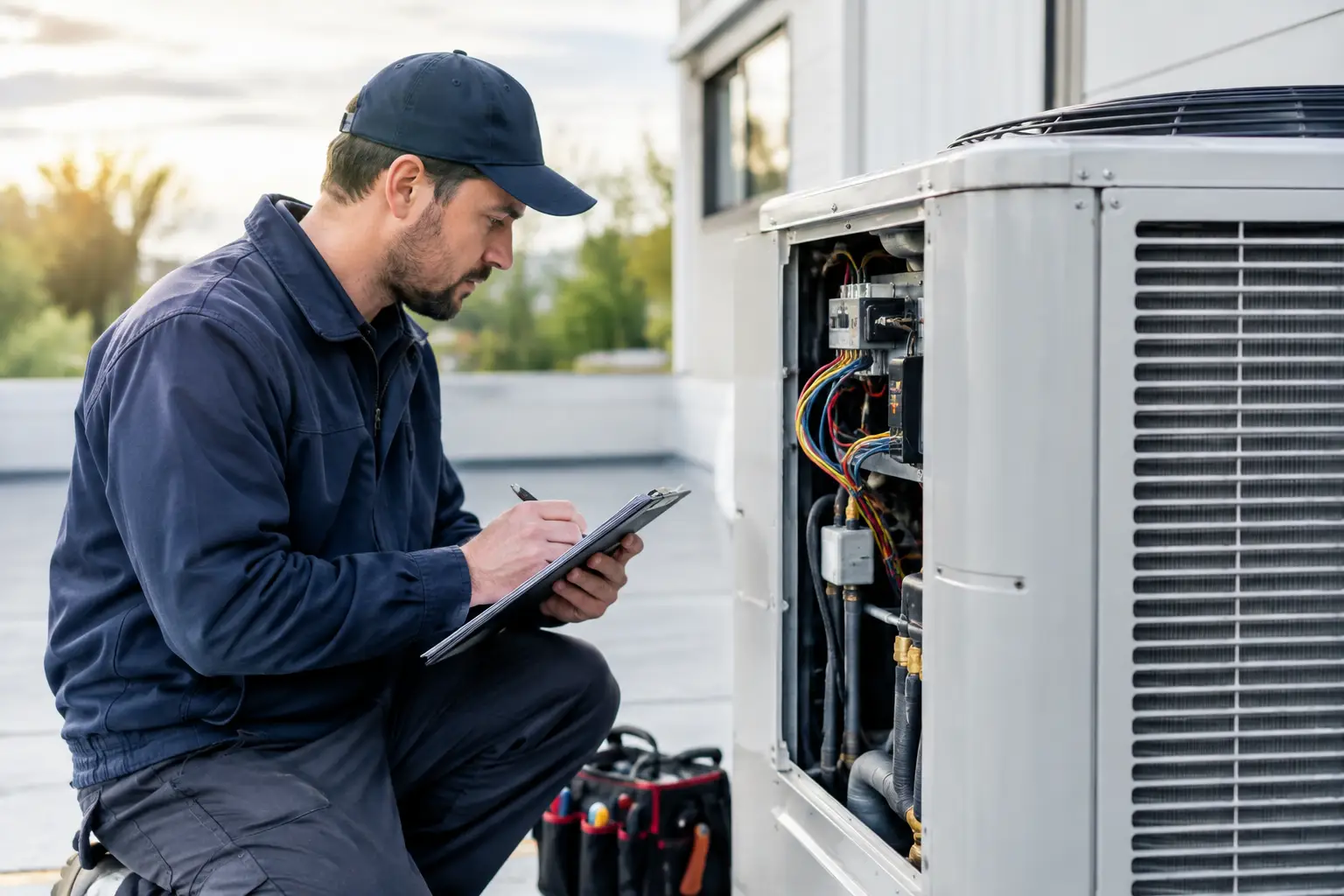
A Charlotte summer can expose an air conditioning problem fast. A furnace that seemed fine last winter can also reveal a safety or reliability issue on the first cold night. This guide to seasonal HVAC inspections explains what should be checked, when to schedule service, and why a real inspection is more than a quick look at the thermostat.
For homeowners and commercial property operators, seasonal maintenance is about avoiding preventable downtime. It is not a sales appointment or a reason to replace equipment that can be repaired. A qualified technician should evaluate how your system is actually operating, identify developing problems, and explain what needs attention now versus what can be monitored.
Why Seasonal HVAC Inspections Matter in North Carolina
Heating and cooling equipment works hardest during the hottest and coldest stretches of the year. In the Charlotte area, AC systems deal with long periods of humidity, high outdoor temperatures, pollen, and frequent summer storms. Heating systems may sit unused for months, then be expected to run reliably when overnight temperatures drop.
That cycle creates wear that is easy to miss. A weak capacitor may still start the outdoor unit until a hot afternoon puts it under greater strain. A partially blocked condensate drain may seem harmless until humidity rises and water backs up. A furnace with dirty burners or a failing ignition component can run inconsistently long before it stops altogether.
Seasonal inspections catch many of these conditions before they become an after-hours emergency. They can also help protect efficiency. When airflow, refrigerant charge, electrical components, and controls are operating as intended, the system does not have to work as hard to maintain the set temperature.
There is a practical financial benefit, too. Maintenance will not prevent every failure, especially on older equipment, but it gives you better information. That matters when deciding whether a repair makes sense or whether replacement is becoming the more reasonable long-term option.
When to Schedule an Inspection
Most homes and many small commercial spaces should have their cooling system inspected in spring and their heating system inspected in fall. Scheduling before peak demand gives you time to address repairs without being forced into a rushed decision during a breakdown.
Spring AC service is ideally completed before consistent hot weather arrives. If your system has a history of refrigerant leaks, drainage issues, weak cooling, or high summer energy use, do not wait until the first 90-degree week.
Fall heating service should happen before you need steady heat. This is particularly important for gas furnaces, where combustion safety and venting must be evaluated. Heat pumps need attention in both seasons because the same equipment handles heating and cooling.
For commercial properties, timing depends on occupancy and operating hours. A restaurant, retail space, medical office, or server room may need inspections planned around customer traffic and critical equipment loads. Properties with multiple units often benefit from a documented maintenance schedule rather than waiting for individual units to fail.
What a Seasonal HVAC Inspection Should Include
A worthwhile inspection is not just changing a filter and calling the job complete. Filters matter, but an HVAC system is a connected set of electrical, mechanical, airflow, drainage, and safety components. The technician should inspect the equipment, test its operation, and discuss what the findings mean in plain language.
Cooling System Checks
During an air conditioning inspection, a technician should verify that the system is producing an appropriate temperature change and moving enough air through the home or building. Low airflow can make a system feel weak even when the equipment is cooling properly.
A thorough AC inspection commonly includes checks of the following:
- Air filter condition, blower operation, return airflow, and accessible duct concerns
- Thermostat calibration, wiring, safety controls, and system cycling
- Outdoor condenser condition, coil cleanliness, electrical connections, contactor, capacitor, and fan motor performance
- Refrigerant line condition, operating pressures when indicated, evaporator coil performance, and signs of leakage or freezing
- Condensate drain, drain pan, pump if installed, and float safety switch
Not every system needs refrigerant added during maintenance. Refrigerant is not fuel that gets used up under normal operation. If charge is low, there may be a leak or another issue affecting performance. The correct response is diagnosis, not repeatedly adding refrigerant without addressing the cause.
Outdoor coil cleaning can also be valuable, but it depends on the condition of the unit. Cottonwood, grass clippings, landscaping debris, and heavy dust can restrict heat transfer. A technician should use an appropriate cleaning method that protects the coil fins and electrical components.
Heating System Checks
Heating inspections vary by equipment type. A heat pump inspection focuses on controls, defrost operation, reversing valve performance, electrical components, airflow, and both heating and cooling capability. Since heat pumps run most of the year in North Carolina, small problems can turn into bigger ones if they are ignored.
Gas furnace maintenance requires additional safety checks. The technician should inspect burners, ignition, flame sensing, heat exchanger condition where visible and accessible, venting, gas connections, and carbon monoxide risks. They should also test the system’s safety controls and confirm that the blower is operating correctly.
A furnace inspection cannot guarantee that every internal heat exchanger issue will be visible, especially on older units with limited access. Still, unusual flame patterns, soot, corrosion, rollout concerns, repeated limit switch trips, or carbon monoxide readings deserve prompt attention. Safety concerns are not a place for guesswork.
What You Can Check Between Service Visits
Property owners can handle a few simple tasks without opening equipment panels or trying to diagnose electrical parts. Replace or clean the filter on schedule, using the size and type recommended for your system. A filter that is too restrictive can reduce airflow, so the highest-rated filter is not automatically the best choice for every system.
Keep the area around the outdoor unit clear of leaves, mulch, shrubs, and stored items. Avoid stacking anything against it or covering it tightly. Inside, make sure supply registers and return grilles are open and not blocked by furniture, rugs, or inventory.
Pay attention to changes in operation. New buzzing, rattling, short cycling, uneven temperatures, rising utility costs, water near the indoor unit, ice on refrigerant lines, or unusual odors are all useful clues. Write down when the issue occurs and what the system was doing at the time. That information helps a technician diagnose the real problem faster.
For gas heating equipment, test carbon monoxide alarms regularly and replace batteries as needed. If you smell gas, leave the area, avoid using switches or open flames, and contact the gas utility or emergency services as appropriate before calling for HVAC repair.
Maintenance Does Not Mean Every System Is Fine
A seasonal inspection may reveal a problem that needs repair. That is the point. The right next step depends on the severity of the issue, the equipment’s age, repair history, efficiency, and whether a repair will restore dependable performance.
For example, a failed capacitor, clogged drain, damaged contactor, worn blower component, or thermostat issue can often be repaired without replacing the system. On the other hand, major compressor failure, a severely leaking coil, repeated expensive repairs, or an unsafe furnace may justify a replacement conversation.
Be cautious with blanket recommendations. “Your system is old” is not a diagnosis. Older equipment does carry more risk, and parts availability can become a concern, but age alone does not determine whether replacement is necessary. Ask what failed, why it failed, what repair options exist, and what trade-offs each option involves.
Questions to Ask During a Seasonal HVAC Inspection
A good technician should be comfortable answering direct questions. Ask what was tested, what readings or conditions were found, and whether the system has any safety concerns. If a repair is recommended, ask whether it is urgent, whether it affects comfort or equipment life, and what could happen if you wait.
For commercial systems, also ask about likely downtime, whether repairs can be scheduled outside business hours, and whether one failing unit is creating extra strain on the others. Clear answers help facility managers plan instead of reacting.
DDL Services approaches inspections with the same principle used for repairs: find the actual cause, explain it clearly, and recommend the practical fix. Equipment should be replaced when it makes sense, not because a service visit was turned into a sales pitch.
Build a Schedule Before the Weather Forces the Issue
Put spring cooling service and fall heating service on the calendar before the seasonal rush. Keep records of repairs, recurring symptoms, filter changes, and prior recommendations, particularly for commercial properties with multiple units. Those details turn maintenance from a one-time appointment into a clearer picture of your system’s health.
The goal is simple: when the first hard summer heat or cold snap arrives, your HVAC equipment should be ready to do its job without creating an expensive surprise.