

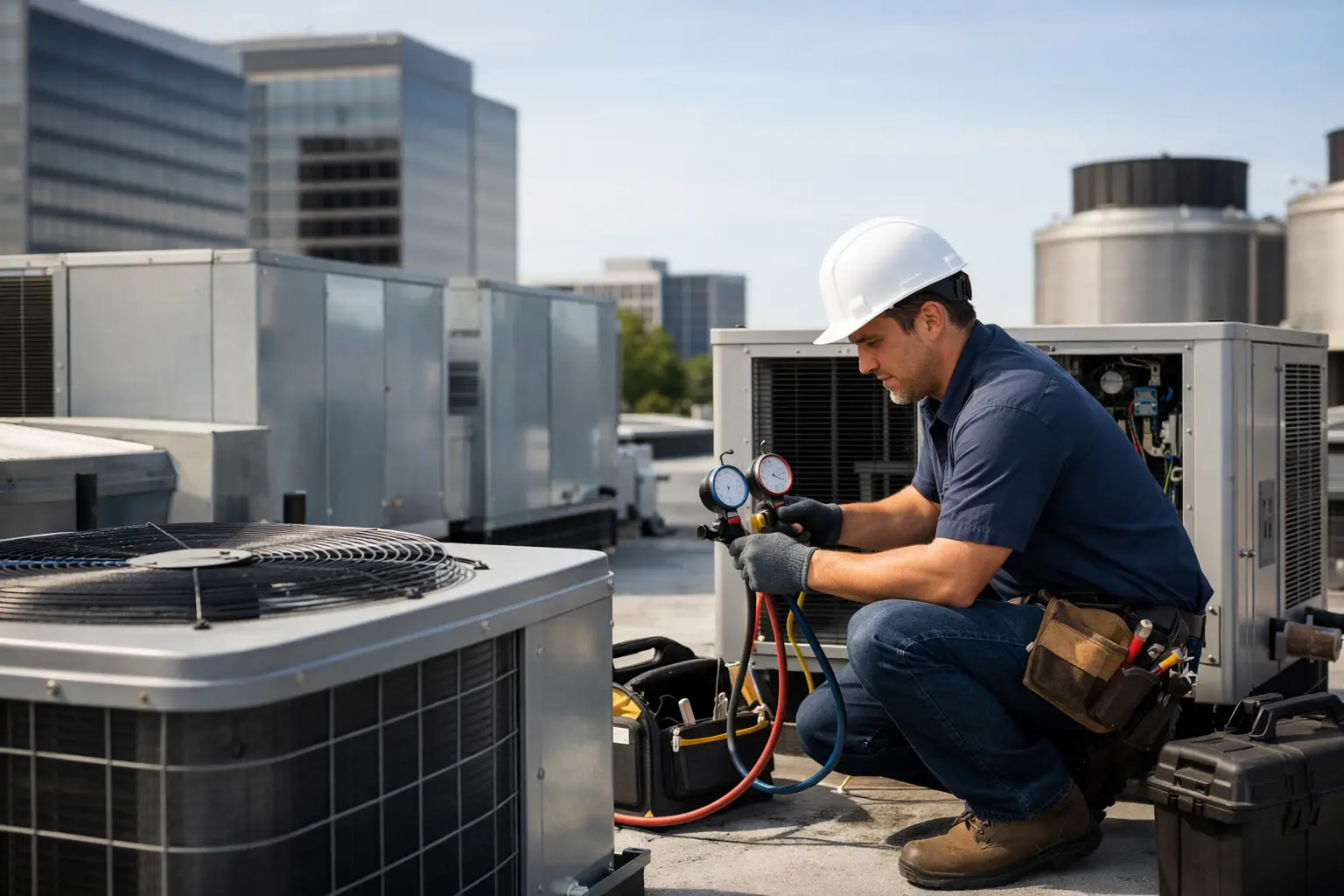
A restaurant opens for lunch with a dining room that feels sticky, a back office that is warm, and a rooftop unit that sounds louder than it did last week. By 2 p.m., staff is distracted, guests notice, and the owner is trying to decide whether this is a simple repair or the start of a major expense. That is where good commercial HVAC service matters. It is not just about getting air moving again. It is about finding the actual fault, protecting business operations, and avoiding the kind of rushed recommendation that turns a repair call into an unnecessary replacement.
What businesses actually need from commercial HVAC service
Most commercial clients are not looking for a sales presentation. They need a technician who can show up, diagnose the system correctly, explain what failed, and recommend the most practical fix. That sounds basic, but many property owners and facility managers have had the opposite experience. A system loses cooling, airflow drops, or the heat will not keep up, and the conversation jumps straight to new equipment before anyone has clearly verified the cause.
In commercial buildings, that approach gets expensive fast. A bad capacitor, failed contactor, dirty condenser coil, low airflow problem, or control issue can look dramatic from the outside. Temperatures rise, tenants complain, and the equipment may short cycle or freeze up. But those symptoms do not always mean the entire unit is at the end of its life.
That is why diagnosis comes first. A good service call should answer a few simple questions. What is the system doing? Why is it doing it? What can be repaired right now, and what should be monitored over time? When those answers are clear, business owners can make decisions based on facts instead of pressure.
Repair first does not mean repair forever
An honest contractor should not push replacement too early. They also should not pretend every aging system is worth saving indefinitely. The right answer depends on the condition of the equipment, the cost of the repair, the availability of parts, and the role that system plays in your building.
If a five-year-old package unit has a failed blower motor and the rest of the system checks out well, repair is often the obvious call. If a 20-year-old system has major compressor damage, poor efficiency, repeated breakdowns, and obsolete components, replacement may be the smarter financial move. The issue is not whether repair or replacement sounds better. The issue is whether the recommendation matches the actual condition of the equipment.
That is the difference many commercial customers are looking for. They want someone who will fix what is broken when repair makes sense and recommend new equipment only when the numbers and the risk justify it.
Why commercial HVAC problems get missed
Commercial systems fail in more complicated ways than many people expect. A comfort complaint in one zone may trace back to a damper issue, a thermostat problem, a failing control board, poor return airflow, or a maintenance problem that has slowly reduced performance over time. The unit may still run, which makes it easy for an inexperienced or rushed technician to misread the situation.
Older buildings add another layer. You may have mismatched equipment, ductwork that was modified years ago, spaces that changed use, or controls that were never updated correctly. A retail suite that becomes a salon or server room will place very different demands on the HVAC system. If the load changes but the system setup does not, comfort issues start showing up that are not solved by swapping out parts at random.
This is why real commercial HVAC service has to go beyond symptom chasing. If the office is hot every afternoon, someone needs to determine whether the issue is refrigerant, ventilation, airflow, insulation, occupancy load, controls, or equipment sizing. Guessing costs money. Careful diagnosis saves it.
Commercial HVAC service and downtime
For most businesses, downtime is the real emergency. A failed AC system in a home is serious. In a business, it can stop production, affect inventory, create customer complaints, or make a space unusable for staff. In some environments, like medical offices, restaurants, churches, retail spaces, and light industrial facilities, HVAC problems can disrupt the day almost immediately.
That is why response time matters, but speed alone is not enough. Fast service without accurate troubleshooting often leads to repeat calls. The unit comes back on, then fails again because the root cause was never addressed. A tripped safety, for example, is not a repair by itself. It is a sign that something else needs attention.
The best commercial service calls aim for both urgency and accuracy. Stabilize the problem if needed, identify the fault, explain the repair clearly, and be honest about whether the equipment is reliable enough to carry the building forward.
What preventative service should really accomplish
Preventative maintenance is often sold as a checkbox. Filters get changed, coils get glanced at, and a report gets sent over. That is not enough for a commercial client relying on equipment every day.
Useful maintenance should reduce breakdowns, improve efficiency, and catch wear before it becomes a shutdown. That means checking electrical components under load, inspecting contactors and capacitors, testing safeties, cleaning coils properly, verifying airflow, checking drains, monitoring refrigerant conditions, and looking for signs that a small issue is building into a larger one.
It also means understanding how the building is used. A daycare, a small office, and a restaurant kitchen put different stress on HVAC equipment. Maintenance should reflect that. Systems with heavier runtime, indoor air quality concerns, grease exposure, or high occupant loads need more attention than a lightly used space.
For commercial property operators in Charlotte and surrounding areas, seasonal demand matters too. A unit that is barely holding on in April may fail hard in July. Preventative service works best when it is not treated like paperwork. It should give you a realistic picture of system condition and the next likely repair points, so you can plan instead of react.
When replacement is the right call
Sometimes replacement is the most practical option. The key is making that recommendation for the right reasons.
If repair costs are stacking up, the system is poorly matched to the building, parts are hard to source, or energy use is consistently out of line, replacement may lower total operating cost. In some cases, a business is not replacing equipment because it is dead. It is replacing equipment because reliability has become too risky.
Sizing also matters. An oversized unit can short cycle and struggle with humidity. An undersized unit can run constantly and still leave hot spots. Good installation is not just about setting a new box on the roof or pad. It is about matching the system to the actual load and making sure airflow, controls, and duct conditions support the equipment. A bad installation can create years of avoidable problems, even with quality equipment.
That is one reason many businesses prefer a technician-led company that does not lead with sales. If replacement is recommended, clients want to know why this unit, why this size, and what problem the new system is expected to solve.
Choosing a commercial HVAC service company
For small-to-mid-sized commercial properties, the best service partner is usually the one that communicates clearly and treats every call like a technical problem to be solved, not an opportunity to sell around it. You want licensed, insured professionals who can explain findings in plain language and back up recommendations with what they actually tested and observed.
It also helps to work with a company that understands the pressure business owners are under. Comfort is one issue. Tenant retention, staff productivity, equipment protection, and operating cost are others. A service company should be able to talk about all of that without turning the conversation into jargon.
That straightforward approach is why many local businesses choose companies like DDL Services. The expectation is simple: find the real problem, fix it if it is fixable, and be honest when a larger upgrade truly makes more sense.
Commercial HVAC service should leave you with clarity
After a service visit, you should know more than whether the system is running at that exact moment. You should know what failed, what was repaired, what condition the rest of the equipment is in, and whether there are warning signs that deserve attention before the next busy day catches you off guard.
That kind of clarity is what separates useful service from expensive guesswork. If your building depends on heating and cooling to stay productive, comfortable, and open for business, the right contractor will not start with a sales pitch. They will start with the system, the symptoms, and the facts. That is usually where the best decisions begin.