

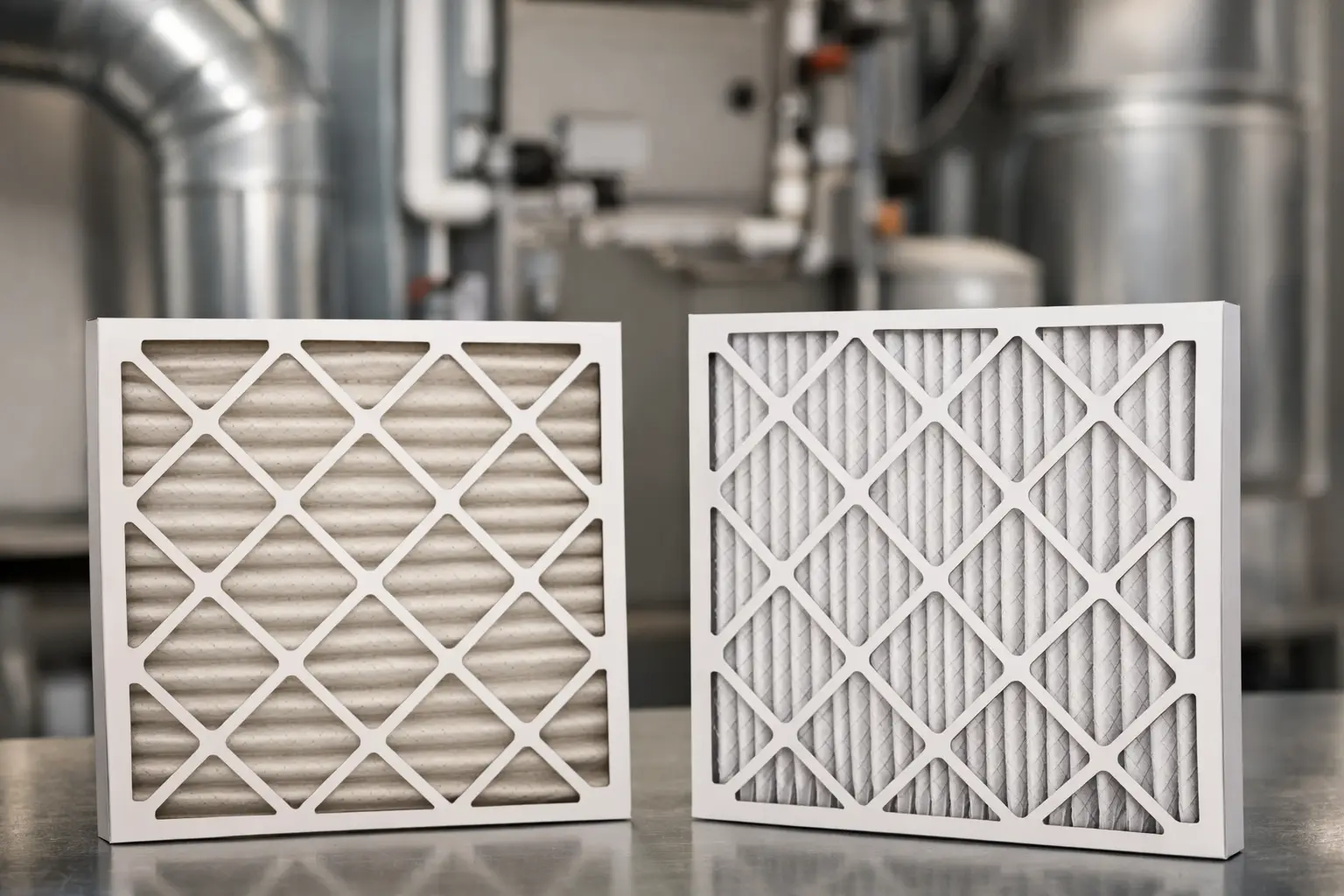
A filter upgrade can improve indoor air quality, but only if your HVAC system can handle it. The real question behind MERV 8 versus MERV 13 is not which filter has the higher number. It is whether that filter gives you better air without creating airflow problems, higher operating costs, or unnecessary wear on your equipment.
For homes and businesses around Charlotte, that question matters. Pollen, construction dust, pet dander, traffic pollution, and long cooling seasons can put a lot of strain on both air filters and HVAC systems. A good filter choice should protect the people inside the building and the equipment moving the air.
MERV 8 Versus MERV 13: The Basic Difference
MERV stands for Minimum Efficiency Reporting Value. It is a rating system that measures how well an air filter captures airborne particles of different sizes. In general, the higher the MERV rating, the more and smaller particles the filter can trap.
MERV 8 filters are common in residential systems because they provide a practical balance between filtration and airflow. They catch larger particles such as dust, lint, pollen, dust mites, mold spores, and many pet dander particles. For a typical household without major air quality concerns, a quality MERV 8 filter is often a reasonable choice.
MERV 13 filters capture smaller particles that MERV 8 filters are more likely to let through. This includes finer dust, smoke particles, some bacteria-carrying droplets, and a greater share of particles associated with outdoor pollution. They are commonly recommended where stronger particle control is needed, including some medical, commercial, and higher-occupancy settings.
The trade-off is resistance. A MERV 13 filter usually creates more resistance to airflow than a MERV 8 filter, especially when it starts to load up with dust. Your blower must work harder to pull air through it. That is not automatically a problem, but it can be a problem in a system that was not designed, sized, or maintained for it.
| Filter rating | What it typically handles | Airflow impact | Best fit | |—|—|—|—| | MERV 8 | Dust, pollen, lint, mold spores, and larger dander | Low to moderate | Most standard homes and many small commercial spaces | | MERV 13 | Fine dust, smoke, smaller airborne particles, and more allergens | Moderate to higher | Homes with air-quality needs and systems verified to support it |
When a MERV 8 Filter Makes Sense
A MERV 8 filter is not a cheap compromise when it is properly matched to the system. It is often the right answer for homeowners who want dependable equipment protection, normal household filtration, and good airflow.
This rating can make sense in a home with no serious allergy or respiratory concerns, particularly if the return ductwork is limited or the system has a standard one-inch filter rack. It can also be a sensible choice for rental homes, offices, retail spaces, and light commercial buildings where maintaining steady airflow and controlling service costs are priorities.
A clean MERV 8 filter helps protect the evaporator coil, blower wheel, and ductwork from heavy dust buildup. That protection matters. A dirty indoor coil restricts airflow, reduces cooling performance, and can contribute to frozen coils during a Charlotte summer. The filter does not need to be the highest-rated option to do its primary HVAC job well.
When MERV 13 Is Worth Considering
MERV 13 is often worth the added cost when cleaner indoor air is a clear priority. Families managing allergies, asthma, smoke exposure, frequent pet dander, or high outdoor particulate levels may notice a meaningful benefit from improved filtration. The same can apply to commercial spaces where many people share the same air, such as offices, clinics, churches, salons, and waiting areas.
Still, MERV 13 should not be installed blindly. A filter that is too restrictive for the return duct size, blower capacity, or filter cabinet can reduce the amount of air flowing across the system. In cooling mode, low airflow can cause weak comfort, reduced efficiency, high energy use, and even coil freezing. In heating mode, it can contribute to overheating issues in some furnaces.
Filter construction also matters. Two filters with the same MERV rating may not have the same pressure drop. A deeper four-inch or five-inch MERV 13 media filter usually provides more surface area and may restrict airflow less than a dense one-inch MERV 13 filter. That is why the rating alone does not tell the whole story.
Do Not Confuse Better Filtration With a Repair
A MERV 13 filter can reduce airborne particles, but it cannot correct an HVAC problem. If rooms are not cooling evenly, the system runs constantly, humidity is high, or the coil keeps freezing, changing to a more expensive filter is not the fix.
Those symptoms may point to a dirty coil, undersized return ductwork, a blower issue, low refrigerant, drainage trouble, or a system that was not properly matched when installed. The honest approach is to find the actual cause before recommending equipment changes.
Check Your System Before Moving to MERV 13
The safest way to decide is to start with the equipment manufacturer’s recommendation, then look at the full air-delivery system. The filter slot size, filter depth, return grille size, duct layout, blower settings, and condition of the indoor coil all affect how well the system handles a higher-efficiency filter.
A technician can measure static pressure, which is the resistance the blower sees as it moves air through the system. This is far more useful than guessing based on whether the unit seems to be running normally. Many airflow issues develop gradually, so homeowners may not realize their system is working harder until comfort drops or a repair is needed.
If a MERV 13 filter raises static pressure too much, there may be practical options besides stepping back to a basic filter. A larger media cabinet, improved return airflow, duct modifications, or a properly selected air-cleaning solution may address the issue. The right answer depends on the equipment and the building, not a sales pitch.
Replacement Frequency Matters More Than the Label
No filter works well once it is loaded with dust. A dirty MERV 8 filter can cause more trouble than a clean MERV 13 filter that is properly matched to the system.
Check one-inch filters monthly and replace them as needed. In many homes, that means every 30 to 90 days, but households with pets, active renovations, heavy pollen exposure, or frequent HVAC use may need more frequent changes. Deeper media filters commonly last longer, often several months, but should still be checked regularly rather than changed only by the calendar.
For commercial properties, filter schedules should match occupancy, operating hours, and the type of work performed in the space. A lightly used office and a busy salon should not be treated the same way. Consistent maintenance protects comfort, indoor air quality, and equipment life.
The Practical Choice for Charlotte Homes and Businesses
For many properties, MERV 8 is the dependable, cost-effective choice. It keeps common debris out of the system while allowing good airflow. MERV 13 can be a strong upgrade for people with specific indoor air quality needs, provided the HVAC system can move air through it without excessive resistance.
If you are unsure, do not let a filter aisle make the decision for you. DDL Services can evaluate airflow, filter fit, and system condition before recommending a change. A properly matched filter is a small part of a healthy HVAC system, but it can prevent a lot of avoidable strain when chosen for the equipment actually in your building.
The best filter is the one that stays clean, fits correctly, supports the airflow your system needs, and addresses the air-quality concerns you actually have.