

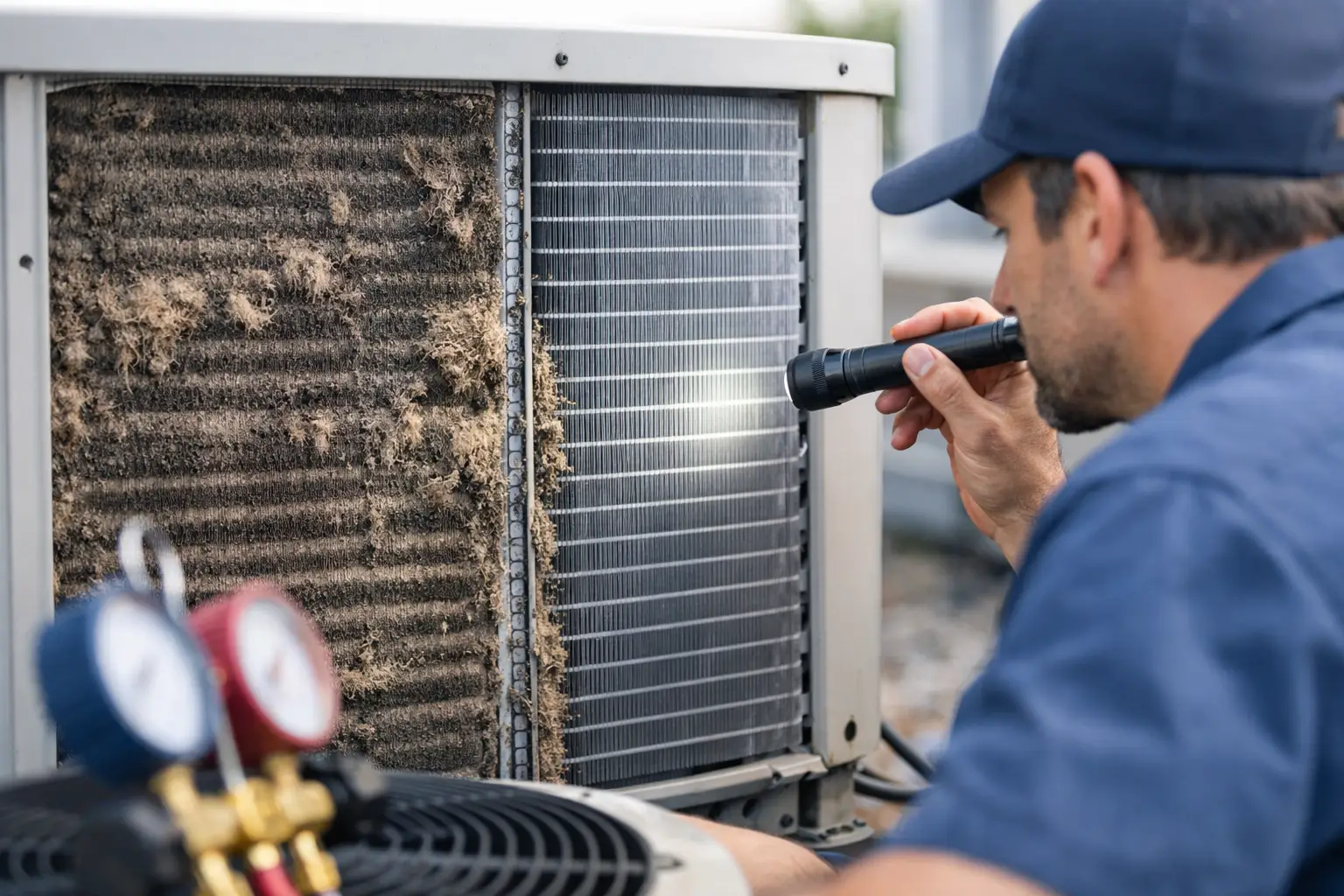
If your electric bill jumped but your thermostat habits did not, your AC may be paying the price for a problem you cannot see. Can dirty coils raise energy bills? Absolutely. In many homes and small commercial buildings, dirty evaporator or condenser coils force the system to work harder, run longer, and deliver less cooling for the same amount of electricity.
That does not mean dirty coils are the only reason bills go up. Bad airflow, low refrigerant, duct leaks, aging equipment, and thermostat issues can all play a role. But coil buildup is one of the most common and most overlooked causes because the system may still run, just not efficiently.
Why dirty coils drive up energy use
Your HVAC system depends on heat transfer. The evaporator coil inside absorbs heat from indoor air. The condenser coil outside releases that heat. When either coil is coated with dust, grease, pollen, or debris, heat transfer slows down.
When that happens, the system has to stay on longer to hit the temperature you set. Longer run times mean more electricity use. You are not getting better cooling. You are just spending more to make the equipment struggle through the same job.
A dirty evaporator coil can also reduce airflow across the coil surface. That can make the coil get too cold and start freezing, which creates an even bigger performance problem. A dirty condenser coil traps heat outside, especially during Charlotte-area summer weather when outdoor units are already working in high temperatures.
Can dirty coils raise energy bills in every system?
Usually yes, but the size of the impact depends on the system, the type of dirt buildup, and how long the problem has been going on.
In a newer high-efficiency unit, dirty coils can erase a lot of the efficiency you paid for. In an older unit, dirty coils can push a marginal system even closer to breakdown. In a commercial setting, where systems may run longer hours and handle larger cooling loads, even moderate coil fouling can show up quickly in utility costs.
There is also a difference between light dust and heavy buildup. A little surface dust may not cause a dramatic spike right away. A coil packed with grime, cottonwood, grass clippings, or grease is a different story. That kind of buildup can noticeably reduce system performance and increase operating cost.
The difference between evaporator and condenser coil problems
Both coils matter, but they create different symptoms.
Dirty evaporator coils
The evaporator coil sits inside the indoor unit, so homeowners often never see it. When it gets dirty, the system may struggle to absorb heat from the air moving through the house or building. You may notice weak cooling, longer cycles, higher indoor humidity, or even ice on the refrigerant lines.
Because airflow and heat absorption are reduced, the system keeps running to try to satisfy the thermostat. That extra runtime shows up on your power bill.
Dirty condenser coils
The condenser coil is in the outdoor unit, where it is exposed to dirt, leaves, lawn debris, and pollen. If this coil cannot release heat properly, system pressures rise and the compressor works harder.
That matters because the compressor is one of the most energy-hungry parts of the system. If a dirty outdoor coil is making the compressor labor every cycle, you can expect energy use to climb. Left alone long enough, it can also shorten equipment life.
Signs dirty coils may be costing you money
You do not need to be an HVAC technician to spot the pattern. If your system is using more energy because of dirty coils, you will often notice other warning signs at the same time.
One common clue is longer cooling cycles. The AC runs and runs, but the house still feels warmer than it should. Another is reduced airflow from the vents, especially if the evaporator coil is affected. You may also notice uneven cooling, sticky indoor air, or an outdoor unit that seems unusually hot and loud.
A sudden increase in utility costs without a major rate change is another red flag. So is ice buildup, frequent system shutoffs, or a unit that seems to struggle most in the late afternoon heat.
None of those symptoms prove dirty coils by themselves. That is where honest diagnosis matters. A good technician should verify whether the problem is coil contamination, airflow restriction, refrigerant issues, or something else before talking about bigger repairs.
Why dirty coils are often missed
Coil problems are easy to ignore because the system does not always fail right away. It just gets less efficient. Homeowners may assume the higher bill is from weather. Commercial operators may think the building simply has a heavy cooling load. Meanwhile, the equipment is losing efficiency day by day.
Another reason is access. Most people can replace a filter. Very few should be opening panels or cleaning indoor coils without the right tools and training. Improper coil cleaning can bend fins, damage components, or push debris deeper into the coil.
That is also why some companies jump too quickly from poor performance to replacement. If a system is underperforming, it is easier to sell new equipment than to inspect coils, confirm airflow, measure refrigerant conditions, and identify the true cause. The better approach is to diagnose first.
Can cleaning coils lower your bill?
In many cases, yes. If dirty coils are the reason the system is running inefficiently, proper cleaning can improve heat transfer, reduce strain, and shorten runtime. That often leads to lower energy use and better comfort.
The savings depend on how dirty the coils were and whether other issues are present. If the system also has a clogged filter, leaky ducts, failing capacitor, or low refrigerant charge, coil cleaning alone may help but not solve everything. HVAC efficiency is tied to the whole system, not one part.
Still, coil cleaning is one of the more practical maintenance items because it addresses a basic function of air conditioning. If the system cannot move and reject heat efficiently, everything downstream suffers.
Preventing coil buildup before bills climb
The simplest first step is regular filter replacement. A neglected filter allows more dust and debris to move through the system, which can end up on the evaporator coil. Filter changes do not eliminate coil cleaning, but they slow down the contamination.
Outdoor units also need breathing room. If the condenser is crowded by shrubs, weeds, or debris, the coil is more likely to collect buildup and lose airflow. Keeping the area around the unit clear helps, but that does not replace professional cleaning.
Routine maintenance is where the bigger value comes in. A proper service visit should include checking coil condition, airflow, refrigerant performance, electrical components, and overall system operation. That kind of inspection can catch efficiency problems before they turn into high bills or an emergency call.
For homes with pets, construction dust, heavy pollen exposure, or long cooling seasons, coil cleaning may be needed more often. The same is true for certain commercial environments where systems run hard and air quality conditions are tougher on equipment.
When to call a professional
If your bill is climbing, your system runs constantly, or cooling performance has dropped off, it is worth having the coils inspected as part of a full diagnostic. This is especially true if the unit has not had maintenance in a while.
A technician should not just say, “Your coils are dirty,” and stop there. The right service call explains how dirty they are, how that is affecting operation, whether cleaning is enough, and whether there are any related problems that need attention. That is the kind of straight answer customers deserve.
For property owners in the Charlotte area, DDL Services takes that technician-first approach. The goal is to find the real problem and fix it, not use a dirty coil as an excuse to push replacement when repair or maintenance is the right move.
The bigger cost of ignoring dirty coils
Higher energy bills are often the first penalty, but they are not the last. A system that runs harder than it should puts more wear on motors, capacitors, contactors, and the compressor. Over time, what started as an efficiency issue can become a repair issue.
That is the real reason dirty coils matter. They do not just waste electricity. They increase strain on equipment you depend on during the hottest and coldest parts of the year.
If your HVAC system seems to be using more power for less comfort, dirty coils are not the only possibility, but they are a smart place to start looking. A clear diagnosis now can save you money, reduce wear, and help your system do its job without fighting through a layer of buildup.