

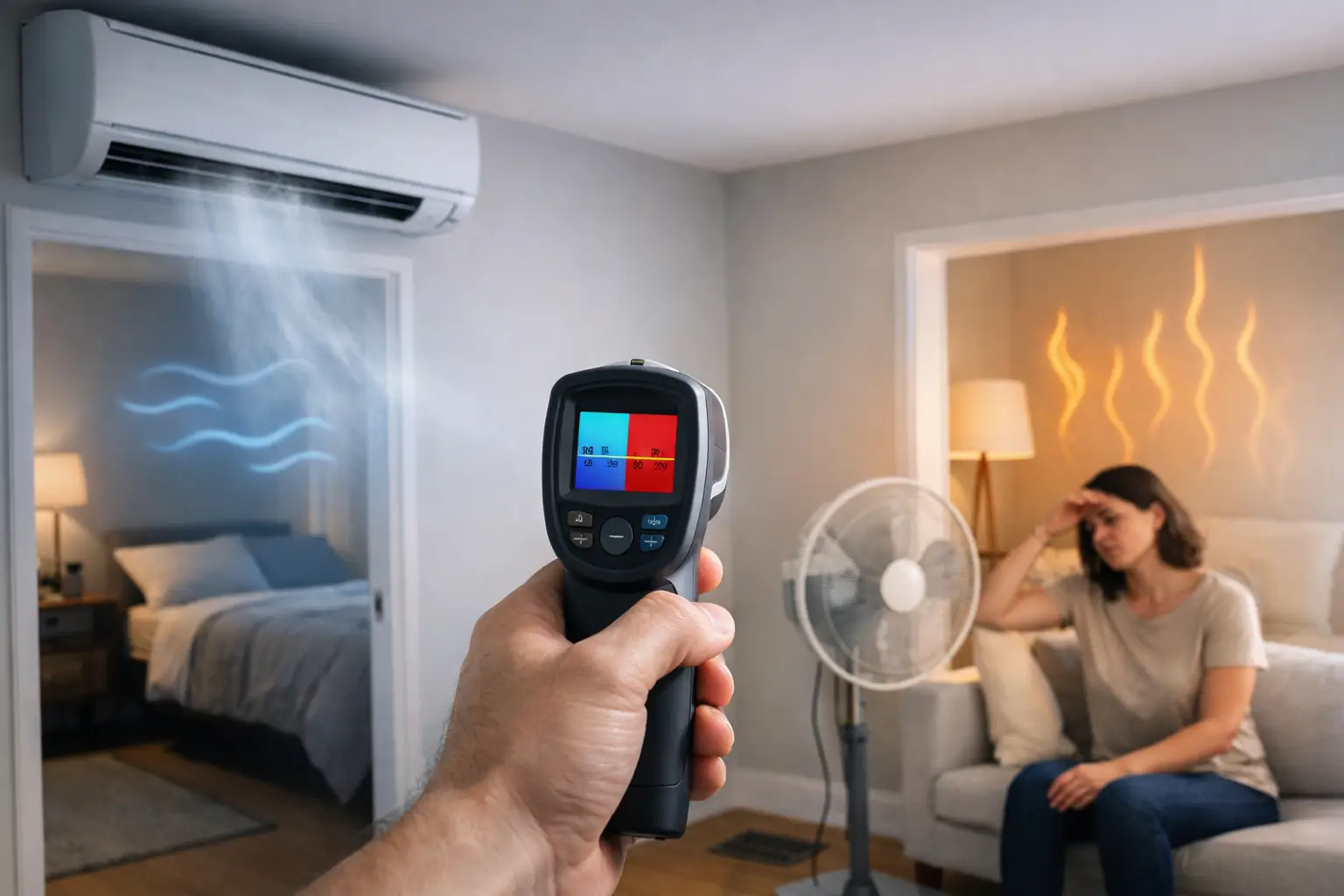
A bedroom that stays warm while the living room feels like a refrigerator is more than a comfort problem. It can drive up utility costs, put unnecessary strain on your equipment, and leave you wondering whether you need a new AC system. Before anyone recommends replacement, the right approach is to find out why the temperatures are uneven. Here is how to fix uneven cooling by working through the most common causes first.
Start With the Easy Airflow Checks
Your air conditioner can only cool a room if enough conditioned air reaches it and the room can return air back to the system. Small airflow restrictions often create big temperature differences, especially during Charlotte’s hottest months.
Check the air filter first. A filter packed with dust restricts airflow across the indoor coil and through the duct system. That may leave rooms farthest from the air handler warmer than the rest of the home. Replace a dirty filter with the correct size and type for your system. If you use a high-efficiency filter, make sure it is not more restrictive than your equipment can handle. Better filtration is useful, but an overly dense filter can reduce airflow when the system was not designed for it.
Next, make sure supply vents are fully open in the rooms that are too warm. Furniture, rugs, curtains, and storage bins can block registers without anyone noticing. Also check return grilles. Closing or covering a return grille can make a room feel stuffy and prevent proper air circulation.
It is tempting to close vents in rooms you do not use, but doing so is rarely a reliable way to balance a central HVAC system. Closing too many vents raises duct pressure, reduces total airflow, and may create new comfort problems elsewhere. It can also contribute to frozen evaporator coils in some systems.
Check Whether the Thermostat Is Getting a False Reading
A single thermostat controls most central systems based on the temperature where that thermostat is located. If it sits near a sunny window, kitchen, exterior door, television, or supply vent, it may sense a temperature that does not represent the rest of the house.
For example, a thermostat in a cool downstairs hallway may satisfy the system before upstairs bedrooms have had time to cool. This is common in two-story homes because warm air naturally rises. A thermostat in a warmer location can create the opposite problem, causing the system to run longer and overcool other rooms.
Verify that the thermostat is set to cooling mode, its fan setting is on Auto, and its temperature reading seems reasonable. The On fan setting runs the blower between cooling cycles. That can help mix air in some homes, but it may also circulate warmer air from ductwork and raise humidity. It is worth testing, but it is not a cure for a duct, insulation, or equipment problem.
If your home has major temperature differences between floors, a zoning evaluation or a properly placed remote temperature sensor may help. Those options should follow a diagnosis, not a guess. Adding controls will not solve undersized ducts or weak airflow.
Look for Duct Problems That Waste Cool Air
Ductwork is one of the most common reasons for uneven cooling, particularly in homes with ducts in attics, crawl spaces, garages, or wall cavities. Cooled air can leak out before it reaches a bedroom or office. Poorly insulated ducts can also absorb attic heat on the way there.
Warning signs include weak air from certain vents, rooms that never cool properly, unusually high summer bills, rattling ducts, or a noticeable difference in airflow from one room to another. Flexible duct that is crushed, kinked, sagging, or disconnected can severely limit airflow.
Duct repairs are not always complicated, but the cause matters. A loose connection may be repairable. A poorly designed duct run may need modification. In older homes, the supply ducts may be adequate while the return-air path is not. When a bedroom door is closed, that room can become pressurized and the cool air has nowhere to go. A technician can measure static pressure and airflow instead of relying on room temperature alone.
Do Not Ignore Attic Heat and Insulation Gaps
If the rooms below your attic are consistently the hottest rooms in the house, the HVAC system may be doing its job against a building-envelope problem. An underinsulated attic, air leaks around ceiling penetrations, poor weatherstripping, or sun-facing windows can add a steady heat load that one room receives more than another.
Start with practical measures: keep blinds or curtains closed on high-sun windows, make sure attic access is sealed, and check for obvious gaps around recessed lights, plumbing penetrations, and exterior doors. Insulation and air sealing can make a meaningful difference, but they need to be handled correctly. Blocking attic ventilation or sealing the wrong area can create moisture issues.
Windows also matter. A west-facing room with older glass may need more cooling than the rest of the home late in the day. That does not automatically mean the AC is failing. It means the system, ductwork, and room load need to be evaluated together.
Make Sure the AC System Is Operating Properly
Uneven cooling can be an early warning sign of an equipment issue. A dirty evaporator coil, failing blower motor, weak capacitor, refrigerant issue, or outdoor unit problem may reduce the system’s cooling capacity. When capacity drops, the rooms with the longest duct runs or greatest heat gain are often the first to feel it.
Watch for longer run times, ice on the refrigerant line, water around the indoor unit, warm air from multiple vents, loud operation, or a system that cannot hold the thermostat setting. If the indoor coil freezes, turn the system off at the thermostat and set the fan to On only if you need to help it thaw. Do not keep running cooling mode with a frozen coil. Continuing to run it can cause more damage and does not fix the cause.
Refrigerant is not a fuel that an AC system simply uses up. If refrigerant is low, there is typically a leak or another underlying issue that needs to be found and repaired. A proper service call includes diagnosis, not just adding refrigerant and moving on.
When a Bigger System Is Not the Answer
Many homeowners assume uneven cooling means the air conditioner is too small. Sometimes that is true, especially after an addition, attic conversion, or major change to the home. But installing a larger unit without addressing airflow and heat gain can make comfort worse.
An oversized AC may cool the thermostat location quickly, then shut off before it properly dehumidifies the home. The result can be cool, clammy rooms and continued temperature swings. A correctly matched system considers the home’s size, insulation, windows, duct capacity, orientation, occupancy, and local climate. Square footage alone is not enough.
For commercial spaces, the same principle applies. A hot office, retail area, or server room may have a different internal heat load than the rest of the building. Equipment size, duct layout, controls, and operating hours all affect the solution.
When to Call an HVAC Technician
Homeowners can replace filters, clear vents, and address obvious obstructions. Beyond that, uneven cooling needs measured diagnostics. A qualified technician should check temperature split, airflow, static pressure, duct condition, refrigerant performance, blower operation, and system sizing before suggesting costly upgrades.
Call for service promptly if airflow has suddenly dropped, the unit is freezing, breakers are tripping, water is leaking, or some rooms have stopped cooling altogether. These are not problems to solve by repeatedly lowering the thermostat.
At DDL Services, the goal is to find the real cause of uneven cooling and explain the repair options clearly. Sometimes the answer is a maintenance issue or duct repair. Sometimes it is insulation, zoning, or a system that is no longer properly matched to the building. Replacement should be recommended when the evidence supports it, not as the first response.
A room-by-room comfort problem deserves more than a sales pitch. Get the airflow and equipment checked while the issue is still manageable, so your system can cool the spaces you use without working harder than it should.