

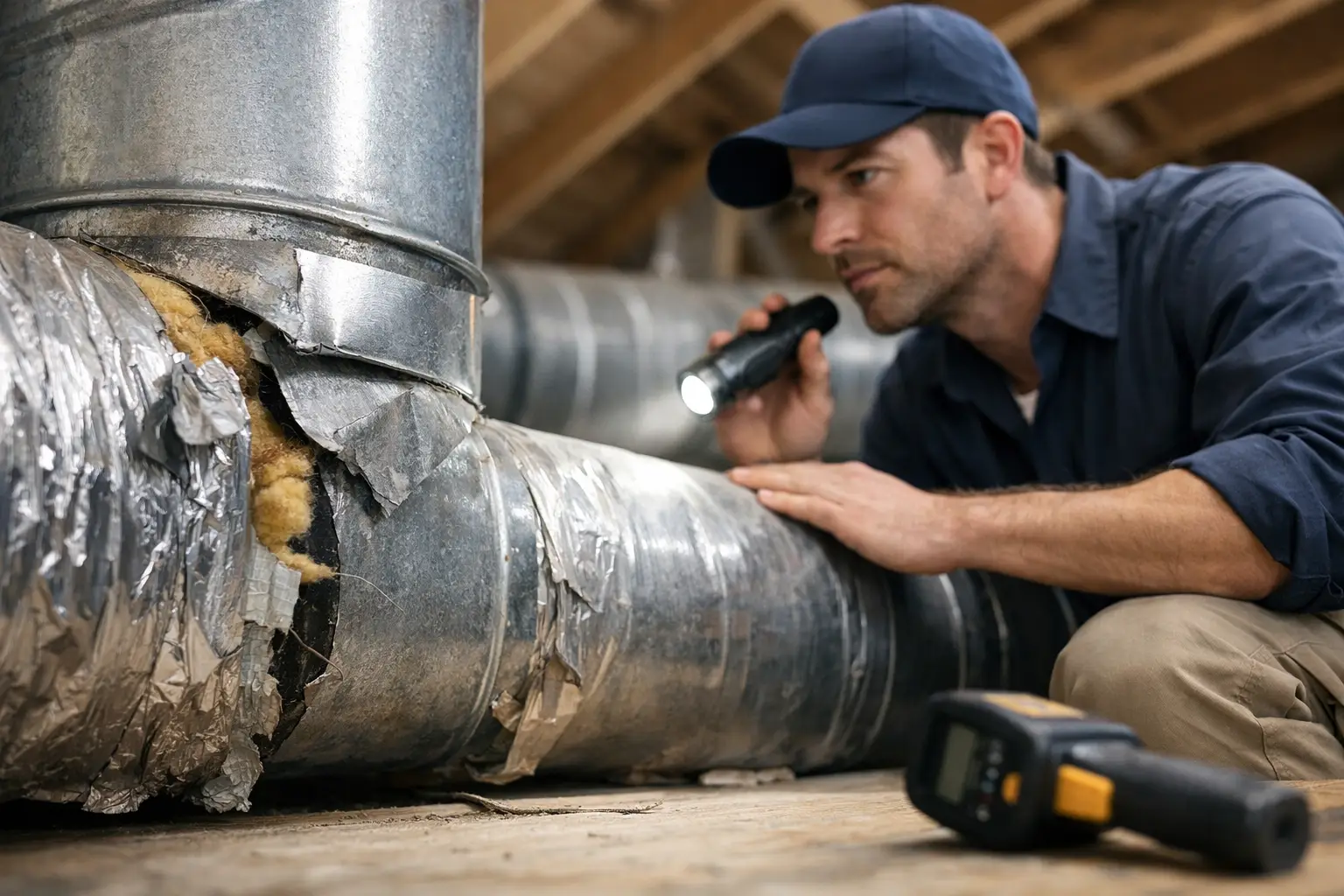
A house can have a newer air conditioner and still feel uncomfortable because the air never gets where it needs to go. One bedroom stays warm, the living room gets too cold, and the system seems to run longer than it should. If that sounds familiar, learning how to spot bad ductwork can help you avoid blaming the equipment for a problem hiding above the ceiling or behind the walls.
Ductwork is the delivery system for heated and cooled air. When it is undersized, leaking, poorly connected, crushed, or poorly insulated, your HVAC system has to work harder to deliver less comfort. That can mean higher utility bills, more wear on the equipment, and rooms that never feel right.
Uneven Temperatures Are Often the First Clue
A small temperature difference between rooms is normal, especially in a two-story home or a house with lots of sun exposure. But a bedroom that is consistently 5 to 10 degrees warmer or colder than the thermostat setting deserves attention.
Bad ductwork can cause this when a branch line is too small, disconnected, pinched, or leaking. Air may be taking the easiest path through the duct system instead of reaching the room that needs it. Poor return-air duct design can create the same problem. If air cannot get back to the system easily, the supply vent may not deliver enough conditioned air into that room.
Before assuming the ducts are at fault, check the basics. Make sure supply registers are open and not blocked by furniture, rugs, or drapes. Replace a clogged air filter. If those simple steps do not change the problem, a technician should measure airflow and static pressure rather than guessing.
Weak Airflow at Supply Vents
Put your hand near several supply vents while the system is running. You should feel a consistent stream of air, though the exact strength will vary by room and vent size. A vent with noticeably weak airflow compared with similar rooms can point to a duct issue.
The problem may be a loose connection, a collapsed flexible duct, a damper that is closed or stuck, or debris restricting airflow. In attics and crawlspaces, flexible ducts are especially vulnerable to sharp bends, sagging, and compression. Flexible duct is not automatically bad, but it has to be properly supported and routed. A crushed section can restrict airflow as effectively as a partially closed valve in a plumbing line.
Weak airflow can also come from a blower problem, dirty evaporator coil, incorrect fan setting, or an oversized filter with too much resistance. That is why a real diagnosis matters. Replacing ductwork without confirming the source of the restriction is no better than replacing an air conditioner because one room is warm.
Dust, Musty Smells, and Dirty Insulation
Excess dust does not always mean your ducts are dirty. Homes naturally collect dust, particularly with pets, carpeting, open windows, renovation work, or frequent foot traffic. Still, dust that returns quickly after cleaning can be a sign that return ducts are pulling air from an attic, crawlspace, garage, or wall cavity through gaps in the system.
Look around accessible duct connections for dark streaks, loose tape, gaps, or deteriorated insulation. These signs can indicate air leakage. A return-side leak is especially concerning because it can draw unfiltered air and contaminants into the HVAC system before that air reaches the filter.
Musty odors are another reason to investigate. In Charlotte-area homes, attic and crawlspace humidity can be significant. If uninsulated or damaged ducts run through those spaces, warm humid air can condense on cold duct surfaces during cooling season. Wet insulation, rusted metal, or visible moisture around ducts should be addressed promptly. The goal is not simply to cover an odor. It is to find out where moisture and unwanted air are entering the system.
Utility Bills Rise Without a Clear Reason
A higher electric bill can come from weather, utility rates, thermostat changes, aging equipment, or more people using the building. But if your bill rises while comfort gets worse, leaking or poorly designed ductwork belongs on the list of possible causes.
Conditioned air that leaks into an attic, crawlspace, or unconditioned commercial ceiling space is wasted air you already paid to heat or cool. At the same time, leaks on the return side can pull in hot summer air or cold winter air. The system then has to condition that extra air before it can satisfy the thermostat.
Duct leakage also puts added strain on the blower and compressor because longer run times are often needed to maintain the set temperature. That does not mean every high bill requires a full duct replacement. Some systems need targeted sealing, insulation improvements, repaired connections, or airflow balancing. The right repair depends on the condition and layout of the existing ducts.
Listen for Noises You Should Not Hear
Ductwork should not be completely silent, but it should not whistle, bang, rattle, or sound like air is rushing through a narrow opening. A loud whistle near a register may indicate excessive pressure, an improperly sized grille, or a damper issue. Rattling can come from loose metal sections or a connection that needs to be secured.
A popping sound when the system starts or stops may occur as metal ducts expand and contract. Occasional minor noise is not unusual. Repeated loud popping, however, can suggest pressure problems or thin, poorly supported duct material. In commercial spaces, these noises can be more than an annoyance. They may point to airflow conditions that affect comfort across offices, retail areas, or workspaces.
Visible Damage in the Attic or Crawlspace
If you can safely view accessible ducts without stepping through a ceiling or disturbing insulation, look for obvious physical problems. Disconnected ducts, torn insulation, hanging flexible duct, and loose straps should be addressed. So should ducts resting on sharp edges or bent tightly around framing.
Do not rely on tape alone as proof that a repair was done correctly. Ordinary cloth-backed duct tape often dries out and fails in hot attics. Professional duct sealing uses materials designed for HVAC work, along with proper mechanical connections where needed.
Pay attention to insulation as well. A duct can be intact but still lose a large amount of cooling or heating if its insulation is damaged or inadequate for its location. This is particularly relevant when ducts run through a hot attic. Insulation does not fix a leak, but after leaks are sealed, it helps keep conditioned air at the temperature your system produced it.
How to Spot Bad Ductwork Without Guessing
Homeowners and facility managers can notice warning signs, but confirming the problem takes more than looking at a few vents. A qualified HVAC technician should inspect accessible connections, evaluate the duct layout, measure static pressure, check temperature differences, and test airflow where appropriate. These steps help separate a duct issue from equipment trouble, thermostat problems, refrigerant concerns, or building-envelope issues.
A good inspection also considers whether the duct system matches the equipment. Installing a larger air conditioner on undersized ducts can create new problems instead of solving old ones. More capacity does not automatically mean better comfort. Proper airflow and balanced distribution matter just as much.
At DDL Services, the approach is to identify the actual cause before recommending a major expense. Sometimes that means repairing a damaged run or sealing leaks. Other times, a larger redesign is justified because the existing duct system cannot support the home or business properly. You deserve a clear explanation of which situation you have and why.
When to Call for Service
Call for an HVAC inspection if several rooms are consistently uncomfortable, airflow has changed suddenly, utility costs rise without a clear explanation, or you see damaged ducts or moisture near the system. For businesses, act early when employees or customers are complaining about hot and cold zones. Comfort problems rarely improve on their own, and ongoing airflow restrictions can add unnecessary wear to the equipment.
Do not accept “you need a new system” as the first answer when the real issue may be in the ducts. Ask what was tested, what was found, and whether a repair can correct the problem. A straightforward diagnosis gives you a better chance of paying for the fix you actually need.