

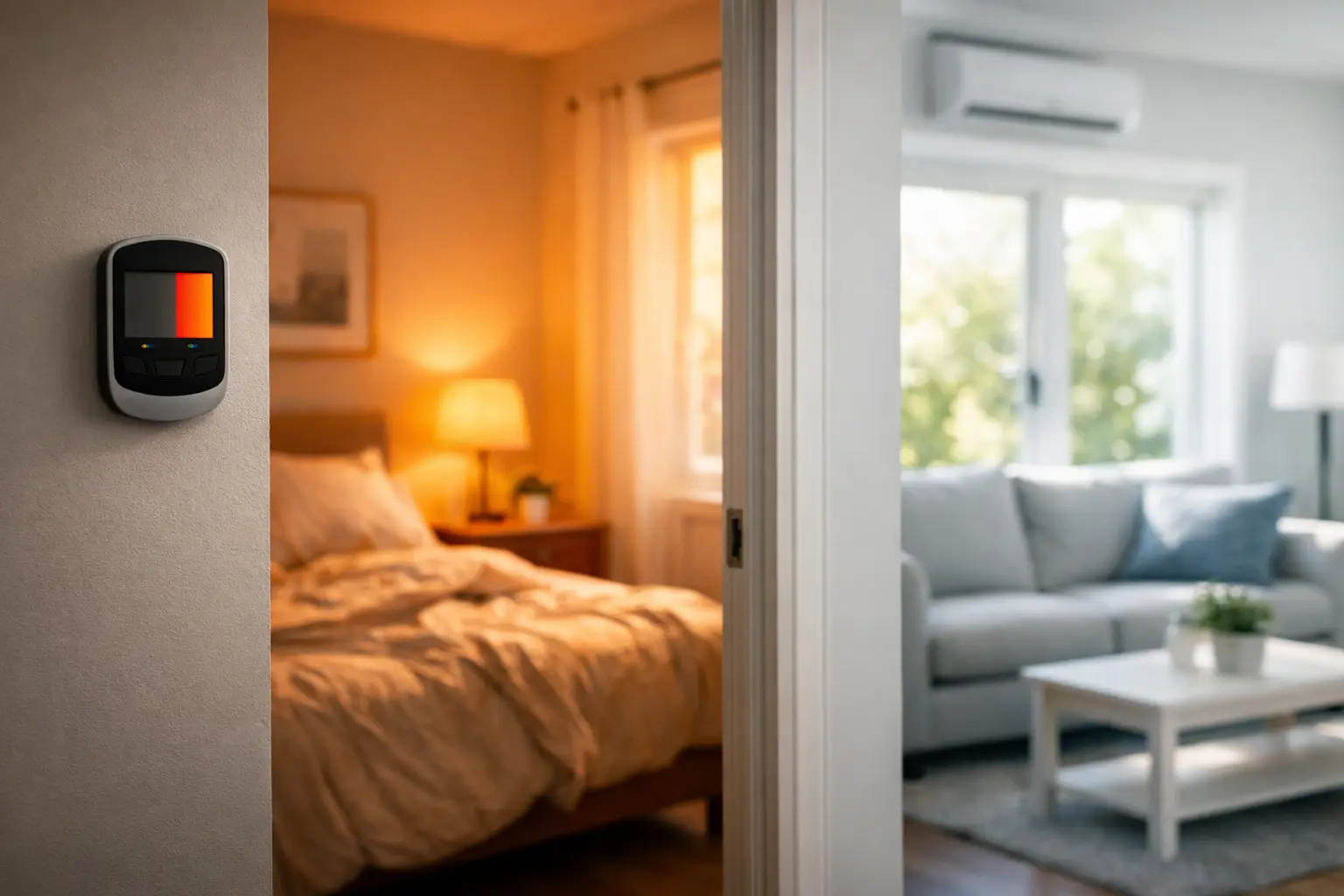
You set the thermostat, the AC runs, and most of the house feels fine – but one bedroom, bonus room, or office stays noticeably warmer. If you have been asking why is one room hotter, the answer usually is not that your whole system has failed. More often, there is a specific airflow, insulation, duct, or room design issue that needs to be diagnosed correctly.
That matters because uneven cooling is where a lot of homeowners get bad advice. A hot room does not automatically mean you need a new air conditioner. In many cases, the real problem is much smaller and much more fixable than that.
Why is one room hotter even when the AC is running?
A central HVAC system is supposed to move conditioned air evenly through the house, but houses are rarely as balanced as they look on paper. One room may get less supply air, hold more heat, lose cooled air through leaks, or sit in a part of the home that is harder to condition.
The key is figuring out whether the room has an airflow problem, a heat gain problem, or both. A room with weak airflow and strong afternoon sun is going to struggle a lot more than an interior room with the same vent size.
The most common reasons one room stays hot
In many homes, the issue starts with restricted airflow. If a supply vent is partially closed, blocked by furniture, or not delivering enough air because of a duct issue, that room simply cannot keep up. You may feel a little air coming out, but not enough volume to cool the space properly.
Dirty filters can also contribute, especially if the system is already marginal on airflow. A clogged filter reduces overall air movement across the system, and rooms at the far end of the duct run often feel that problem first.
Ductwork problems are another common cause. Flexible ducts can sag, kink, or come loose. Metal ducts can leak into attics, crawl spaces, or wall cavities. When that happens, cooled air meant for the room never fully gets there. In some homes, the duct was undersized from the start, which means the room has never really been comfortable.
Heat gain inside the room is just as important. A room over a garage, a second-floor bedroom, a finished attic space, or a room with large west-facing windows can absorb much more heat than the rest of the house. Even if the HVAC system is working correctly, that room may need better insulation, air sealing, window treatments, or airflow adjustments to stay comfortable.
Then there is the return side of the system, which gets overlooked all the time. Supply vents push cooled air in, but return air has to make its way back out. If a room has poor return airflow, especially with the door closed, pressure builds up and the room can stay warmer than it should.
Why upstairs rooms are often hotter
If the hot room is upstairs, that narrows the field pretty quickly. Heat rises, second floors absorb attic heat, and upper-level ductwork often runs through very hot attic spaces. That combination makes upstairs comfort one of the most common complaints in residential HVAC.
Sometimes the issue is insulation above the ceiling. Sometimes it is leaky attic ductwork. Sometimes the system is a single-zone setup trying to cool two floors with very different loads. None of those problems are unusual, but they need different fixes.
This is where honest diagnosis matters. If one upstairs room is hot but the rest of the home is cooling reasonably well, replacing the outdoor unit alone may not solve anything. The problem could still be duct loss, poor balancing, inadequate return air, or attic heat transfer.
What to check before calling for service
There are a few basic things worth checking first. Make sure the room’s supply vent is fully open and not blocked by a bed, dresser, rug, or curtains. Check the air filter and replace it if it is dirty. If the room has blinds or curtains and gets hard afternoon sun, close them during the hottest part of the day and see if that changes the temperature.
It also helps to compare airflow from vent to vent. You do not need instruments to notice a major difference. If one room barely has any airflow while nearby rooms feel strong, that points toward a balancing or duct issue.
Check whether the problem changes when the room door is open versus closed. If the room gets warmer with the door shut, return air may be part of the issue. Some homes rely on air moving under the door back to a central return, and that does not always work well.
If you can access visible ductwork in an attic or crawl space, look for disconnected sections, crushed flex duct, or obvious damage. That said, do not guess past your comfort level. A lot of duct problems are hidden, and the goal is to spot simple issues, not create a bigger one.
When the problem is not the HVAC unit itself
Homeowners often assume a hot room means the AC is too small or wearing out. That can happen, but it is far from the only explanation. If the rest of the house is close to set temperature and one room is consistently off, the equipment may be doing its job while distribution is failing.
That distinction saves people money. We see cases where the outdoor unit, indoor coil, and refrigerant levels are fine, but the room is still uncomfortable because of a duct restriction, poor system balance, inadequate insulation, or a return air problem. Replacing major equipment without fixing those issues just gives you a newer system with the same comfort complaint.
Repairs and upgrades that actually help
The right fix depends on the real cause. Sometimes the answer is straightforward, like replacing a clogged filter, opening a damper, sealing a leaking duct, or correcting crushed flex duct. Sometimes it involves balancing airflow so one room is not being starved while others get too much.
In other homes, insulation and air sealing make a bigger difference than mechanical work. If a room is gaining too much heat through the attic, walls, or windows, the HVAC system is fighting a losing battle. Cutting that heat load can improve comfort without overworking the equipment.
A return air improvement may be needed in some cases, especially for rooms that stay hot when the door is closed. Adding or modifying return pathways can help the room condition more evenly.
Zoning can help too, but it is not a cure-all. In the right house, zoning gives much better control over different areas. In the wrong setup, it can add complexity without fixing poor duct design or insulation problems. It depends on the home, the equipment, and how severe the temperature difference is.
For rooms that were additions, garage conversions, or finished bonus spaces, a ductless system may sometimes be the cleanest answer. That is especially true when the existing central system was never designed to handle the extra load. But again, that should come after proper evaluation, not as a default sales pitch.
Signs you need a professional diagnosis
If one room is persistently 3 to 5 degrees hotter than the rest, if airflow feels weak, if the issue started suddenly, or if your energy bills are climbing, it is worth having the system checked. The same goes for rooms that only become uncomfortable at certain times of day, because that can point to insulation, sun load, or duct leakage in extreme attic conditions.
A good HVAC technician should look beyond the thermostat and the condenser outside. Uneven cooling requires checking airflow, duct condition, static pressure, return setup, insulation factors, and how the room is actually behaving in the house. That is how you find the real problem instead of making an expensive guess.
For homeowners and property managers in the Charlotte area, this is where technician-led service matters. DDL Services approaches these comfort complaints the same way we approach repair calls in general – diagnose first, explain clearly, and fix what is actually wrong before recommending bigger replacements.
Why one room hotter problems should not be ignored
A hot room is not just a comfort issue. It can be an early sign of airflow restrictions, duct leakage, or system imbalance that puts extra strain on your HVAC equipment. Over time, that can mean longer run times, higher utility costs, and more wear on parts that are already working hard during a North Carolina summer.
It also affects how people actually use the building. In homes, it turns bedrooms and offices into problem spaces. In small commercial settings, it can make certain offices, treatment rooms, or customer areas consistently uncomfortable. If people are adjusting thermostats to fix one bad room, the whole system usually pays for it.
The best next step is simple: do not assume, and do not let anyone assume for you. When one room runs hotter than the rest, the right answer comes from finding the reason, not from jumping straight to replacement. A careful diagnosis usually tells you a lot more than the hot room itself ever could.