

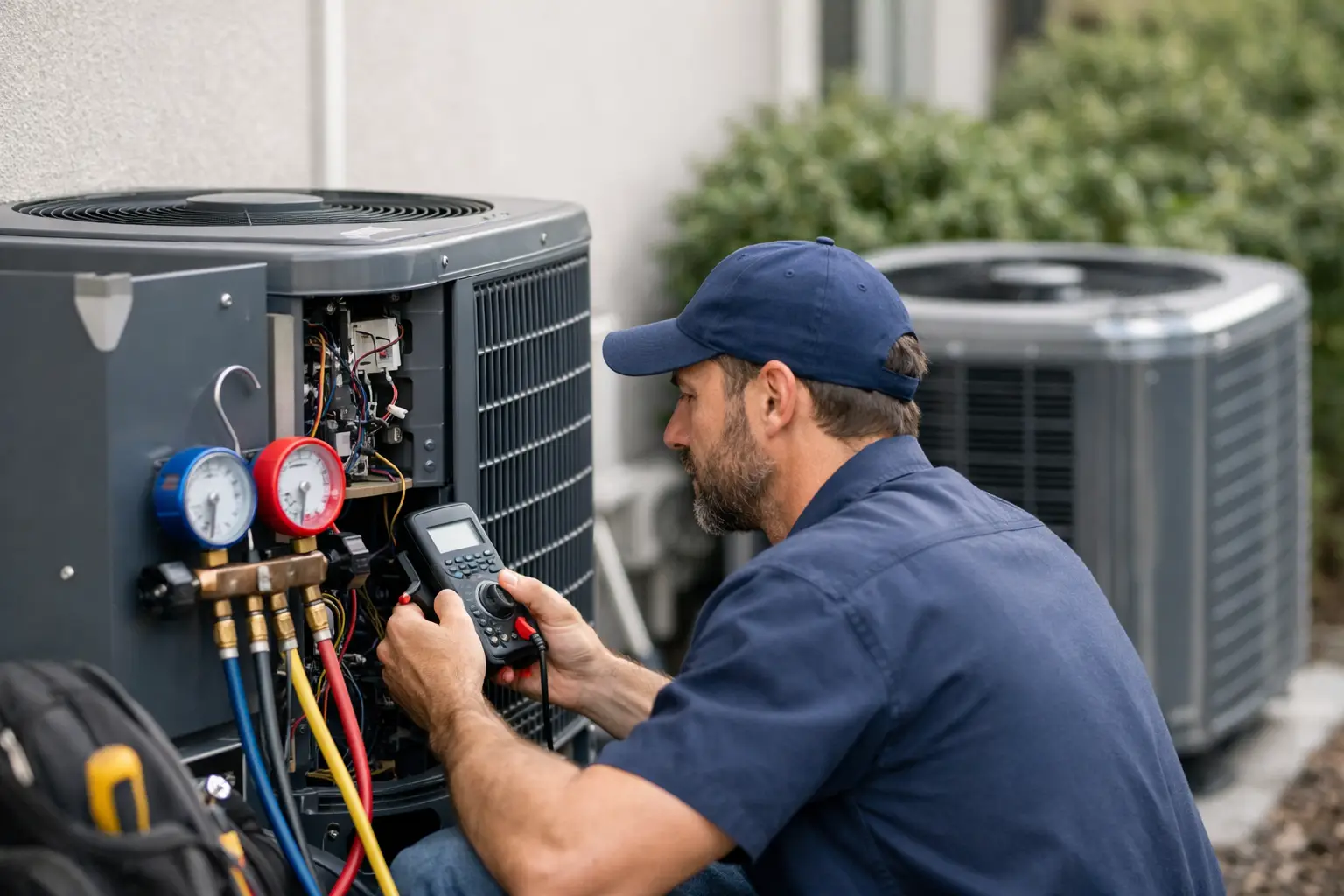
A system stops cooling on a 95-degree afternoon, airflow drops, and the first thing many property owners hear is, “You need a whole new unit.” Sometimes that is true. A lot of times, it is not. HVAC diagnosis prevented full replacement in more homes and commercial spaces than most people realize because the real failure often comes down to one component, one airflow issue, or one control problem – not the entire system.
That matters in Charlotte and the surrounding area, where air conditioning is not a luxury for much of the year. When your comfort, indoor air quality, or business operations are on the line, it is easy to feel cornered into a fast decision. The problem is that urgency can lead to expensive recommendations before anyone has actually confirmed the root cause.
Why accurate diagnosis changes the whole conversation
A heating and cooling system is not one part. It is a chain of electrical components, refrigerant pressures, motors, controls, drainage, filtration, ductwork, and safety devices working together. If one link in that chain fails, the symptoms can look much bigger than the actual repair.
For example, a frozen evaporator coil can make it seem like the air conditioner is dying. In reality, the system may be freezing because of restricted airflow, a blower issue, a dirty filter, low refrigerant from a leak, or a metering problem. Replacing the whole system without identifying which of those conditions caused the freeze does not just cost more. It can leave the underlying issue in place.
The same is true for furnaces and heat pumps. Short cycling, weak airflow, warm air in cooling mode, tripped breakers, noisy startup, and uneven temperatures can all point to several different causes. Some are serious enough to justify replacement. Others are very repairable. The only honest way to know is to test the system instead of guessing.
Common problems that get mistaken for total system failure
This is where a technician-led approach makes a difference. A failed capacitor, contactor, condenser fan motor, blower motor, drain safety switch, thermostat, ignitor, or control board can shut a system down or make it run poorly. To a customer, that often feels like complete equipment failure. To a trained technician, it is a reason to slow down and verify.
Refrigerant issues are another big one. If a system is low on refrigerant, the question is not just how much to add. The real question is why it is low in the first place. A proper diagnosis checks for leaks, confirms pressures, evaluates coil condition, and looks at how the entire system is performing. If the equipment is otherwise in solid shape, a targeted repair may make far more sense than replacement.
Airflow problems also get overlooked. Dirty evaporator coils, plugged filters, collapsed duct sections, closed dampers, blower wheel buildup, and undersized return air can all make an AC system struggle. Homeowners often get told the unit is too old or too weak, when the real issue is that it cannot move air the way it was designed to.
On the commercial side, the stakes are different but the principle is the same. A rooftop unit with poor cooling may have a sensor issue, economizer problem, motor failure, or control fault. If you own or manage a small business, replacing a unit too early ties up capital that could have gone elsewhere.
When HVAC diagnosis prevented full replacement
A careful inspection does not start with a sales pitch. It starts with questions. What changed? When did the problem begin? Is it constant or intermittent? Has airflow dropped off gradually, or did it happen all at once? Has the utility bill changed? Are certain rooms affected more than others?
From there, the technician should verify operation step by step. That can include checking supply and return temperatures, refrigerant pressures, capacitor readings, amp draws, blower performance, drain condition, thermostat communication, electrical connections, and overall system cleanliness. In a furnace or heat pump, it may also mean checking ignition sequence, safety switches, defrost operation, and heat rise.
This is usually the moment when HVAC diagnosis prevented full replacement for a customer. Not because someone was trying to save an old system at all costs, but because the test results showed a specific failure that could be corrected.
A homeowner may be told their 10-year-old AC is done, only to find the real issue is a failed outdoor fan motor and a severely impacted coil. A business may think a packaged unit is beyond repair, then learn the shutdown was caused by a control board issue and neglected maintenance. A family may assume uneven cooling means they need a whole new setup, when the actual problem is duct leakage and a blower adjustment.
Those are not miracle saves. They are the result of doing the diagnostic work first.
Repair first does not mean repair forever
There is a difference between honest repair and false hope. A trustworthy HVAC company should not recommend replacement too quickly, but it also should not keep patching a system that is no longer a good investment.
Sometimes replacement is the right call. If the heat exchanger is cracked, the compressor has failed in an aging system, refrigerant leaks are widespread, or the equipment is badly mismatched and unreliable, replacement may be the practical option. The key is that the recommendation should come after diagnosis, not instead of it.
Age matters, but age alone is not enough. A 15-year-old system that has been maintained and needs a repair is not automatically a replacement case. On the other hand, a younger system with repeated major failures, poor installation history, and high operating costs may not be worth continuing to repair. It depends on condition, repair cost, efficiency, parts availability, and how long you reasonably expect the equipment to last.
That kind of advice protects the customer. It does not trap them in endless repairs, and it does not rush them into buying equipment they do not need.
What property owners should expect from a real diagnostic visit
If you are calling about an AC or heating problem, you should expect more than a glance at the outdoor unit and a replacement quote. A real diagnostic process should connect the symptom to the cause and explain what was found in plain language.
You should also expect options. In many cases, there may be a repair option and a replacement option, with a clear explanation of the pros and cons of each. That is especially important for homeowners balancing budget concerns and for commercial operators trying to avoid unnecessary downtime or capital expense.
A good technician should be able to explain why a repair makes sense, why a replacement makes sense, or why a temporary repair may buy time while you plan a larger upgrade. That level of transparency is what separates service from sales.
Why this matters in the long run
The cheapest call is not always the smartest call, and the biggest recommendation is not always the right one. What saves money over time is accurate problem solving. When the actual fault is identified early, you avoid replacing good equipment, reduce repeat breakdowns, and improve the chances that the next repair actually fixes the issue.
That approach also helps with maintenance decisions. If a system has recurring airflow restrictions, drainage problems, dirty coils, or electrical wear, those patterns can be addressed before they turn into emergency calls. For commercial properties, that means fewer disruptions. For homeowners, it means better comfort and fewer surprises during the hottest or coldest weeks of the year.
DDL Services is built around that way of working – find the real problem, explain it clearly, and recommend what makes sense for the equipment and the customer.
The real value of HVAC diagnosis prevented full replacement
For many property owners, the biggest frustration is not just the repair bill. It is the feeling that they are being rushed into a major purchase without enough proof. Accurate diagnosis changes that. It gives you facts, not pressure.
And if the test results show that replacement is truly the better investment, you can move forward knowing the decision is based on system condition, not guesswork. That is how HVAC service should work.
If your system is acting up, the best next step is not to assume the worst. It is to make sure someone actually diagnoses the problem before telling you to replace everything.