

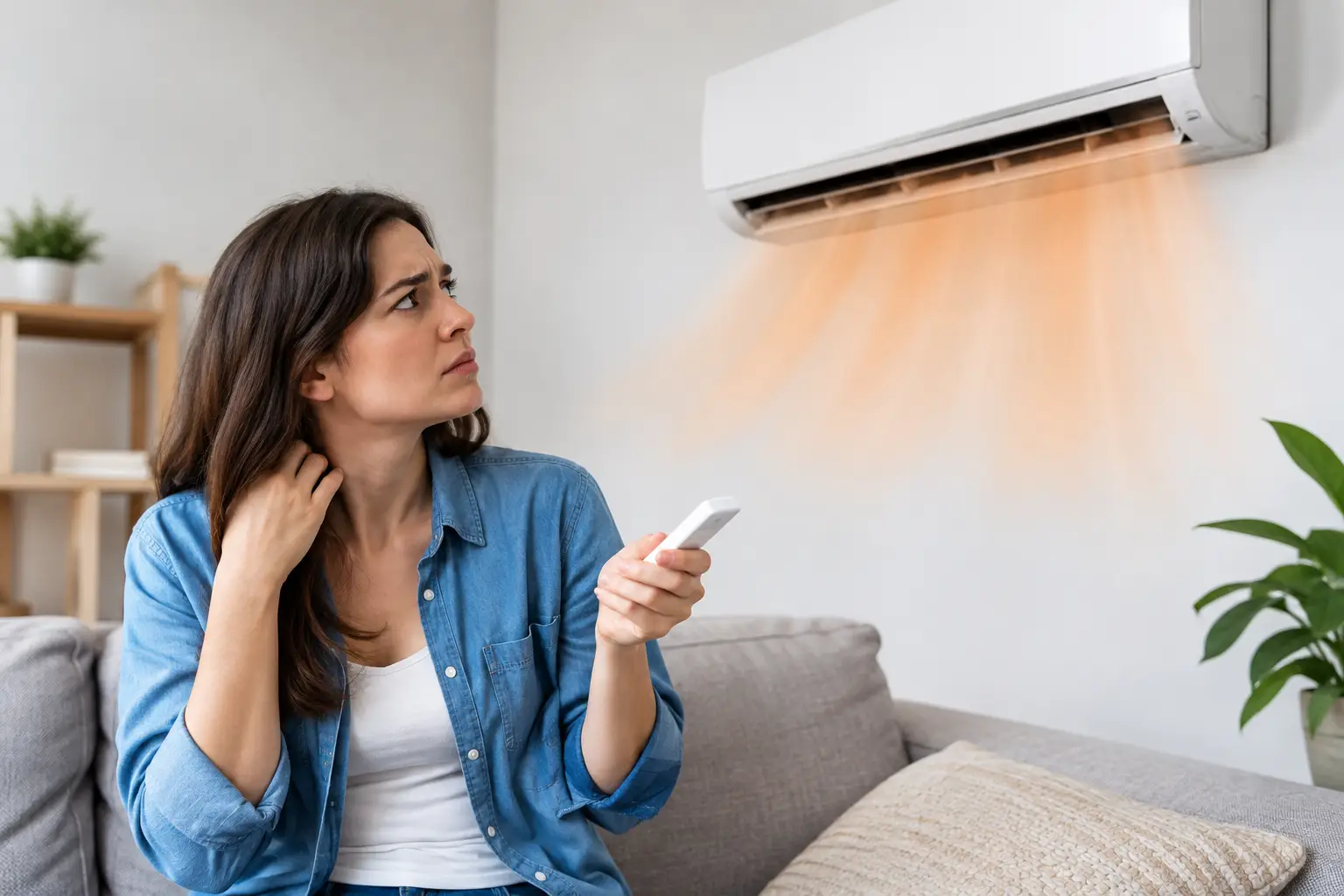
A Charlotte summer can turn a small cooling problem into an urgent one fast. If you are asking, “why is AC blowing warm,” the answer may be as simple as a thermostat setting or as involved as a refrigerant leak, frozen coil, or failing outdoor unit. The key is not guessing or jumping straight to replacement. A proper diagnosis should identify what is actually preventing your system from removing heat.
Before checking anything, remember that an air conditioner contains high-voltage electrical components and pressurized refrigerant. There are a few safe checks a homeowner or facility manager can make. Beyond those, an experienced HVAC technician should take over.
Why Is AC Blowing Warm Instead of Cooling?
Your AC does not create cold air. It pulls heat from indoor air and releases that heat outside. For that process to work, air must move freely across the indoor evaporator coil, refrigerant must circulate at the correct pressure, and both the indoor and outdoor equipment must operate properly.
When one part of that process breaks down, the system may still blow air through the vents, but that air will be room temperature or warm. Airflow alone is not proof that the air conditioner is cooling.
The thermostat is set incorrectly
Start with the obvious because it solves more service calls than most people expect. Set the thermostat to COOL, not HEAT or AUTO, and choose a temperature several degrees below the current indoor temperature. Check that the fan setting is on AUTO.
When the fan is set to ON, it runs continuously, even when the cooling cycle has stopped. That can make the vents feel warm between cycles because the blower is moving unconditioned air through the ductwork. The system may be working normally, but the setting creates the impression that it is not.
If the thermostat screen is blank, has an error message, or does not respond to setting changes, weak batteries, a wiring issue, or a failed thermostat could be the problem. Smart thermostat settings can also be changed accidentally through an app or schedule.
A dirty air filter is restricting airflow
A clogged filter is one of the most common and preventable causes of weak or warm AC airflow. Your system needs a steady volume of return air moving over the evaporator coil. When a filter is packed with dust, pet hair, or construction debris, airflow drops.
At first, the home may simply feel less comfortable. Over time, the coil can become so cold that moisture on it freezes. Once that coil is covered in ice, it cannot absorb heat effectively, and the air coming from your vents may become warmer and weaker.
Check your filter monthly during heavy cooling season. Replace it when it looks dirty, but avoid installing an overly restrictive filter just because it has a high rating. The right filter depends on the system and the home. A technician can help match filtration to your equipment without choking off airflow.
The evaporator coil is frozen
Ice on the indoor coil is a symptom, not a final diagnosis. Restricted airflow is one possible cause. Low refrigerant, a failing blower motor, blocked return vents, or a dirty evaporator coil can also cause freezing.
If you see ice on the refrigerant line near the indoor unit or notice water around the air handler after the system shuts down, turn the cooling system off at the thermostat. Set the fan to ON only if it is moving air normally, which can help thaw the coil. Do not chip ice off the coil or keep forcing the AC to run. That risks further damage.
Once the ice has melted, the underlying cause still needs to be found. Simply restarting the system may bring cool air back briefly, but it does not correct a refrigerant problem or airflow failure.
Low refrigerant or a refrigerant leak
Refrigerant carries heat from inside your building to the outdoor unit. It is not fuel that an AC system normally “uses up.” If refrigerant is low, there is usually a leak that needs to be located and repaired.
Low refrigerant can cause warm air, long cooling cycles, frozen coils, hissing sounds, and higher electric bills. The outdoor unit may run almost constantly without bringing the indoor temperature down. In a commercial space, that can lead to uncomfortable customers, stressed employees, and equipment downtime.
Adding refrigerant without finding the leak is a temporary charge, not a real repair. A technician should verify refrigerant pressures, inspect for leaks, repair the source when practical, and then charge the system to manufacturer specifications. Whether repair makes sense depends on the age and condition of the equipment, the refrigerant type, and the severity of the leak.
The outdoor unit is not running correctly
The outdoor condenser is where your system releases the heat it collected indoors. If it is not operating, your indoor blower can continue pushing air through the vents, but the air will not cool.
First, look from a safe distance. Is the outdoor unit running? Can you hear the fan or compressor? Make sure the disconnect near the unit has not been switched off and check whether a breaker has tripped. If a breaker trips again after being reset once, leave it off and call for service. Repeated resets can damage equipment and create a safety concern.
Common outdoor-unit problems include failed capacitors, worn contactors, damaged wiring, a failed condenser fan motor, and compressor issues. A dirty outdoor coil can also prevent heat from escaping efficiently. Keep grass, leaves, mulch, and stored items at least a couple of feet away from the unit, but do not open electrical panels or spray the unit with high-pressure water.
Dirty coils or neglected maintenance
Both indoor and outdoor coils need clean surfaces to transfer heat. The indoor evaporator coil absorbs heat. The outdoor condenser coil releases it. Dirt acts like insulation on both.
The outdoor coil is exposed to pollen, lawn clippings, cottonwood, and everyday dust. In the Charlotte area, spring pollen and summer yard work can build up quickly. The indoor coil collects dust when filters are not changed regularly or when ductwork has leaks that pull dirty attic or crawlspace air into the system.
Maintenance is not a sales event. It is the time to clean critical components, check electrical connections, measure system performance, clear the condensate drain, and catch smaller problems before they become a no-cooling call in July.
Ductwork or airflow problems are keeping rooms warm
Sometimes the air leaving the equipment is cold, but it does not reach the rooms that need it. Leaky ducts, disconnected runs, crushed flex duct, closed dampers, blocked returns, or an improperly sized system can create uneven temperatures.
This is especially common in bonus rooms, second floors, additions, and commercial spaces that have been remodeled without updating the HVAC design. Closing too many supply vents can also increase static pressure and reduce system performance. It may seem logical to close vents in unused rooms, but most residential systems are designed for balanced airflow throughout the house.
A technician should measure temperatures, airflow, and static pressure rather than assuming the issue is the AC unit itself. Real diagnostics distinguish an equipment failure from a distribution problem.
Safe Checks Before You Call for AC Repair
There are several practical steps worth taking before scheduling service. Confirm the thermostat is in COOL mode with the fan on AUTO. Replace a visibly dirty filter. Make sure supply and return vents are open and not blocked by furniture. Check the electrical panel for a tripped breaker, resetting it only once. Finally, clear leaves and debris from around the outdoor unit.
If the system is frozen, making unusual electrical noises, leaking heavily, producing a burning smell, or repeatedly tripping a breaker, stop there. Those are not do-it-yourself repairs.
When Warm Air Means You Need a Technician
Call for professional service if the AC runs but never cools, the temperature rises despite continuous operation, ice returns after thawing, or your utility bill suddenly climbs. A system that is more than 10 years old may need a careful repair-versus-replacement discussion, but age alone is not a diagnosis. Many problems are repairable, and a sound system should not be replaced just because a contractor did not take time to find the cause.
For homeowners and businesses, fast service matters when the heat is rising. DDL Services focuses on finding the real problem, explaining the repair plainly, and recommending replacement only when the numbers and condition of the equipment support it.
Warm air from the vents is frustrating, but it does not automatically mean your AC is finished. Start with the simple checks, protect the system when you see ice or electrical trouble, and insist on an accurate diagnosis before making an expensive decision.