

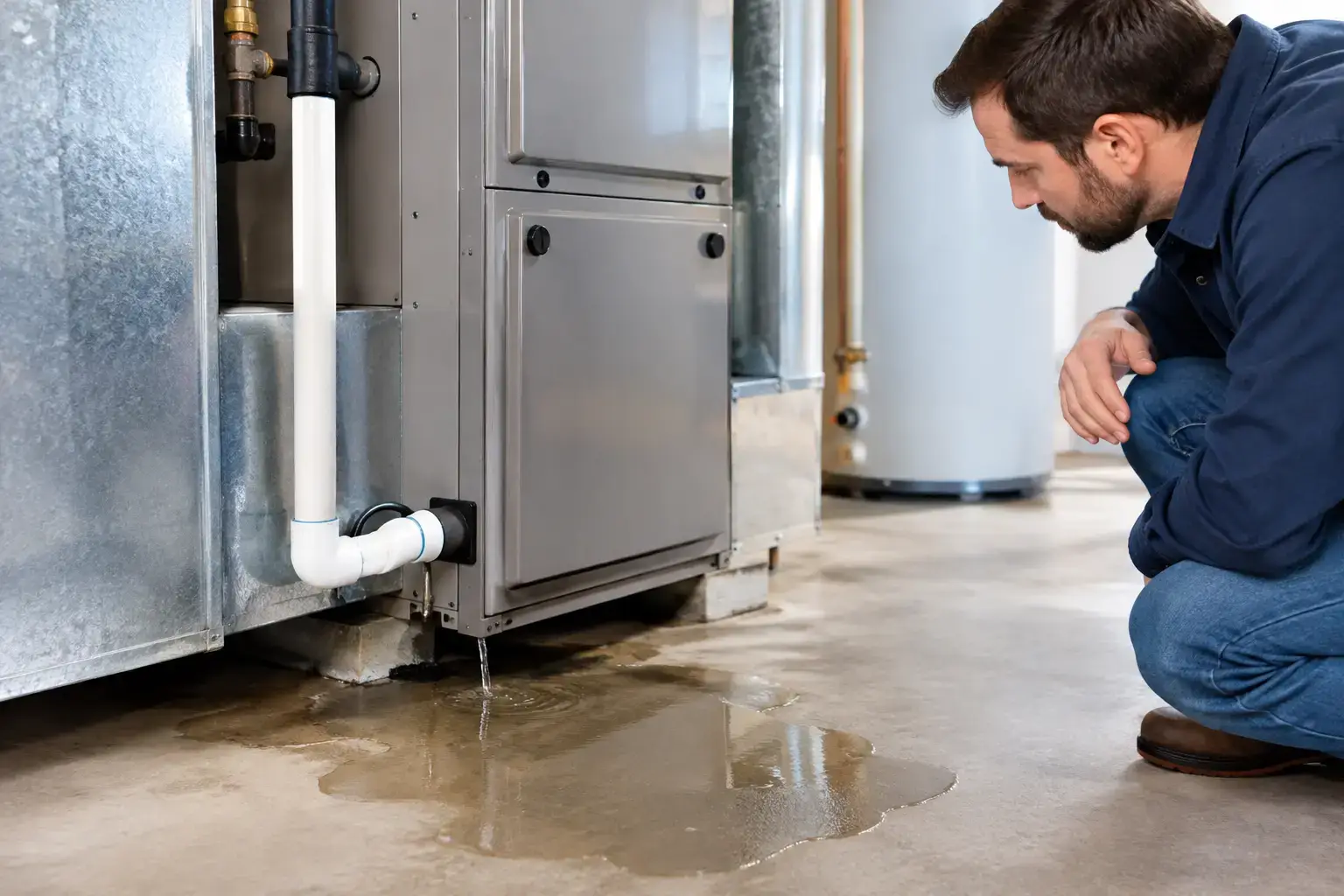
A puddle beside the furnace is not a problem to ignore, even if the heat is still running. If you are asking why furnace leaks water, the answer often comes down to condensate drainage, but the type of furnace and the location of the water matter. A small drain issue may be a practical repair. Water inside the cabinet, repeated leaks, or a furnace that stops heating needs prompt, accurate diagnosis.
Why Furnace Leaks Water Depends on the Furnace Type
A high-efficiency furnace, typically rated at 90% AFUE or higher, naturally produces water during normal operation. These units pull enough heat from combustion gases that the vapor in those gases condenses into liquid. The furnace collects that condensate and routes it through a drain line, often made of PVC, to a floor drain, plumbing connection, condensate pump, or outdoor discharge point.
Water production is normal for this type of furnace. Water leaking onto the floor is not. A blockage, loose connection, cracked drain fitting, or failed pump can stop that water from leaving where it should.
A conventional furnace, usually an 80% efficiency model with a metal exhaust flue, should not create much visible condensate during normal heating. When one leaks water, the source may be an attached humidifier, a leaking air conditioner evaporator drain, a plumbing line nearby, or an exhaust venting issue. That difference is why guessing based on the puddle alone can lead to the wrong repair.
Common Reasons a Furnace Is Leaking Water
A clogged condensate drain or trap
This is one of the most common causes in condensing furnaces. Dust, algae-like growth, sediment, and debris can collect in the condensate trap or drain line. Once the line is restricted, water backs up and may spill from the trap, tubing, collector box, or internal furnace compartment.
The fix is not always as simple as clearing the visible end of the pipe. A technician should confirm the trap is clean, properly installed, and filled as required by the furnace design. They should also verify the drain has proper slope and that no hidden restriction remains downstream.
A failed condensate pump
Many furnaces are installed in basements, crawl spaces, or utility areas without a nearby floor drain. In those cases, a condensate pump lifts water to a suitable drain point. If the pump loses power, its float switch sticks, the discharge tube clogs, or the pump motor fails, the reservoir can overflow.
A pump problem may be obvious when water is pooled around a small plastic tank near the furnace. It can also trigger a safety switch that shuts the furnace down before an overflow gets worse. Replacing a failed pump is usually far more reasonable than replacing an otherwise sound furnace.
A damaged or disconnected drain line
PVC drain fittings and flexible tubing can crack, loosen, or separate. This sometimes happens after a previous service visit, nearby storage is moved, or a line freezes. A line routed outdoors can also freeze during a North Carolina cold snap, sending water back toward the furnace instead of allowing it to drain.
The location of the water offers a clue. Water around a fitting, union, or elbow often points to a drain connection. Water appearing only during extended heating cycles may point to a restriction farther down the line.
A humidifier leak
A whole-home humidifier mounted on or near the furnace can leak from its water supply line, solenoid valve, drain tube, evaporator pad housing, or overflow path. Because humidifiers commonly run during heating season, homeowners understandably assume the furnace itself is leaking.
The repair depends on the failed component. A worn water panel or loose drain tube is a different issue from a leaking valve or a damaged water line. The important part is identifying the actual source before approving work.
An air conditioner drain problem
Your furnace and air conditioner often share the same indoor cabinet. When the AC runs, it removes humidity from indoor air, creating condensate at the evaporator coil above the furnace. A clogged AC drain can drip into or around the furnace, especially during Charlotte’s humid spring and summer weather.
If the water appears while cooling is running but not when heating is on, the AC drain system is the likely place to start. If it appears in winter, a humidifier or condensing-furnace drain is more likely, although schedules and thermostat settings can complicate that picture.
A venting or heat exchanger concern
Condensation in an 80% furnace’s metal flue or chimney connection is not something to brush off. It can result from an improperly sized vent, damaged chimney liner, vent blockage, or combustion issue. Persistent flue condensation can corrode components and may signal that combustion gases are not venting correctly.
This is not a do-it-yourself repair. If you see water near the flue pipe, rust around vent connections, white residue, or a furnace that cycles off unexpectedly, turn the system off and arrange for a qualified HVAC technician to inspect it.
What You Can Safely Check Before Calling
Start by protecting the area. Move boxes, furniture, and electronics away from the water, and dry the floor to reduce slip and flooring damage. If water is approaching wiring, an electrical outlet, or the furnace control area, turn off the furnace at the thermostat and service switch if you can do so without stepping into standing water.
You can look for a loose drain tube, a full condensate pump reservoir, or water coming directly from a humidifier. Avoid removing furnace panels, disconnecting gas lines, or pouring chemicals into a drain. Bleach, drain cleaner, and improvised tools can damage tubing, seals, and internal components while leaving the real blockage untouched.
A few details will help speed up the diagnosis: whether the furnace is heating, whether the AC has been running, where the water first appears, and whether the leak is constant or only happens during a heating cycle. If you smell gas, notice a carbon monoxide alarm, or see water inside the furnace’s electrical compartment, leave the unit off and call for emergency service.
Accurate Diagnosis Prevents Unnecessary Replacement
A water leak does not automatically mean a furnace is at the end of its life. Clogged traps, failed pumps, broken drain tubing, and humidifier leaks are common repair issues. On the other hand, a cracked collector box, corroded internal component, or serious venting defect needs a closer evaluation of repair cost, equipment condition, and safety.
The right recommendation depends on the actual failure, the furnace age, maintenance history, and whether the repair will restore reliable operation. A technician should be able to show you where the water is coming from, explain the repair in plain language, and separate a necessary fix from an optional upgrade. That is the practical approach DDL Services takes: find the real problem first, then recommend the repair that makes sense.
For commercial property operators, this matters even more. A small condensate problem can become ceiling damage, electrical exposure, tenant discomfort, or unexpected downtime if it is allowed to continue. Addressing the drainage issue early is usually less disruptive than waiting for the system to shut down during a cold morning.
Frequently Asked Questions About Furnace Water Leaks
Can I still run my furnace if it is leaking water?
It depends on where the water is coming from and how much is present. A minor drip from a clearly identified condensate pump may not create an immediate safety issue, but continued operation can cause water damage or allow the leak to worsen. Do not run the furnace if water is near electrical controls, if it is leaking inside the cabinet, or if you suspect a venting problem.
Is water from a high-efficiency furnace normal?
Yes, condensate is normal. A high-efficiency furnace is designed to create and drain water as it extracts more heat from combustion gases. The water should travel through a contained drain system, not collect on the floor, drip from the furnace, or back up into the equipment.
Why is my furnace leaking only when it is very cold outside?
Extended run times produce more condensate, which can expose a partially clogged drain or weak condensate pump. In some installations, an outdoor drain line can freeze. Very cold weather can also make venting deficiencies more noticeable. The timing is useful information, but the drain and vent system still need to be inspected.
A furnace leak is easier to solve when it is treated as a diagnostic issue rather than a reason to rush into replacement. Catch the source early, protect the surrounding area, and have the drainage and venting system checked before a small puddle turns into a no-heat call.