

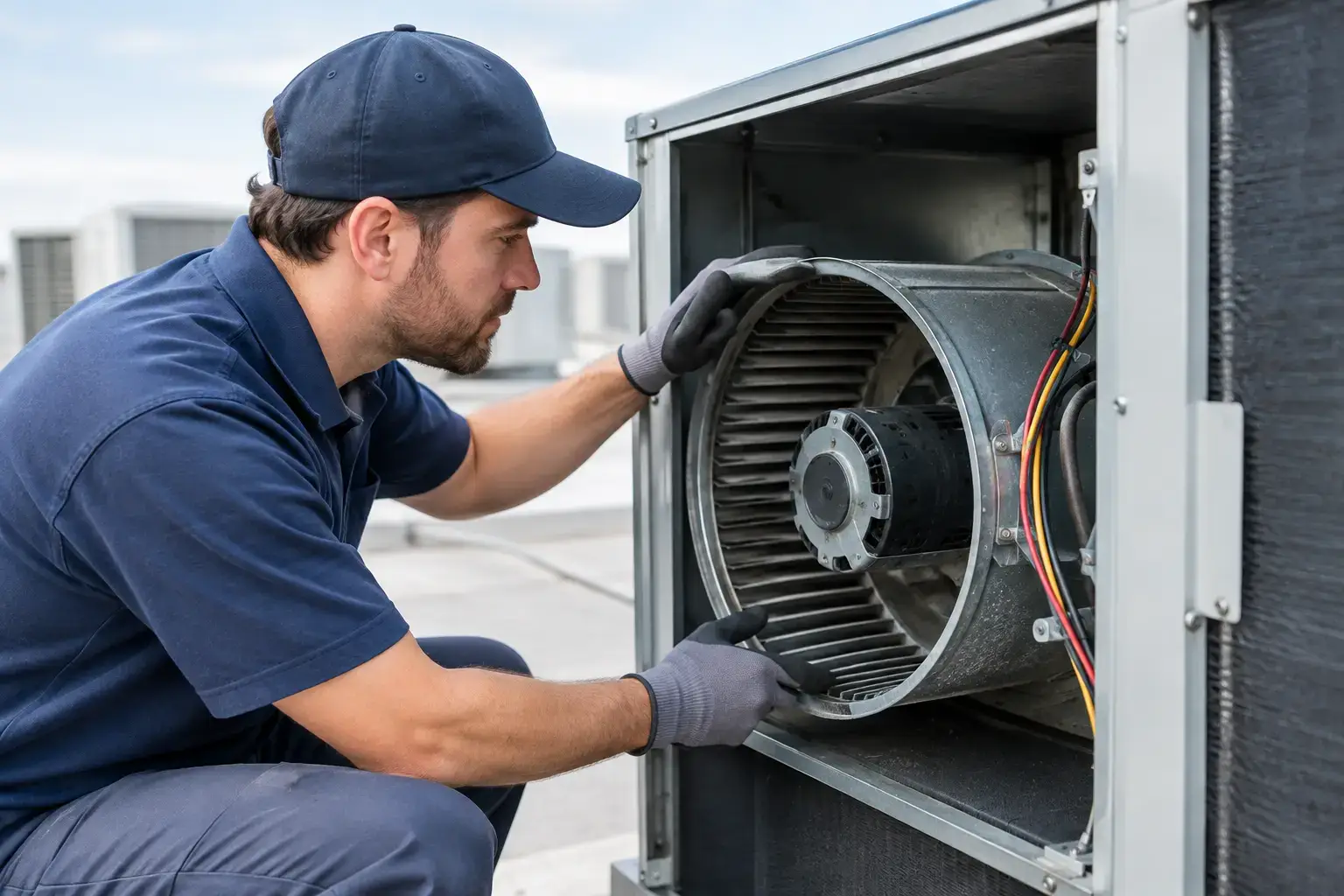
When your thermostat is set correctly but the rooms still feel stuffy, uneven, or barely conditioned, the problem may be moving air rather than making it. The top signs of a failing blower motor often start small: weaker airflow, new noises, or a system that runs longer than it should. Catching the issue early can mean a targeted repair instead of a no-heat or no-cooling call at the worst possible time.
Your blower motor is the part of the indoor HVAC system that pushes heated or cooled air through the ductwork. In a furnace, air handler, or fan coil, it works alongside the blower wheel, control board, capacitor, and other components. A symptom that looks like a bad motor can sometimes come from one of those related parts, which is why accurate diagnosis matters.
Top Signs of a Failing Blower Motor
Airflow is weak at multiple vents
Weak airflow is one of the most common warning signs. You may feel a little air at nearby registers but almost nothing in bedrooms, upstairs rooms, offices, or farther areas of the building. The system may still produce cold or warm air, but it cannot deliver that conditioned air effectively.
Before assuming the motor has failed, check the air filter. A heavily clogged filter restricts airflow and makes the blower work harder. Closed registers, blocked return grilles, crushed ductwork, and a dirty evaporator coil can create similar complaints. If the filter is clean and several vents remain weak, a technician should check motor speed, amp draw, wheel condition, and duct static pressure.
The system runs, but air is not coming out
If you hear the outdoor AC unit running or the furnace firing, but there is little or no air from the supply vents, the indoor blower may not be starting. This can happen when a blower motor fails completely, but it can also point to a failed capacitor, relay, control board, wiring issue, or safety switch.
Do not keep resetting the thermostat or repeatedly cycling power to force the system to start. A motor that is struggling to start can overheat, and repeated attempts can add stress to electrical components. Turn the system off and have the indoor equipment inspected.
You hear grinding, squealing, rattling, or loud humming
HVAC equipment makes normal operating noise, but new mechanical sounds deserve attention. Grinding or scraping may indicate worn motor bearings or a blower wheel that is rubbing its housing. A high-pitched squeal can come from bearing wear or, on older belt-driven systems, a damaged belt. Rattling can mean a loose wheel, loose mounting hardware, or debris inside the blower compartment.
A loud hum with no airflow is another concern. The motor may be receiving power but unable to turn. In some systems, the capacitor is the actual failed component. It is a less expensive repair than replacing a motor, but the only responsible way to know is through testing, not guessing.
The blower turns on and off unpredictably
A blower that starts, stops, and restarts during a normal heating or cooling cycle is not operating as it should. Overheating can cause the motor’s internal safety protection to shut it down temporarily. Once it cools, it may run again. This pattern can leave parts of the home uncomfortable and put added strain on the system.
Restricted airflow is a frequent contributor. A dirty filter, dirty coil, blocked return, or failing motor can all raise operating temperatures. Electrical problems such as a weak capacitor, loose connection, or failing control board may also cause intermittent blower operation. The symptom alone does not justify replacing the entire HVAC system.
Your utility bills rise without a clear reason
A blower motor that is wearing out may draw more electricity or run longer to move the same amount of air. You might notice that the AC seems to run all afternoon without cooling the home evenly, or that heat cycles last longer while certain rooms stay chilly.
Higher bills have many possible causes, including duct leakage, refrigerant issues, poor insulation, thermostat problems, and outdoor unit trouble. Still, airflow should be part of the diagnostic process. A technician can measure electrical amp draw and airflow performance to determine whether the blower assembly is contributing to the higher operating cost.
There is a burning smell or the cabinet feels unusually hot
A hot electrical smell, melted-plastic odor, or unusually warm furnace or air-handler cabinet requires prompt attention. Shut the system off at the thermostat if it is safe to do so, and do not continue operating it until it has been checked. Overheating motors, damaged wiring, and failing electrical parts can create fire and equipment-damage risks.
A dusty smell during the first heating cycle of the season can be normal and short-lived. A persistent burning odor is different. It is not a symptom to wait out.
The blower only works on one speed
Many modern systems use multi-speed or variable-speed blower motors. If airflow seems stuck too high, too low, or inconsistent between heating and cooling modes, the motor may not be receiving the proper speed command. The issue could be the motor module, control board, wiring, or thermostat setup.
Variable-speed equipment is especially worth diagnosing carefully. These systems can provide better comfort, humidity control, and efficiency when working correctly, but they use more specialized electronics than a basic single-speed motor. Replacing parts based only on a noise or airflow complaint can be expensive and unnecessary.
What a Proper Blower Motor Diagnosis Should Include
A blower motor is not diagnosed by sound alone. A careful HVAC inspection starts with the basics: filter condition, thermostat operation, return-air restrictions, visible wiring, and the blower wheel. The technician should then test the components that control and support the motor.
That process may include checking voltage at the motor, capacitor performance on applicable systems, motor amp draw, wheel balance, control signals, and overall static pressure. Static pressure testing is valuable because it shows whether the duct system and air path are making the motor work too hard. Installing a new motor without correcting severe airflow restriction can shorten the life of the replacement.
For commercial spaces, the stakes can be higher. Poor airflow can make customer areas uncomfortable, create hot and cold zones for employees, and increase operating costs. A practical diagnosis helps facility managers make a repair decision based on the actual failure, not a broad recommendation to replace equipment that may still have useful life.
When a Repair Makes Sense and When Replacement May Be Smarter
In many cases, a failed blower motor can be repaired by replacing the capacitor, tightening a connection, correcting a control issue, or replacing the motor itself. Those are legitimate repairs when the rest of the system is in sound condition.
Replacement becomes a more reasonable conversation when the HVAC system is near the end of its expected service life, has multiple major failures, uses obsolete parts, or has an expensive motor failure alongside a failing compressor or heat exchanger. Even then, the decision should be clear. You deserve to know what is broken now, what the repair will address, and why replacement is or is not the better value.
Do not confuse a blower motor problem with proof that your whole AC or furnace must be replaced. Real HVAC solutions start with finding the root cause.
What You Can Check Before Calling for Service
There are a few safe checks homeowners and property managers can make. Confirm the thermostat is set to the correct mode and temperature, make sure the breaker has not tripped, and replace a visibly dirty filter with the correct size and type. Check that return grilles and supply vents are open and not blocked by furniture, boxes, or rugs.
Avoid opening electrical compartments or trying to spin the blower wheel by hand while power is connected. Motors, capacitors, and control boards involve electrical hazards, and a small mistake can cause injury or more damage. If there is a burning smell, loud mechanical noise, no airflow, or repeated shutdowns, turn the system off and schedule professional service.
A blower problem rarely gets more convenient with time. Addressing weak airflow or unusual sounds while the system still runs gives you the best chance to make a focused repair, protect comfort, and avoid being left without heating or cooling when you need it most.