

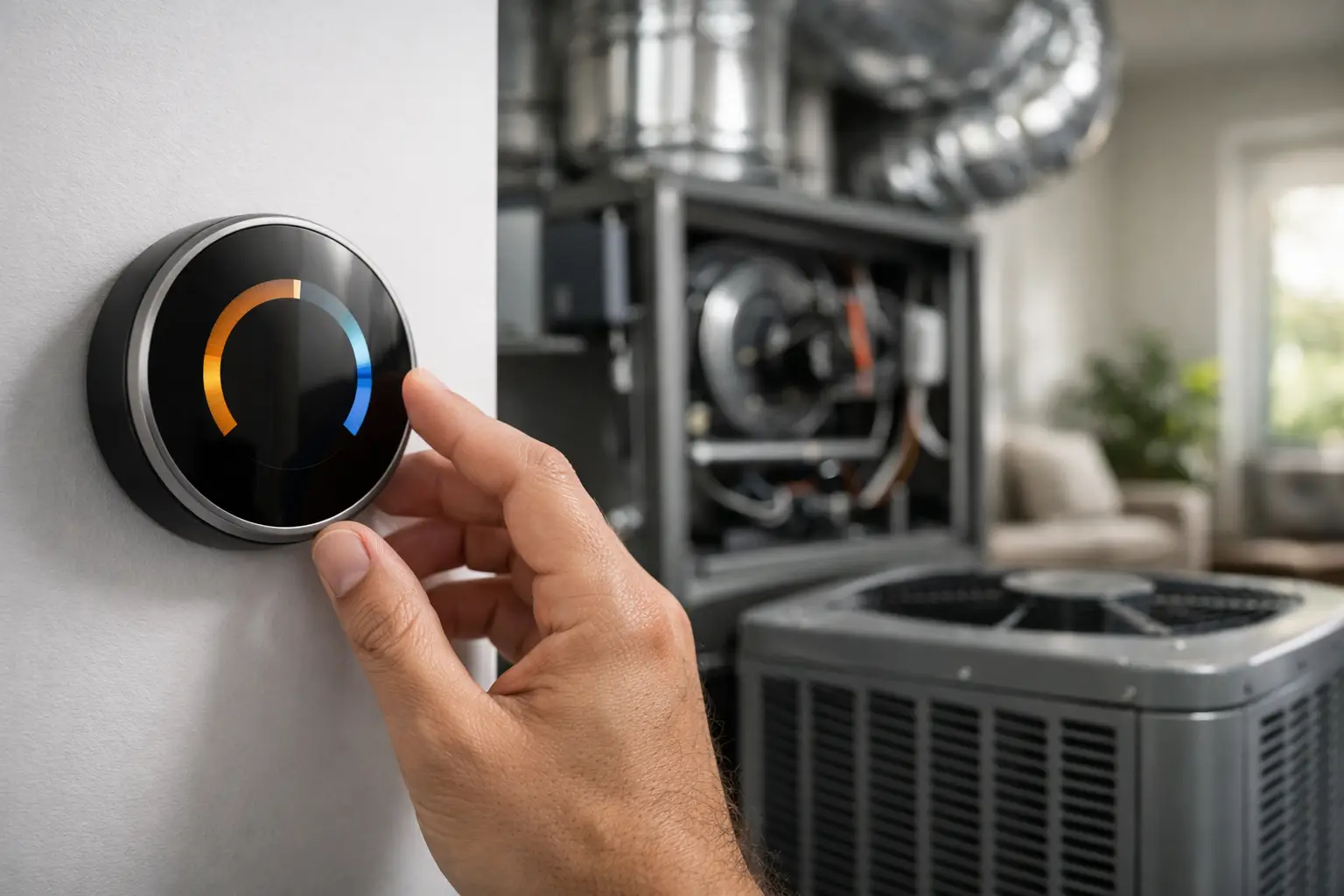
A thermostat can make a good HVAC system feel better – or make a good system act worse. That is why a smart thermostat review for HVAC systems should focus on more than app features and glossy screens. The real question is whether the thermostat works properly with your equipment, your schedule, and the way your home or building actually operates.
A lot of homeowners buy a smart thermostat expecting lower utility bills right away. Sometimes that happens. Sometimes it does not. If the thermostat is set up wrong, wired wrong, or paired with equipment it cannot control correctly, you can end up with comfort problems, short cycling, or poor humidity control. That is not a thermostat problem alone. It is usually a matching and setup problem.
What a smart thermostat should actually do
At its best, a smart thermostat gives you better control without making the system work harder than it should. It should keep temperatures more consistent, let you adjust settings remotely, and help reduce waste when no one is home. For many families and small business owners, that added control is the real benefit, not just the promise of savings.
The best models also provide useful runtime data, maintenance reminders, and scheduling that adapts to your routine. Those features can help, especially if your current thermostat is basic or outdated. But there is a limit. A thermostat cannot fix airflow problems, low refrigerant, dirty coils, duct leaks, or equipment that was oversized or undersized from the start.
That matters because some people try to solve an HVAC performance issue by replacing the thermostat first. It is a reasonable guess, but not always the right one. If one room stays hot, your system runs nonstop, or humidity stays high, the thermostat may not be the root cause.
Smart thermostat review for HVAC: what matters most
If you strip away the marketing, four things matter most in a smart thermostat review for HVAC equipment: compatibility, control logic, ease of use, and installation quality.
Compatibility comes first. Not every thermostat works with every system. Standard single-stage systems are usually straightforward. Things get more complicated with heat pumps, dual-fuel systems, multi-stage equipment, variable-speed systems, and commercial applications with more advanced controls. A thermostat can look impressive on the shelf and still be the wrong choice for the equipment on the wall.
Control logic matters just as much. Some thermostats are better at managing temperature swings, staging, and recovery times. Others tend to chase setpoints too aggressively. That can lead to frequent cycling, which adds wear and can make comfort worse instead of better.
Ease of use sounds simple, but it is often overlooked. If the app is confusing or the schedule is hard to adjust, people stop using the features they paid for. In real homes, the best thermostat is often the one that is simple enough for everyone in the household to operate without frustration.
Installation quality is the final piece, and it is the one that gets ignored most often. Even a top-rated smart thermostat can underperform if the wiring, programming, or equipment settings are wrong.
The strengths of smart thermostats
For the right system, a smart thermostat can be a solid upgrade. Remote access is one of the biggest advantages. If you are out of town, coming home early, or managing a small commercial property, being able to adjust temperatures from your phone is genuinely useful.
Scheduling is another clear plus. Older manual thermostats depend on someone remembering to change settings. Smart models let you set weekday and weekend routines, and some learn usage patterns over time. That can cut unnecessary runtime, especially in households where everyone leaves for work and school during the day.
Some thermostats also provide maintenance alerts and filter reminders. Those features are not complicated, but they help keep small issues from being ignored. For business owners, usage reports can also help spot patterns, such as a unit running longer than expected after hours.
Then there is integration. If you already use smart home controls, lighting, or occupancy routines, a thermostat can fit into that setup. That is convenient, though it should be a bonus, not the main reason to buy one.
Where smart thermostats fall short
This is where an honest review matters. Smart thermostats are not automatic money savers in every building. If your schedule is already consistent and you already use a programmable thermostat properly, the savings may be modest.
They can also create problems when homeowners choose based on brand popularity instead of HVAC compatibility. A system with multi-stage heating and cooling needs a thermostat that can control those stages correctly. A heat pump needs proper auxiliary heat setup. If those details are wrong, comfort and efficiency suffer.
There is also the issue of Wi-Fi dependence. Most units still work at a basic level without internet, but many advanced features depend on a stable connection. If your network is unreliable, part of the product value disappears.
Privacy is another fair concern. Usage data, occupancy patterns, and app-based control all involve connected technology. Some customers are comfortable with that. Others prefer a simpler control that does not depend on cloud features.
Best fit: who should consider one
A smart thermostat usually makes the most sense for homeowners who have irregular schedules, travel often, manage a second property, or want tighter day-to-day control over comfort. It can also be a good fit for small offices, retail spaces, and light commercial buildings where staff hours are predictable and after-hours setbacks can be managed carefully.
If your current thermostat is old, inaccurate, or limited, upgrading can improve usability right away. And if your HVAC system is relatively modern and properly installed, the thermostat has a better chance of delivering the benefits people expect.
On the other hand, if your system already struggles to maintain temperature, has airflow issues, or needs repair, a thermostat upgrade should not be the first move. Fix the operating problem first. Controls work best when the equipment itself is working the way it should.
Installation and compatibility are not side issues
A lot of online thermostat reviews focus on packaging, app design, and how quickly the screen responds. Those things matter, but they are secondary. The bigger issue is whether the thermostat is correctly matched to your HVAC system and configured for how that system is supposed to run.
For example, some homes do not have the wiring needed for every smart thermostat feature. Some systems need a common wire. Some need special setup for heat pump reversing valves, staging, or fan operation. In commercial settings, the control setup may be even more specific.
This is also why DIY installation is hit or miss. If you are replacing a simple thermostat on a standard system and you understand the wiring, it may go fine. If the system is more complex, guessing can get expensive fast. Miswiring can damage equipment, disable stages, or leave backup heat running when it should not.
An honest HVAC contractor should tell you if a smart thermostat is a good fit, if a simpler thermostat would do the job just as well, or if the real problem has nothing to do with the control on the wall. That is the kind of conversation people actually need.
Smart thermostat review for HVAC buyers in North Carolina
In the Charlotte area, thermostat performance is tied closely to both summer humidity and winter heating demands. That means comfort is not just about hitting a temperature number. It is also about how the system cycles, how long it runs, and whether the thermostat is helping or hurting indoor conditions.
For many North Carolina homes, a smart thermostat can help reduce wasted runtime and improve schedule control. But if the setup pushes the system to recover too aggressively, or if the equipment is not configured correctly, you can lose some of the comfort benefit. This is especially true with heat pumps, which are common in the region.
That is why the best thermostat is not always the most expensive or the one with the most features. It is the one that fits the equipment, the home, and the people using it. A good contractor should be able to explain that without turning the conversation into a sales pitch. That practical approach is exactly how DDL Services looks at HVAC upgrades in the field.
Final take
If you want a straight answer, smart thermostats are worth considering when they solve a real need – better scheduling, remote access, clearer control, or improved day-to-day convenience. They are not a cure-all, and they should never be used to paper over a bigger HVAC problem. Get the equipment checked, confirm compatibility, and choose a control that matches how your system actually runs. A thermostat should make your HVAC system easier to live with, not harder to diagnose later.