

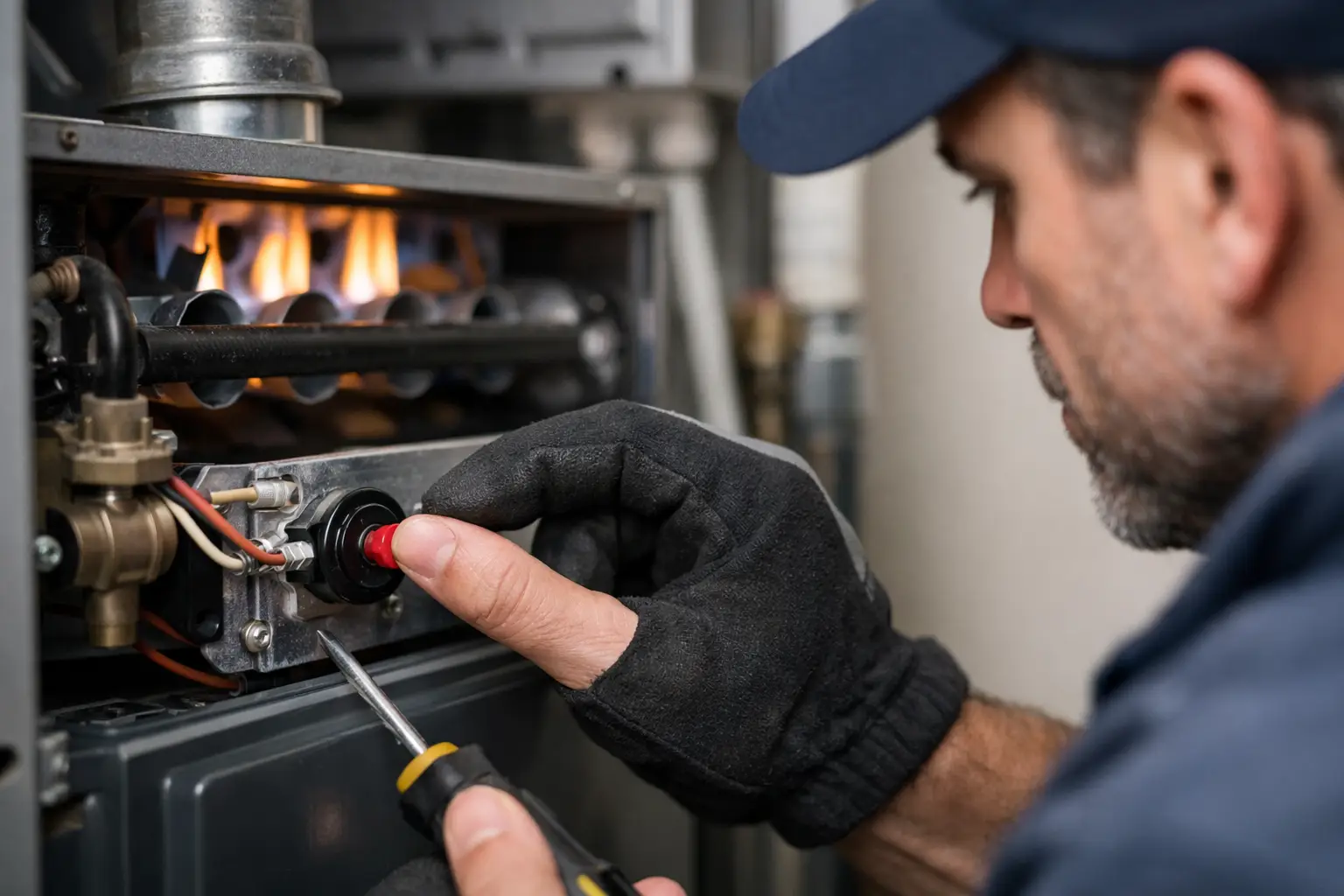
A furnace that shuts down on a cold Charlotte-area night can be stressful. If you are trying to reset a tripped furnace limit, start with one fact: the limit switch is a safety control, not the cause of the problem. Resetting it may get the furnace running temporarily, but it will not fix the airflow, venting, blower, or control issue that made the furnace overheat.
A one-time reset can be reasonable in limited circumstances. Repeatedly resetting a furnace safety switch is not. If the switch trips again, the furnace is telling you it needs a proper diagnosis.
What a Furnace Limit Switch Does
The high-limit switch monitors furnace temperature. When heat builds beyond a safe operating range, it shuts off the burners or gas valve to prevent damage to the heat exchanger and other components. The blower may continue running to cool the furnace down.
Many high-limit switches reset automatically once the furnace cools. Some safety switches, including certain rollout switches near the burners, have a small manual-reset button. These switches are not interchangeable, and that distinction matters.
A manual-reset rollout switch can trip because flame or combustion gases are leaving the burner area where they do not belong. That can point to a serious issue such as a blocked vent, burner problem, cracked heat exchanger, or failed inducer-related component. Do not keep resetting a rollout switch. Turn the furnace off and arrange professional service.
Before You Reset a Tripped Furnace Limit
First, turn the thermostat to Off. Shut off power to the furnace at its service switch or the circuit breaker, then give the unit time to cool. If you smell gas, see soot, notice scorch marks, hear a booming ignition, or have a carbon monoxide alarm sounding, leave the building if necessary and contact the appropriate emergency service. Do not attempt a reset.
Once the furnace is cool, check the easy airflow restrictions. A severely clogged filter is one of the most common reasons a furnace overheats. Replace it with the correct size and type if it is dirty. Do not install an extra-restrictive filter just because it has the highest rating on the shelf. Some furnaces struggle with dense filters unless the duct system and blower are designed for them.
Make sure supply registers are open and unobstructed. Check that return grilles are not covered by furniture, rugs, boxes, or closed doors. A furnace needs enough return air to move heat through the system. Closing off rooms to save money often has the opposite effect: reduced airflow can raise furnace temperature and make the system less reliable.
If you recently had work done, consider whether anything changed. A new filter type, closed vents, a blocked return, or thermostat changes can affect operation. Still, do not assume the filter is the answer simply because it was dirty. A technician should verify why the safety switch opened, especially if the furnace has tripped more than once.
How to Reset a Furnace Limit Switch Safely
After checking for obvious airflow problems, restore power and set the thermostat to Heat. If your furnace uses an automatic high-limit switch, there may be no button to press. The switch should close on its own after the furnace cools and the underlying condition is corrected.
If you have confirmed that the furnace has a manual-reset safety switch and there are no signs of a combustion or electrical problem, press the reset button once only. It is usually a small button located on the switch body inside the furnace cabinet, but locations vary by model. Do not bypass the switch, tape wires together, or hold the button in. Those actions remove a critical safety protection.
Replace the furnace panel securely before operating the unit. Most furnaces have a door safety switch and will not run correctly with the panel loose or removed. Then watch one normal heating cycle. The burners should ignite smoothly, the blower should start after its normal delay, and warm air should move steadily from the registers.
If the furnace shuts down again, the burners cycle off quickly, or the blower runs continuously with no heat, stop resetting it. Turn the thermostat off and schedule service. One reset is a troubleshooting step. Two or more resets without diagnosis can risk further damage.
Why Furnace Limits Trip in the First Place
Restricted airflow is common, but it is not the only answer. A dirty evaporator coil, even during heating season, can restrict airflow through many shared HVAC systems. A weak or failing blower motor, worn blower wheel, incorrect blower speed, failing run capacitor, or damaged ductwork can also keep enough air from moving across the heat exchanger.
Oversized equipment or incorrect gas input can create excess heat faster than the blower can carry it away. On older furnaces, a dirty flame sensor may cause a different type of shutdown that can be mistaken for a limit issue. A qualified technician reads the furnace fault code, checks temperature rise, measures static pressure, confirms blower performance, and verifies combustion and venting rather than guessing.
A blocked intake or exhaust pipe can be especially relevant on high-efficiency furnaces. Leaves, insect nests, ice, damaged piping, or improper termination can interfere with safe operation. Conventional furnaces may have chimney, draft, or vent connector problems that require prompt attention. These are not homeowner reset situations.
When a Furnace Limit Problem Is an Emergency
Not every high-limit trip is an after-hours emergency. A dirty filter that caused one shutdown, with no odor or unusual operation, may be resolved safely after replacement and a normal cycle. But some warning signs should move the problem to the top of the list.
Call for prompt professional help if you notice any of the following:
- A carbon monoxide alarm, gas odor, soot, smoke, or visible scorching around the furnace
- A manual-reset rollout switch that has tripped
- Burners that roll out, roar, ignite with a bang, or produce unstable flames
- Repeated limit trips after a clean filter and open registers
- Water around the furnace, damaged vent piping, or a furnace that will not stay on
For commercial spaces, repeated furnace lockouts can also affect occupants, inventory, pipes, and business operations. Avoid the temptation to keep cycling power just to get temporary heat. A documented diagnosis is usually faster and less expensive than turning a manageable airflow or ignition repair into major equipment damage.
What a Technician Should Check
Honest furnace repair starts with testing the system, not treating every safety trip as a reason to sell a new furnace. The technician should inspect the filter, duct system, blower assembly, coil condition, electrical components, thermostat operation, temperature rise, pressure conditions, and venting. If a rollout switch has opened, combustion and heat exchanger conditions need careful evaluation.
The right repair depends on the findings. It could be as straightforward as correcting a blower setting, replacing a weak capacitor, cleaning a restricted component, or repairing damaged ductwork. In other cases, an aging furnace may have a failed heat exchanger or multiple costly issues that make replacement the safer choice. The difference is that replacement should follow clear evidence, not a vague claim that the furnace is old.
Prevent the Next Furnace Limit Trip
Use the filter size and replacement schedule recommended for your system, and check it more often during heavy heating and cooling use. Keep return grilles and supply vents clear. Schedule routine maintenance before winter so blower performance, safety controls, combustion, and venting can be checked under controlled conditions.
If your furnace has tripped a limit switch, treat the reset as a warning light, not a repair. DDL Services can identify the actual reason the safety opened and explain the practical next step, whether that is a targeted repair, maintenance correction, or a replacement recommendation supported by the condition of the system.