

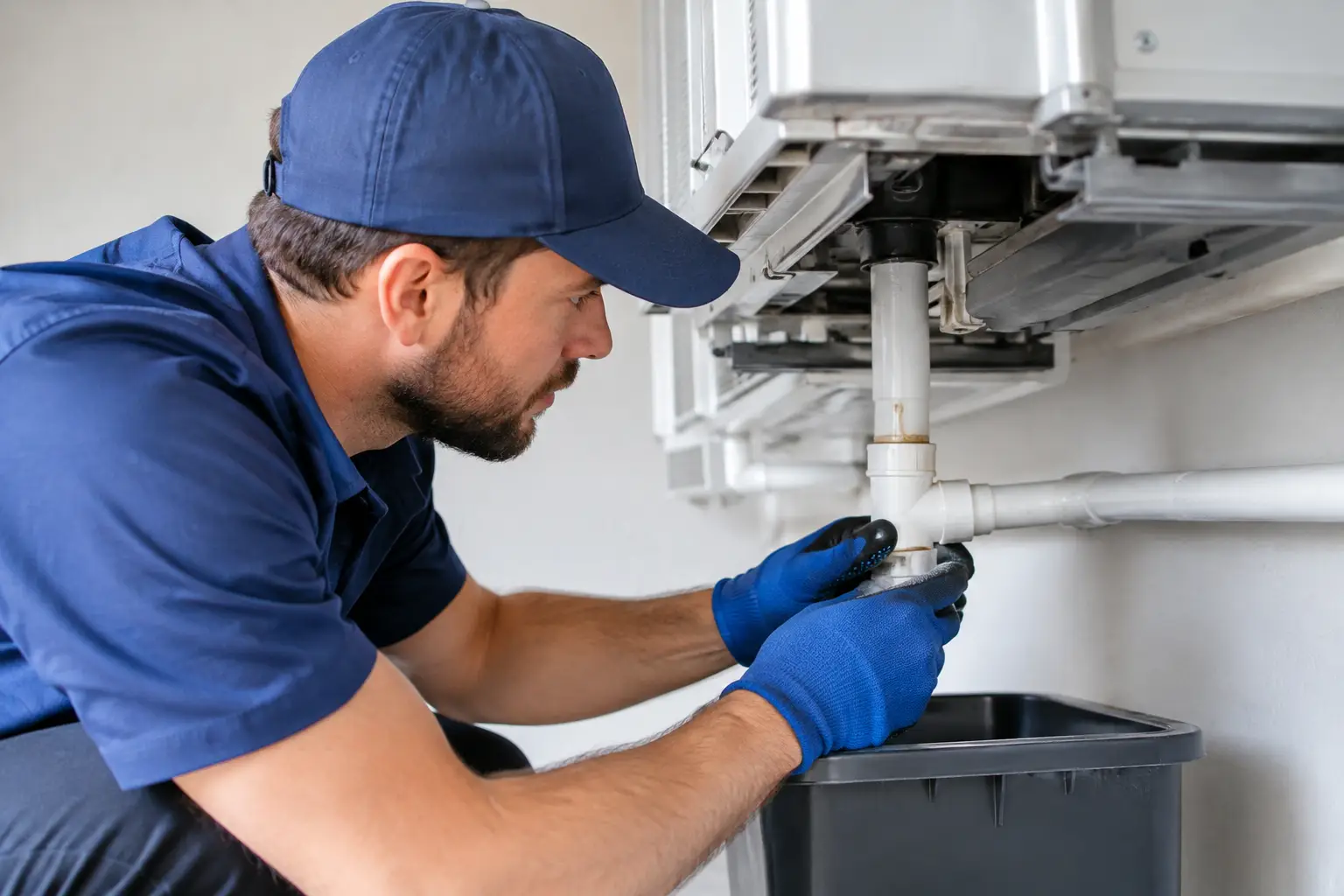
A puddle near an indoor air handler is easy to dismiss as a minor leak. It is often the first sign of condensate drain issues, and ignoring it can lead to ceiling damage, mold growth, damaged equipment, or an air conditioner that shuts down when Charlotte heat is at its worst.
Your AC naturally creates water as it removes humidity from indoor air. That water has to leave the system through a small drain line. When the line, trap, pump, or safety switch has a problem, the water backs up. The right repair depends on why it is backing up. A clogged line is common, but it is not the only possible cause.
How the condensate drain system works
Inside your indoor unit, warm household air passes over a cold evaporator coil. Moisture in that air condenses on the coil, much like water forming on a cold glass. A drain pan catches the water and directs it into a condensate line, usually PVC pipe, which carries it to an approved drain location outside or near a plumbing drain.
Many systems also have a P-trap. The trap creates the proper water seal so the unit can drain correctly while the blower is running. Some systems, especially where gravity drainage is not possible, use a condensate pump. Most newer installations also include a float switch that turns the system off if water reaches an unsafe level.
That shutoff can feel inconvenient, but it is doing its job. It is far better for an AC system to stop cooling than for water to overflow into an attic, closet, crawlspace, or commercial ceiling.
Common condensate drain issues and what causes them
A clogged drain line
Algae, mildew, dust, pet hair, and sludge can build up in a drain line over time. North Carolina’s long cooling season and humidity give that buildup plenty of opportunity to develop. As the opening narrows, water drains more slowly until it backs up into the pan.
A technician may clear the line with the proper equipment, flush it, and confirm that it drains freely from the unit to the termination point. Simply pouring a household chemical into the pipe may not remove a heavy blockage and can create problems for certain components. The goal is to clear the obstruction, not just push it farther down the line.
A dirty evaporator coil or filter
A neglected air filter does more than reduce airflow. Dirt can accumulate on the coil, and poor airflow can cause the coil to freeze. When that ice melts, the system may release more water than the drain pan and line can manage, especially if there is already partial blockage.
If your system has ice on the refrigerant line, visible frost at the indoor unit, or weak airflow from vents, the drain problem may be a symptom rather than the root cause. The system needs a real diagnosis that checks airflow, coil condition, refrigerant performance, and drainage together.
A cracked or rusted drain pan
Primary drain pans can crack, corrode, or shift out of position. Older systems are more likely to have this issue, but installation errors can affect newer equipment too. Water may leak even when the drain line is open because it never reaches the line properly.
An auxiliary pan under an attic air handler can also rust through. This is one reason attic systems deserve regular maintenance. By the time water stains show on a ceiling, the problem may have been developing for a while.
A failed condensate pump
A condensate pump collects water in a small reservoir and pumps it up and out through tubing. If the pump loses power, its float sticks, the discharge tube clogs, or the motor fails, water has nowhere to go. You may hear the pump humming without moving water, or you may notice that it never turns on.
Pump replacement is sometimes the sensible repair. But the pump should be tested before it is condemned. A blocked discharge tube or failed safety switch can look a lot like a bad pump.
An improperly installed drain line or trap
Drain lines need the correct slope, connections, support, and trap configuration. A line that sags can hold standing water and collect debris. A line with poor pitch may drain slowly. An incorrectly sized or missing trap can cause drainage trouble because air pressure inside the system works against the water flow.
These problems are not always obvious from the outside. Repeated clogs, persistent water in the pan, or a line that only drains when the system is off can point to an installation issue. Clearing the line may provide short-term relief, but correcting the piping may be the lasting fix.
Warning signs you should not ignore
Water near the indoor unit is the clearest warning, but not the only one. Watch for musty odors when the AC runs, water stains around ceilings or walls, a tripped float switch, or an AC that suddenly stops while the thermostat still calls for cooling.
In a business, a stained ceiling tile, water near equipment, or a cooling unit that cycles off can disrupt more than comfort. Acting early helps avoid damage to inventory, finishes, electrical components, and occupied spaces.
A drain issue can also be hidden. If you see a steady drip from the exterior drain outlet while the AC is running, that is usually normal. If you never see drainage during humid weather and your system has a history of leaks or shutoffs, it is worth having the line inspected.
What you can safely check first
Start by turning the system off if water is actively leaking around the indoor equipment. Continuing to run it can overflow the pan and worsen property damage. Check the air filter and replace it if it is visibly loaded with dust. Make sure supply vents are open and unobstructed.
If your indoor unit has an accessible drain cleanout, you can look for obvious standing water. Avoid taking apart electrical panels, bypassing a float switch, or using compressed air without knowing where the line terminates. Too much pressure can separate glued fittings, force debris into an inaccessible section, or send water where it does not belong.
Do not assume bleach is the answer. Some homeowners use it as a preventive measure, but the right treatment and frequency depend on the drain material, the system layout, and the manufacturer’s recommendations. If a line is already blocked, a chemical rinse alone is rarely a dependable repair.
When to call for HVAC service
Call for service if water is leaking from the unit, the AC stops because of a float switch, the line clogs repeatedly, or you suspect a frozen coil. Those conditions need more than a quick cleanup. A qualified technician should verify drain flow, inspect both pans, test the float switch or pump, check the trap, and look for the reason the problem developed.
This is where honest diagnosis matters. Not every leak means you need a new air conditioner. A clogged drain line, failed pump, damaged pan, or installation correction can often be repaired. On the other hand, if an aging system has repeated coil problems, corrosion, and costly component failures, it is reasonable to discuss replacement after the facts are clear.
Preventive maintenance is the practical middle ground. During a tune-up, the drain system can be inspected and cleaned before a small buildup becomes an emergency shutdown. DDL Services approaches these calls by finding the actual cause first, then explaining the repair options plainly.
A clean, properly draining system protects more than your comfort. If you notice water, odors, or an unexplained AC shutdown, address it before a simple drainage problem becomes a repair to your home or business.