

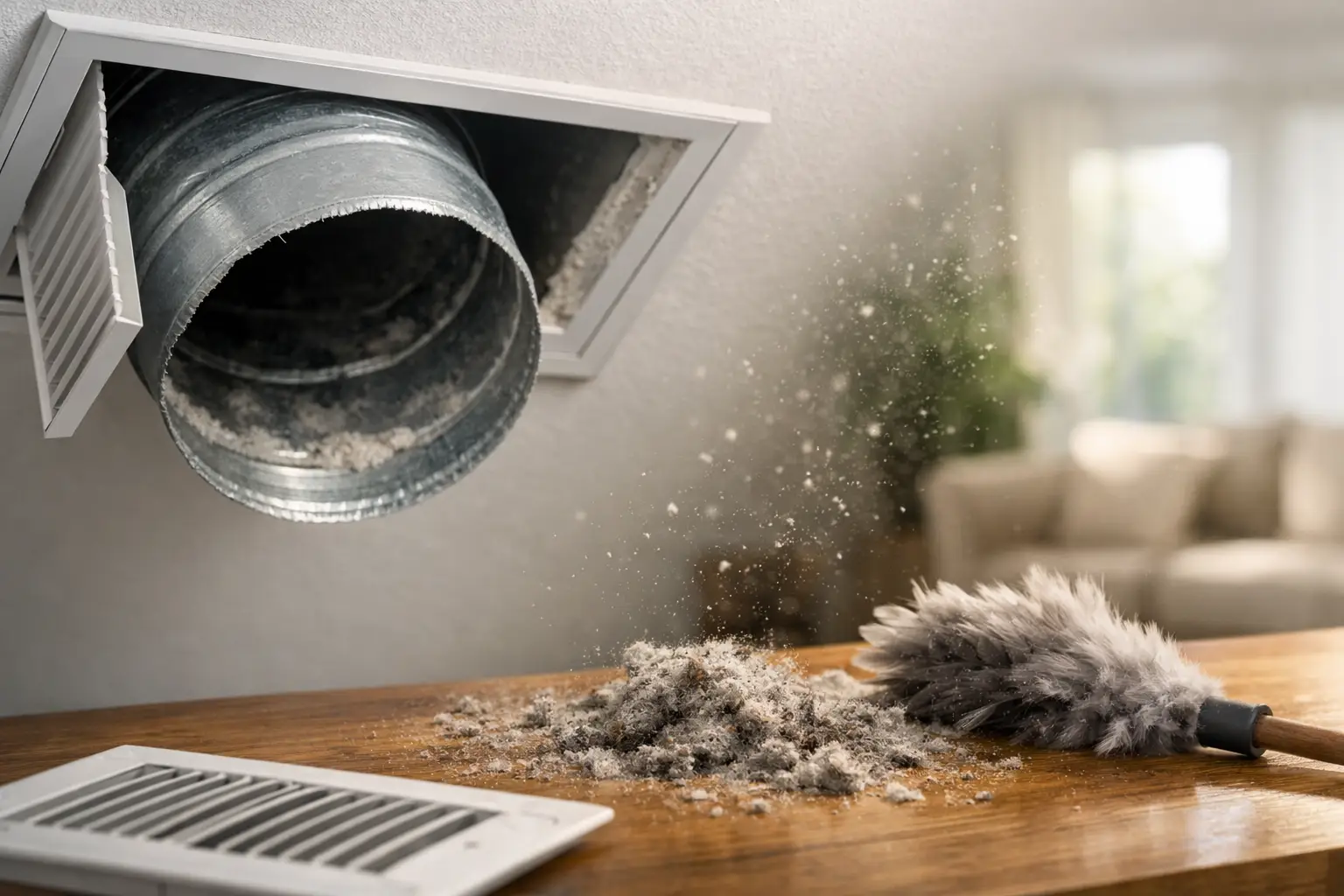
If you dust the furniture on Saturday and see a new layer by Tuesday, the HVAC system is an understandable suspect. So, can HVAC ducts cause dust? Yes, but ductwork is often the pathway that moves dust through a home, not the original source. The right fix depends on why dust is getting into the system and whether the system is filtering it effectively.
For Charlotte-area homes, that distinction matters. Pollen, red clay, attic insulation, crawlspace debris, pet dander, and normal household fibers all have ways of finding their way indoors. A company that immediately recommends duct cleaning or equipment replacement without checking the system first may miss the real problem.
Can HVAC Ducts Cause Dust? Sometimes.
Ducts can contribute to dusty rooms in several ways. The most common is a leak in return ductwork. Return ducts pull air back to the air handler to be cooled or heated. If a return has gaps, loose connections, torn flex duct, or failed duct tape in an attic, crawlspace, or garage, it can pull in unfiltered air from those spaces.
That means insulation fibers, construction dust, attic debris, or crawlspace particles can enter the HVAC system before they ever reach the filter. The system then distributes some of that material throughout the house. In this situation, cleaning the ducts alone may make things look better briefly, but the dust will return until the leak is sealed.
Supply duct leaks can also create problems, though differently. Leaky supply ducts waste conditioned air in unconditioned spaces and can change pressure inside the home. Those pressure changes may pull outdoor air and dust in through gaps around doors, windows, recessed lights, or attic access points.
Ducts may also hold a buildup of dust, especially in an older home, after a renovation, or when a filter has been neglected for a long time. Normal airflow does not usually turn every bit of settled duct debris into airborne dust. But a disturbed duct, a loose connection, a dirty blower, or strong airflow changes can send some particles back into the living area.
Signs Ductwork May Be Part of the Problem
Dust alone does not prove the ducts are at fault. Look for patterns. If one room gets dusty faster than the rest, has weak airflow, or smells musty when the system starts, that branch duct or its connection deserves attention. Dust collecting around supply registers can also point to leakage, dirty registers, or air being pulled from wall cavities through gaps around the boot.
A sudden dust problem after roof work, attic work, flooring replacement, drywall repairs, or a remodel is another clue. Construction dust is extremely fine and can travel through open returns or gaps around the indoor unit. If someone removed a filter during work, used the wrong filter size, or ran the system while sanding drywall, the blower compartment and evaporator coil may also be dirty.
In homes with ducts in a crawlspace or attic, visible damaged insulation, disconnected flex duct, crushed runs, and loose return boxes are worth investigating. These issues affect more than cleanliness. They can reduce comfort, raise utility costs, and make the system work harder than it should.
The More Common Reasons Your House Is Dusty
Before blaming the ducts, check the basics. A filter that is overdue for replacement, installed backward, or too small for its rack can let particles bypass it. The filter should fit snugly. Even a good filter cannot do its job if air can slip around the edges.
Filter selection also involves a trade-off. A higher-efficiency filter can capture more small particles, but one that is too restrictive for the equipment can reduce airflow if the system was not designed for it. Low airflow can contribute to comfort problems, frozen AC coils, and extra strain on the blower. The best filter is not automatically the most expensive one. It is the one that fits correctly and matches the system’s airflow capacity and your household needs.
Dust can also come from ordinary daily activity. Pets, bedding, upholstered furniture, carpeting, cooking, open windows, shoes, and frequent door traffic all add particles to indoor air. During high-pollen periods or dry weather, a home can become dusty quickly even when the HVAC system is operating normally.
Air leaks in the home itself are another frequent source. Gaps around attic hatches, plumbing penetrations, recessed lighting, and exterior doors can allow dusty outside or attic air to enter. If the home has pressure imbalances caused by closed interior doors, undersized return paths, or duct leakage, those small openings become more significant.
Why Duct Cleaning Is Not Always the First Answer
Professional duct cleaning can be useful in the right situation. It may be reasonable after major renovation work, evidence of pests in the ducts, substantial visible debris, or a long period of poor filtration. It can also be part of correcting a system that has been neglected for years.
But duct cleaning does not repair disconnected ductwork, stop filter bypass, seal a leaky return, or correct a dirty blower wheel. It will not solve ongoing dust from open windows, unsealed attic penetrations, or a home that needs better housekeeping and filtration practices. Treating every dust complaint with duct cleaning is like washing a floor without fixing the roof leak above it.
There is also a workmanship issue. Aggressive cleaning methods can damage aging flex duct, loosen poorly supported connections, or create new leaks if the contractor is not careful. The duct system should be inspected before anyone decides cleaning is necessary.
What a Practical HVAC Dust Diagnosis Looks Like
A useful diagnosis starts at the filter and indoor unit. A technician should check whether the filter fits, whether the rack has bypass gaps, and whether the blower compartment shows signs of dust getting past the filter. The condition of the evaporator coil matters too. A dirty coil can restrict airflow and reduce cooling performance.
Next comes the duct system. The goal is to identify loose or disconnected ducts, damaged flex duct, poorly sealed return connections, gaps at duct boots, and insulation issues. In accessible attics and crawlspaces, these problems are often visible. In harder-to-reach systems, airflow testing and a careful review of room-by-room comfort can help narrow down the likely cause.
The home should also be considered as a whole. If dust is worst near a particular exterior door, attic hatch, or room with a closed door, the source may be outside the ductwork. Honest HVAC service means separating what the system can fix from what requires air sealing, cleaning, or building repairs.
Steps You Can Take Before Scheduling Service
Start by checking your filter. Make sure it is the correct size, seated properly, and replaced on the schedule recommended for your home. A household with pets, allergies, or heavy system use may need more frequent changes than a lightly occupied home.
Vacuum supply and return register grilles, then watch where dust returns. Do not block return grilles with furniture or rugs, and avoid closing too many supply vents in unused rooms. Closing vents rarely saves money and can create airflow and pressure problems.
If you have access to the attic or crawlspace, look without stepping on ductwork or disturbing insulation. A visibly disconnected duct, a torn flex run, or a return duct pulling from an unconditioned space is a repair issue, not a cleaning issue. Take note of odors, hot or cold rooms, unusual system noise, and how quickly dust appears after a filter change. Those details help speed up a professional diagnosis.
For persistent dust, DDL Services can inspect the system for the actual cause rather than pushing a one-size-fits-all answer. Sometimes the repair is simple: seal a return leak, correct a filter rack gap, reconnect a duct, or clean a neglected blower compartment. Other times, the ductwork is not the main source at all.
A dusty home is frustrating, but it is also useful information. Pay attention to where the dust gathers and when it returns. That pattern can point to the real issue and help you spend money on the repair that actually improves your indoor air.