

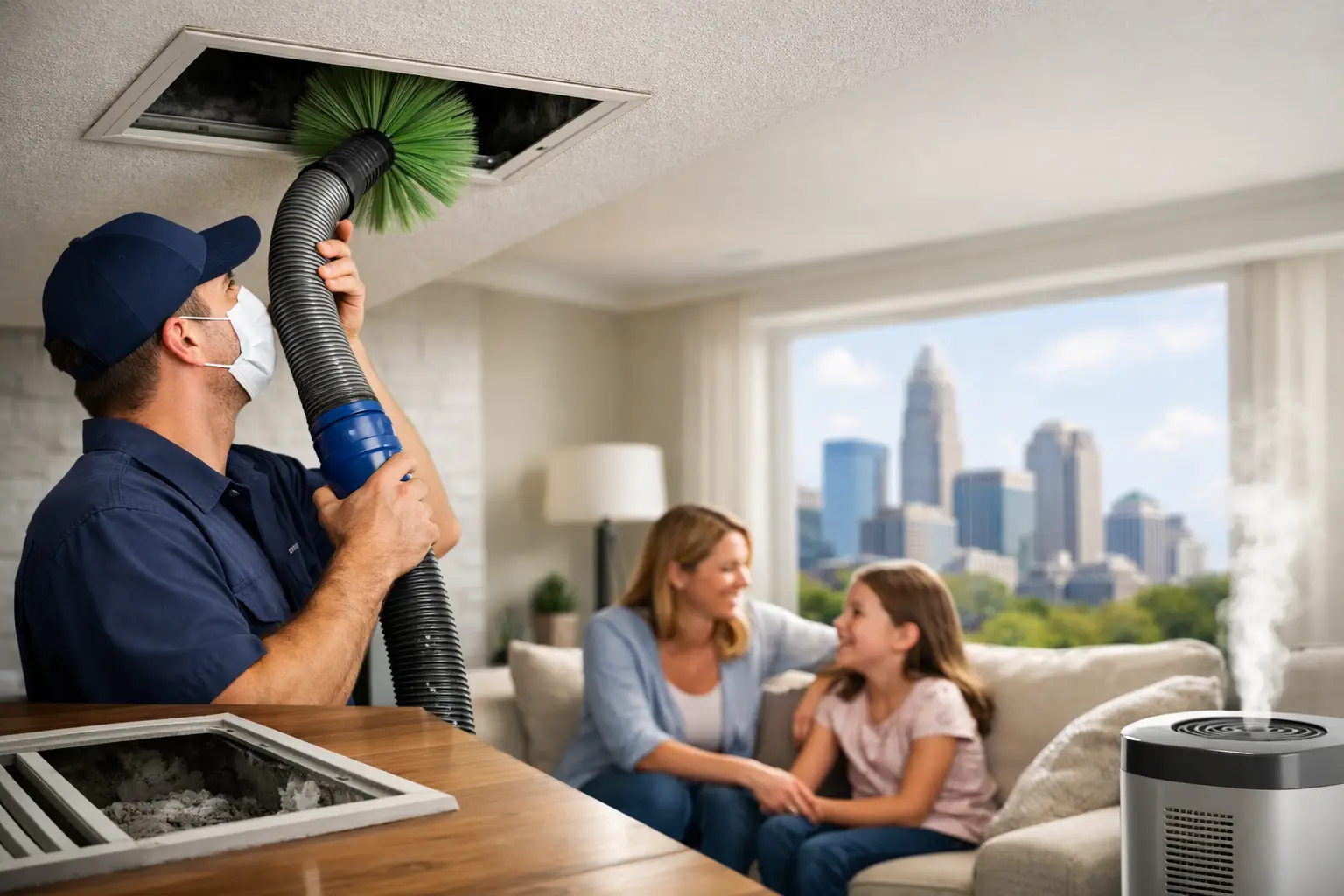
If you pull a return-air grille and see a layer of dust, it is reasonable to ask whether cleaning the ductwork will make your home healthier or your HVAC system work better. The honest answer is that air duct cleaning benefits can be real, but they depend on what is actually inside the ducts and what caused it to get there. Duct cleaning is not a cure-all for every dust, odor, comfort, or efficiency complaint. A good HVAC contractor should inspect the situation first and explain what service can reasonably accomplish.
For homeowners and property managers in the Charlotte area, that distinction matters. Our long cooling season, high humidity, construction activity, pets, and everyday household dust can all affect indoor air and HVAC performance. The right service starts with the real problem, not a blanket recommendation.
Air Duct Cleaning Benefits That Matter
The most straightforward benefit is the removal of accumulated debris from supply and return ducts. Over time, ducts can collect dust, pet hair, insulation particles, drywall debris from remodeling, and material pulled in through poorly sealed returns. When there is a meaningful buildup, cleaning removes material that would otherwise remain in the system.
This can be especially helpful after a renovation, before moving into a previously occupied home, or when a home has been vacant during construction. Newly built homes are not automatically clean inside the ductwork. Drywall dust, sawdust, and other job-site debris can enter open registers or return ducts before the system is fully protected.
Cleaning may also reduce the amount of visible dust that cycles back into occupied rooms. It will not eliminate dusting – every home produces dust from skin cells, fabrics, outdoor pollen, cooking, and normal activity. But when ductwork contains a heavy layer of debris or the return side is pulling in unfiltered air, addressing it can reduce one source of recirculated particulate matter.
For homes with pets, smokers, or a history of strong indoor odors, duct cleaning can be part of a practical cleanup plan. Odor-causing particles can settle in ducts, particularly if filters were neglected or the system ran while work was being done in the home. Still, the odor source must be corrected. Cleaning ducts will not solve a musty smell caused by an active moisture problem, a dead animal in a wall, a dirty evaporator coil, or a drain issue.
Better Airflow Depends on the Underlying Restriction
People often expect duct cleaning to dramatically lower utility bills or transform a weak air conditioner into a strong one. Sometimes cleaning helps airflow, but that outcome is not guaranteed.
A severely blocked return grille, a collapsed flex duct, construction debris lodged in a branch line, or heavy buildup on a blower assembly can restrict air movement. In those cases, cleaning or repairing the affected area may improve how the system delivers air. Commercial spaces can see similar issues when dust, packaging debris, or insulation enters return paths.
But many airflow problems come from something else: a dirty filter, undersized ductwork, a failing blower motor, a clogged evaporator coil, closed dampers, refrigerant problems, or poor system design. Duct cleaning does not correct these failures. If one bedroom stays hot while the rest of the house is comfortable, the answer may be duct balancing, insulation, return-air capacity, or equipment sizing rather than cleaning alone.
That is why diagnosis comes first. A technician should look at filter condition, blower performance, static pressure, coil cleanliness, duct condition, and supply temperatures before promising an efficiency improvement.
Cleaner Components Can Protect HVAC Performance
The ducts are only one part of the air path. Your HVAC system also includes filters, return grilles, the blower compartment, evaporator coil, drain system, and supply registers. When debris has traveled through the system, cleaning appropriate components can help prevent buildup from continuing downstream.
The filter remains the first line of defense. A properly sized, properly installed filter catches much of the airborne material before it reaches the blower and coil. If a filter is bent, missing, too loose, or left unchanged for months, air can bypass it and carry dust into places it does not belong.
A clean duct system paired with a neglected filter will not stay clean for long. Regular filter changes and preventative HVAC maintenance are usually more valuable than scheduling duct cleaning on a fixed annual timetable.
When Duct Cleaning Is Worth Considering
Duct cleaning makes the most sense when there is a specific reason to do it. A visual inspection can reveal heavy debris, pest remains, loose insulation, signs of water damage, or contamination from construction. In some cases, homeowners notice dust blowing from registers after a major remodeling project or find that a previous occupant left the system poorly maintained.
Consider an inspection if you are dealing with one or more of these situations:
- Visible debris, unusual dust buildup, or material coming from registers
- Recent renovation, new construction, fire or smoke exposure, or water damage
- Evidence of rodents, insects, nests, or other pest activity in ductwork
- A dirty blower compartment or return system caused by filter bypass or neglect
- Ongoing odors after the original source has been identified and corrected
For commercial property operators, duct cleaning can be useful after tenant build-outs, interior construction, or a prolonged vacancy. It can also support a cleaner environment in offices, retail spaces, and facilities where occupants are sensitive to dust. The scope should match the property, the equipment, and the condition found on inspection. A small office suite and a multi-zone building should not receive the same generic recommendation.
What Duct Cleaning Will Not Fix
This service is sometimes oversold as a solution for allergies, high power bills, mold, and every comfort issue in a building. That is not how responsible HVAC service works.
Duct cleaning does not remove outdoor pollen from the air, fix humidity that is too high, repair an air conditioner that is not cooling, or correct a furnace with a mechanical fault. It also does not prove that indoor air is free of mold. If there is visible mold-like growth, moisture, or a persistent musty odor, the first job is finding and correcting the moisture source. That could involve a clogged condensate drain, a leaking duct, poor insulation, a roof or plumbing leak, or humidity control problems.
Be cautious with claims that every home needs duct sanitizing. Chemical treatments are not automatically necessary, and they should never be used as a substitute for cleaning or moisture control. Homeowners should understand exactly what product is proposed, why it is recommended, and where it will be applied.
What a Proper Duct Cleaning Visit Looks Like
Quality work is more than placing a vacuum hose near a vent. The technician should protect floors and furnishings, inspect accessible ductwork, and use equipment designed to contain and remove debris. Registers, returns, and accessible supply lines should be addressed as part of a complete, agreed-upon scope.
Before work begins, ask whether the blower compartment, coil area, return plenum, and accessible trunk lines will be inspected. Ask what the service excludes, especially if your home has crawlspace ductwork, limited access, damaged flex duct, or older materials that require special handling. Clear answers are a good sign.
You should also be wary of extremely low advertised prices that turn into pressure-filled add-ons once a crew arrives. Duct cleaning costs vary because homes and systems vary. The number of returns, access points, duct material, contamination level, and equipment configuration all affect the work required. A legitimate recommendation should be based on conditions, not a scare tactic.
At DDL Services, the same approach applies to duct concerns as it does to repair decisions: identify the cause, explain the options, and recommend work that makes technical sense. If cleaning is not likely to solve the issue, you deserve to hear that before spending money.
Keep the System Clean Afterward
Once ductwork and HVAC components are in good condition, simple habits help preserve that improvement. Use the correct filter size and replace it on schedule. Keep return grilles clear of furniture and clutter. Seal gaps around filter racks and return connections so unfiltered attic, crawlspace, or wall-cavity air is not pulled into the system.
During remodeling, cover registers in active work areas when appropriate and avoid running the HVAC system while heavy dust is being created. Schedule routine maintenance so a technician can catch coil buildup, drainage problems, and airflow issues early.
If you are considering duct cleaning, start with an inspection and a clear reason for the work. A clean system is valuable, but the best result comes from correcting the conditions that made it dirty in the first place.