

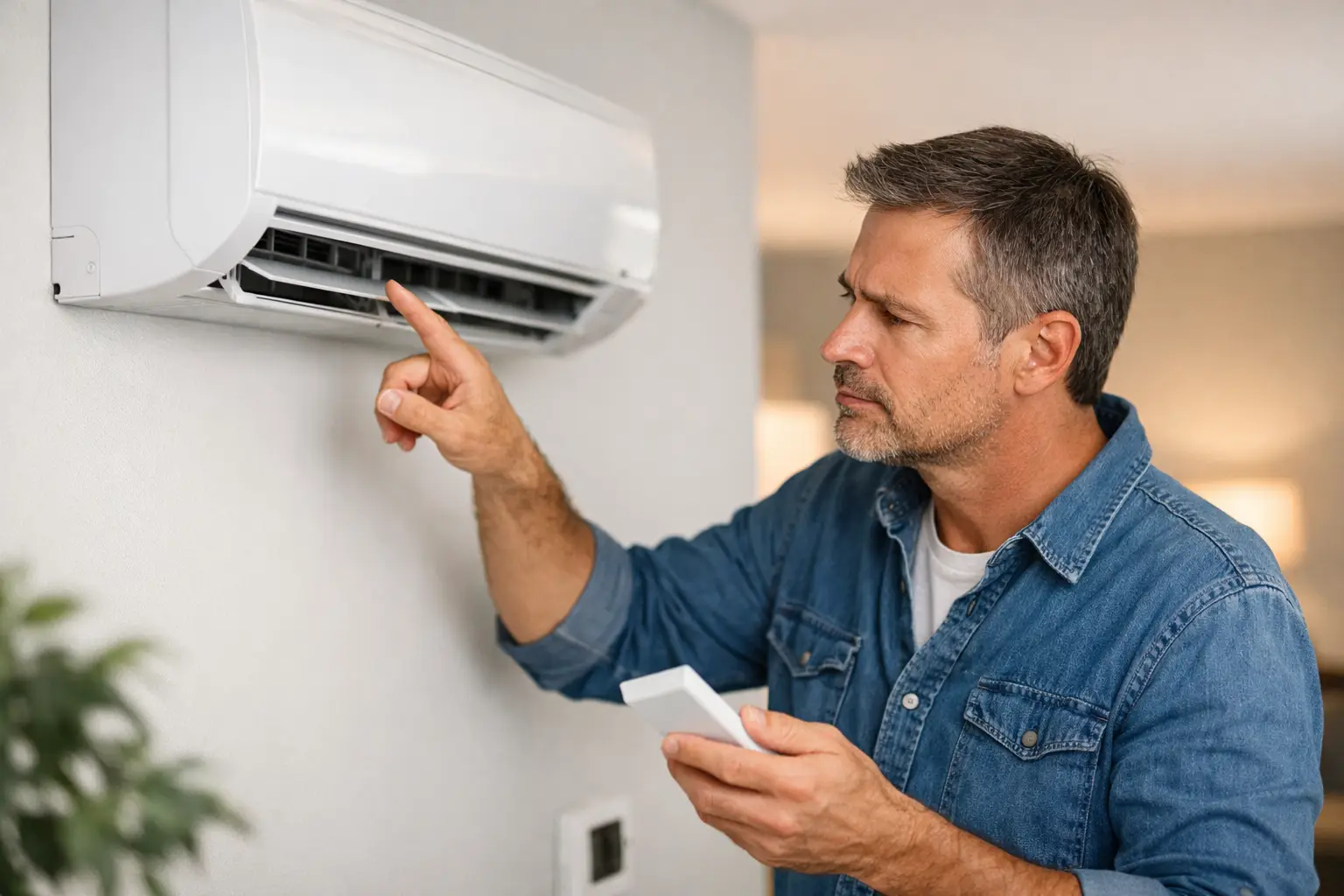
You set the thermostat, wait for the familiar click, and nothing happens. When the AC not turning on issue shows up on a hot North Carolina day, it can feel urgent fast. The good news is that a dead air conditioner does not always mean a failed system or a full replacement. In many cases, the real problem is smaller, more specific, and repairable.
That is where accurate diagnosis matters. A unit that will not start can be dealing with anything from a tripped breaker to a failed capacitor, a thermostat issue, a safety switch, or a wiring problem. Those are very different repairs, with very different costs, and lumping them all together as “you need a new system” is exactly how homeowners and business owners get pushed into decisions they do not need to make.
Why an AC not turning on can mean several different things
Before anything else, it helps to define what is actually happening. Some people say the AC is not turning on when the outdoor condenser is silent. Others mean the thermostat is blank, or the indoor fan is not running, or the system starts briefly and then shuts back off. Each version points in a different direction.
If the thermostat has no display at all, power and control issues move to the top of the list. If the thermostat is on but neither the indoor nor outdoor unit responds, the problem may be electrical, control-related, or connected to a safety device. If the indoor blower runs but the outside unit does not, the issue may be isolated to the condenser, contactor, capacitor, disconnect, or compressor circuit.
That is why a real service call should start with testing, not guessing. The symptom matters, but the exact failure point matters more.
What you can safely check first
There are a few things worth checking before you call for service. These are basic homeowner steps, not deep electrical work.
Start with the thermostat. Make sure it is set to cool and the temperature is lower than the current room temperature. If the screen is blank and your thermostat uses batteries, replace them. If it is a smart thermostat, check whether it has lost power or Wi-Fi settings after a power interruption.
Next, check the breaker panel. HVAC systems often use separate breakers for indoor and outdoor equipment. If one has tripped, reset it once. If it trips again, stop there. A repeatedly tripping breaker is a sign of an electrical problem, and forcing it back on can make a repair worse.
Then look at the air filter. A severely clogged filter can cause airflow and safety issues that lead to shutdowns. Replacing a dirty filter is simple and worth doing, especially if it has been a while.
If your system has a condensate drain safety switch, standing water in the drain pan or a clogged drain line may have shut the system down to prevent overflow. In many homes, this shows up as an AC that suddenly stops responding even though the thermostat appears normal.
Finally, check the outdoor disconnect box if you know where it is and can safely confirm it has not been switched off during yard work or service. If you are not comfortable around electrical components, leave that part alone.
The most common reasons the AC will not start
Power problems are high on the list. That includes tripped breakers, blown fuses, loose electrical connections, failed disconnects, and damaged wiring. Sometimes the issue is obvious after a storm or outage. Sometimes it is hidden and only shows up under load.
Thermostat failure is another common cause. A thermostat can lose calibration, lose power, stop sending the cooling call, or have wiring problems behind the wall plate. That can make a healthy system look dead when the actual issue is just the control side.
Capacitor and contactor failures are also common, especially in hot climates where air conditioners work hard. A failed capacitor can keep the compressor or fan motor from starting. A bad contactor may prevent the outdoor unit from receiving the signal to run. These are routine repairs, but they should be tested properly because replacing parts blindly wastes money and can miss the actual fault.
Drain safety switches shut down many systems every summer. When the condensate line clogs, the system may stop turning on to avoid water damage. This is one of the better examples of why diagnosis matters. The AC may seem dead, but the shutdown is actually the equipment doing its job.
Motor issues can also stop the system. A failed blower motor may prevent air movement indoors. A failed condenser fan motor may leave the outdoor unit unable to reject heat. In some cases, the compressor may attempt to start and shut down on overload because the fan is not operating.
Then there is the compressor itself. Compressor failure is more serious than most of the other items on this list, but even here, it depends. A compressor that is not starting may have a bad capacitor, a relay issue, voltage problems, or a hard-start issue. It is not always a condemned unit.
When the problem is bigger than a quick fix
Not every no-start issue is minor. If the breaker trips immediately, if there is a burning smell, if wires are visibly damaged, or if the system hums loudly and shuts off, it is time for a technician. The same is true if the unit is older and has multiple underlying problems stacked together.
Commercial spaces can be even less forgiving. A rooftop unit that will not start can affect staff comfort, equipment operation, customers, and business hours. In those cases, downtime costs more than the repair itself, so speed matters. But so does accuracy. Throwing parts at a unit without proving the failure is expensive and rarely the best path.
Age also matters, but it should not be the only factor. An older system with a straightforward electrical repair may still be worth fixing. A newer system with chronic compressor issues, refrigerant leaks, and poor maintenance history may be a different story. Honest HVAC service means looking at the condition of the full system, not using age alone as a sales tool.
Why you should be careful with DIY repairs
It is one thing to replace thermostat batteries or reset a breaker once. It is another to open electrical panels, test voltage, or swap out capacitors. Air conditioning equipment uses high voltage, stored electrical charge, and components that can be dangerous without the right tools and training.
There is also the issue of misdiagnosis. Replacing a capacitor because the internet said it was common does not help if the real problem is a low-voltage short, a float switch shutdown, a failed contactor coil, or a damaged thermostat wire. DIY guesses often turn a single repair into multiple problems.
A good technician should not make this more confusing than it needs to be. You should get a clear explanation of what failed, what was tested, what repair is actually needed, and whether replacement is truly justified.
How a real diagnostic approach saves money
When an AC not turning on is treated like a symptom instead of a sales opportunity, the next steps become much more practical. A technician should verify power, inspect controls, test capacitors and contactors, check safeties, evaluate motors, and confirm whether the compressor is receiving the correct signal and voltage.
That process matters because many no-start calls come down to targeted repairs. A bad dual-run capacitor is not the same as a failed compressor. A clogged condensate line is not the same as a failed air handler. A thermostat issue is not the same as a system at the end of its life.
This is one reason many customers in Charlotte and surrounding areas are skeptical of fast replacement recommendations. They should be. If nobody has taken the time to identify the root cause, there is no way to know whether replacing the entire system is necessary.
At DDL Services, that straightforward approach matters. Fix what is broken, explain what is happening, and only talk about replacement when the repair case no longer makes sense.
Preventing another no-start problem
Some failures cannot be predicted, but a lot of AC startup problems are tied to deferred maintenance. Dirty coils, clogged drains, worn capacitors, loose electrical connections, and overworked motors often show warning signs before the system stops responding altogether.
Routine maintenance gives a technician the chance to catch those issues early. It also helps your system start and run under normal load instead of struggling through every heat wave. For commercial properties, that kind of preventive work can reduce interruptions that affect employees, tenants, and customers.
If your AC has been slow to start, making unusual sounds, short cycling, or tripping breakers before the full shutdown, do not wait for it to fail completely. Small warnings tend to get more expensive when ignored.
When your AC will not turn on, the most useful next step is not panic and it is not assuming the worst. It is getting a real diagnosis from someone who is there to solve the problem, not sell around it.