

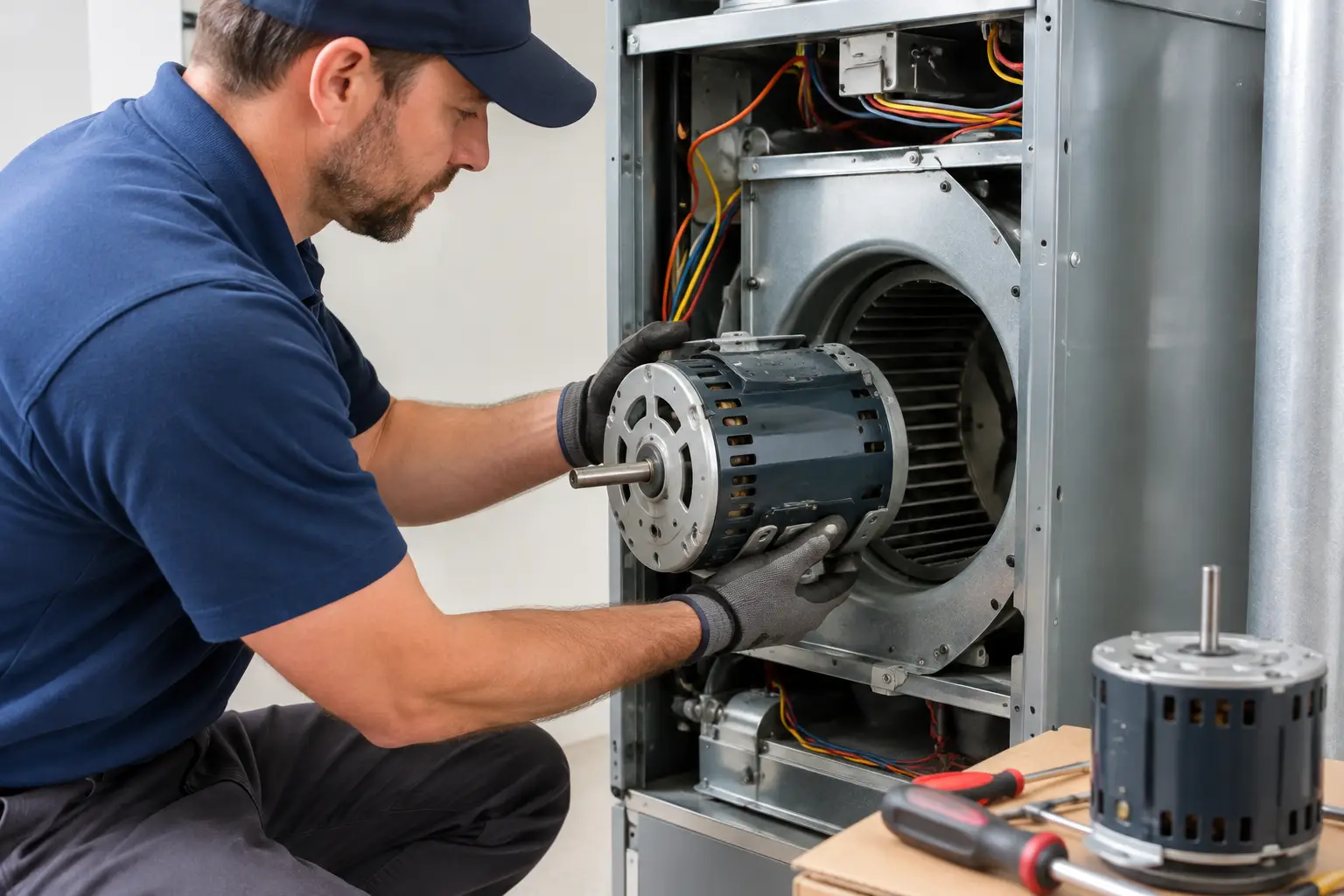
A furnace can still produce heat while leaving your house cold if the blower is not moving that heat through the ducts. You may hear a hum but no airflow, notice weak air at every register, or find the system shutting down on a safety limit. This guide to replacing a furnace blower motor explains what to check before ordering parts, how the replacement process works, and when the smarter repair is not a motor at all.
The blower motor is one of the harder furnace components for a homeowner to replace safely. It involves line voltage, a heavy blower assembly, sharp sheet metal, and parts that must match the equipment exactly. A careful diagnosis can prevent spending money on a motor when the real issue is a capacitor, control board, dirty blower wheel, or restricted airflow.
Confirm the Blower Motor Is Actually the Problem
Do not start with the assumption that a silent blower means a failed motor. Furnaces have several controls that can stop the blower from running or prevent it from receiving power. Replacing a working motor will not correct the underlying problem.
Start with the basics. Confirm the thermostat is set to heat and the fan is set to Auto, then try switching the fan setting to On. Check the furnace breaker and the service switch near the unit. Make sure the access panels are fully installed, since most furnaces use a door safety switch that cuts power when a panel is removed. A severely clogged filter can also cause overheating and limit-switch problems, although it does not usually prevent the blower from running altogether.
Common signs of a failing blower motor include squealing or grinding bearings, a hot electrical smell, a motor that starts slowly, intermittent operation, or a loud hum with no wheel movement. If the motor hums but does not turn, the run capacitor may be weak on a standard PSC motor. That is a much less expensive repair, but only if testing confirms it.
Variable-speed ECM blower motors require even more caution. These motors use an electronic control module and may not use a standard capacitor. They can fail because of a module issue, damaged wiring, incorrect control signals, moisture, or a motor failure. A universal replacement motor is rarely the right answer for an ECM system.
Identify Your Furnace Blower Motor Before Buying Parts
The data plate on the motor provides the information needed to select a replacement. Turn off electrical power at the breaker before opening the furnace cabinet. Do not rely only on the thermostat or furnace switch.
Take clear photos of the motor label, wire connections, capacitor label if present, and the furnace model and serial number. Record the voltage, horsepower, RPM, amperage, rotation direction, frame size, shaft size, and mounting style. On a direct-drive furnace blower, the motor is usually mounted inside a metal housing called the blower assembly or blower wheel housing.
A replacement must be compatible with the furnace controls and deliver the correct airflow. More horsepower is not automatically better. An improperly matched motor can change airflow, increase noise, strain the system, and create heating or cooling performance issues. For a variable-speed unit, use the OEM-approved motor or module specified for that furnace model.
If the old motor has failed after years of dependable service, replacement often makes sense. If the furnace has repeated electrical issues, a burnt control board, extensive rust, or a cracked heat exchanger, the repair decision needs a broader diagnosis. Honest HVAC service means looking at the complete condition of the equipment, not treating every no-blower call as an automatic motor sale.
Tools and Safety for Replacing a Furnace Blower Motor
For a standard direct-drive PSC motor replacement, you will typically need a nut driver set, socket set, screwdrivers, adjustable wrench, needle-nose pliers, wire labels or masking tape, a multimeter, and a camera or phone for reference photos. A puller may be needed if the blower wheel is seized to the motor shaft.
Before touching wiring, shut off the furnace breaker and verify power is off with a meter. The furnace switch can be switched off as an added measure, but it should not be your only protection. Capacitors can retain an electrical charge even after power is disconnected. They should be discharged safely according to proper electrical practices before handling terminals.
Wear gloves because furnace cabinet edges and blower housings can be sharp. Avoid pulling on wires by their insulation. If you are not comfortable verifying voltage, testing a capacitor, or reconnecting wires exactly as designed, stop there. A qualified technician can diagnose the failure and complete the repair without guessing.
How to Replace a Standard Furnace Blower Motor
Remove the blower assembly
After power is confirmed off, remove the furnace access doors. Locate the blower assembly in the lower cabinet. Disconnect the motor wiring harness or individual leads, labeling every connection before removing it. Some furnaces use a plug connection, while others route wires to the control board, capacitor, or relay.
Remove the screws or retaining brackets that hold the blower housing in place. Slide the assembly out carefully. It can be awkward and heavier than it looks, especially in a horizontal attic installation. Protect nearby wiring and avoid bending the blower wheel.
Separate the motor from the wheel
Before loosening anything, mark the motor shaft position in relation to the blower wheel. The wheel needs to sit in the correct location inside the housing to avoid rubbing and to maintain proper airflow.
Loosen the set screw on the blower wheel hub. You may need to rotate the wheel until the screw is accessible. Remove the mounting bolts or belly band that holds the motor to the housing, then slide the motor out of the wheel. If the wheel is corroded onto the shaft, forcing it can bend the wheel or damage the housing. This is one of the most common points where a routine motor replacement turns into a repair best handled by a technician.
Inspect the blower wheel while it is accessible. Heavy dust buildup reduces airflow and can make the motor work harder. Clean it carefully without bending the fins. Also inspect the wheel for cracks, wobble, or signs it has been rubbing the housing.
Install and wire the new motor
Mount the new motor using the correct bracket or belly band. Slide the blower wheel onto the shaft, align it to the reference mark, and tighten the hub set screw securely onto the flat portion of the shaft when applicable. Spin the wheel by hand. It should rotate freely without scraping.
Install a new capacitor if the manufacturer specifies one or if the replacement motor requires a different microfarad rating. The capacitor must match the required rating and meet or exceed the voltage rating. Do not reuse an old capacitor simply because it fits physically.
Reconnect every wire according to the motor diagram and the labels or photos you made before disassembly. Make sure the speed tap selected matches the furnace wiring design. Incorrect speed wiring can produce poor comfort, coil freeze-ups in cooling mode, nuisance limit trips in heating mode, or excessive noise.
Reassemble and test operation
Slide the blower assembly back into place and secure all fasteners. Reinstall both furnace doors, restore power, and call for heat at the thermostat. The ignition sequence should complete, followed by blower operation after the normal delay.
Listen for rubbing, rattling, or unusual vibration. Check airflow at several registers and let the furnace complete a full cycle. If the furnace shuts down on a limit switch, produces weak airflow, or the blower does not start reliably, turn it off and investigate rather than continuing to run it.
When to Call a Furnace Technician Instead
A blower motor replacement is not a good DIY project when the system has ECM electronics, damaged wiring, a failed control board, a seized wheel, or recurring overheating. It is also time to call for help when you cannot verify the correct replacement part or identify why the original motor failed.
For commercial equipment, downtime and electrical complexity make professional diagnosis especially valuable. A motor that failed from poor airflow, voltage problems, or a control issue can take out the new motor if the root cause is left behind.
DDL Services approaches furnace repairs by testing the component, checking the controls around it, and explaining the repair in plain language. Sometimes the answer is a capacitor or cleaning. Sometimes it is a properly matched blower motor. The point is to fix what is actually broken, not turn a repairable furnace into an unnecessary replacement conversation.
A furnace blower should run quietly and move air without drama. If yours is struggling, shut the system down if you smell burning or hear metal rubbing, keep the filter clean, and get a clear diagnosis before buying parts. That one careful step can protect your comfort, your equipment, and your budget.