

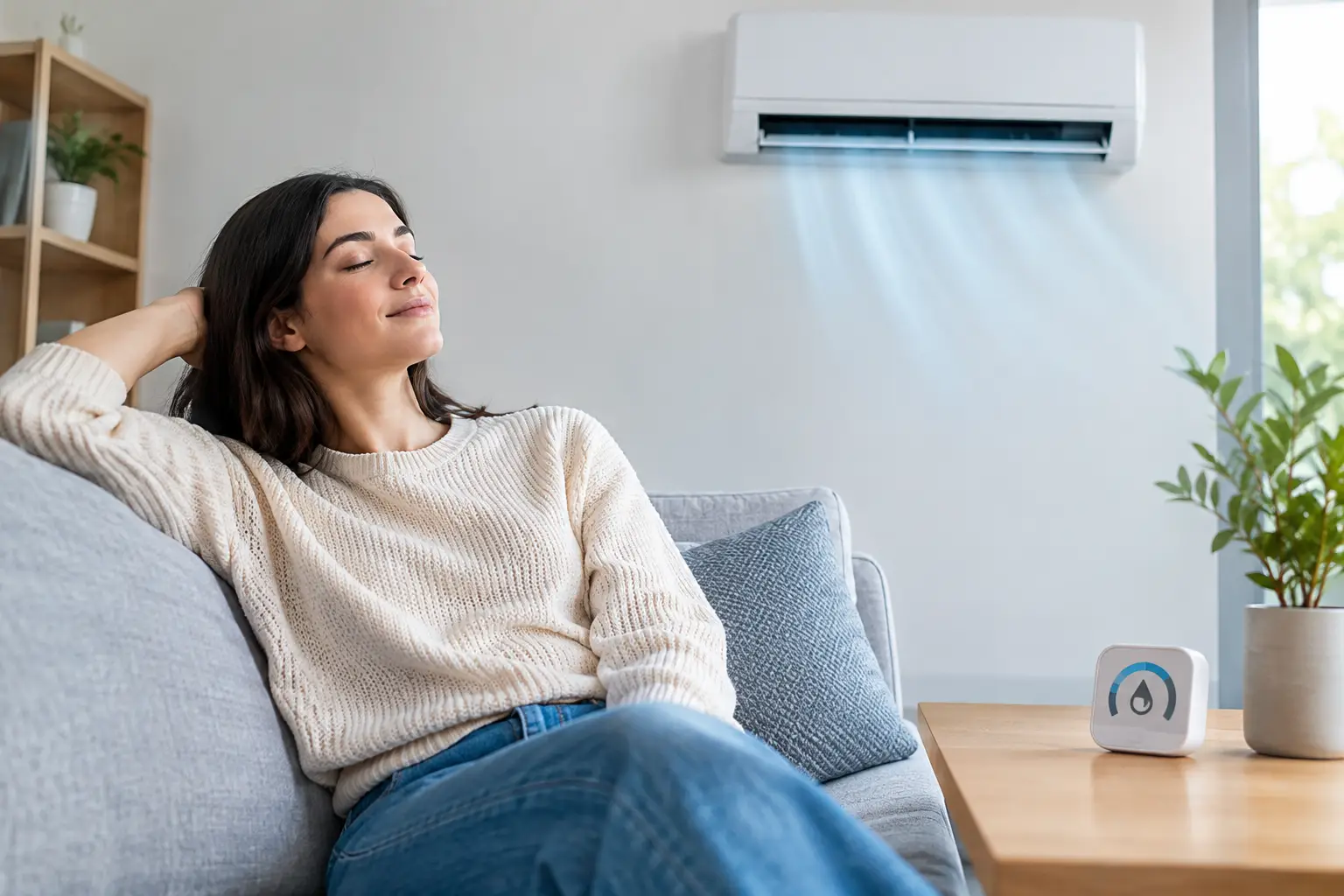
A Charlotte summer can make a perfectly cool house feel sticky, clammy, and uncomfortable. If you are trying to reduce humidity with HVAC equipment, the goal is not simply to lower the thermostat. Your system needs enough runtime, proper airflow, and the right capacity to remove moisture from the air while it cools.
That distinction matters. Many humidity problems are repairable, but they are often misdiagnosed. A bigger air conditioner or a lower temperature setting may sound like the answer, yet either can make the problem worse. The practical fix starts with finding out why the system is not dehumidifying as it should.
How an HVAC System Removes Moisture
Your air conditioner does two jobs at once. It transfers heat out of the building, and it pulls water vapor from indoor air as that air passes over the cold evaporator coil. The moisture condenses on the coil, drains into the condensate pan, and exits through the drain line.
For that process to work, the system needs to run long enough. A properly operating unit usually cycles for extended periods during hot, humid weather. If it cools the space quickly and shuts off after a few minutes, it may satisfy the thermostat before it has removed much moisture.
This is why a home can be 72 degrees and still feel damp. Temperature and humidity are related, but they are not the same measurement. For most homes, indoor relative humidity between 40% and 50% feels comfortable. Regular readings above 55% deserve attention, especially if you notice condensation on windows, musty odors, or visible mildew.
Start With Thermostat Settings
The thermostat is the simplest place to look, but it is not a cure-all. Set the fan to AUTO, not ON. In the ON position, the blower continues circulating air after the cooling cycle ends. That can re-evaporate moisture sitting on the evaporator coil and send it back into the house.
Avoid dropping the temperature dramatically in an effort to dry the air. Setting the thermostat lower can make the system run longer, but it also raises energy use and can leave occupants uncomfortably cold. A better starting point is a steady temperature, often around 72 to 76 degrees depending on the building and the people in it, with the fan set to AUTO.
If your thermostat has a humidity setting, use it carefully. It can help manage comfort, but the equipment still needs to be capable of meeting that target. If the system cannot maintain reasonable humidity, changing the thermostat setting alone will not fix the underlying issue.
HVAC Problems That Cause High Indoor Humidity
A working air conditioner should remove moisture. When it does not, there may be a maintenance issue, an installation problem, or excessive moisture entering the building.
A dirty air filter is a common starting point. Restricted airflow changes how air moves across the evaporator coil and can reduce performance. In severe cases, it can contribute to a frozen coil. Replace filters on schedule, using the filter type and size recommended for your system. Do not assume that the most restrictive high-MERV filter is automatically best. Some systems are not designed for it, and inadequate airflow creates a different set of problems.
A dirty indoor coil, low refrigerant charge, blower issue, or clogged condensate drain can also interfere with dehumidification. These are not guesswork repairs. Refrigerant levels, airflow, static pressure, coil condition, and drainage should be checked by a qualified technician. Adding refrigerant without locating a leak, for example, is not a real repair.
Duct problems deserve attention as well. Leaky return ducts in a hot attic, crawlspace, or utility area can pull humid outdoor air into the system. Poorly insulated ducts can sweat, waste energy, and contribute to moisture problems around ceilings or mechanical rooms. In commercial spaces, incorrect outside-air settings or damaged economizer controls can introduce more humid air than the system can handle.
Why an Oversized Air Conditioner Can Make Humidity Worse
Homeowners are often told that more cooling capacity is better. It is not. An oversized air conditioner cools the space too quickly, then turns off. Those short cycles reduce the time available for moisture removal, leaving rooms cool but damp.
This is especially common after a replacement installation where the new system was selected based on the old unit’s size rather than a proper load calculation. A home may have added insulation, new windows, shade, or air sealing since the previous system was installed. The old equipment may have been oversized from the beginning.
The answer is not to assume replacement is necessary. A technician should first verify the system’s condition, airflow, thermostat operation, refrigerant performance, and ductwork. If the system is truly oversized, there are sometimes ways to improve comfort without immediate replacement, such as adjusting blower settings where appropriate or adding dedicated dehumidification. The right option depends on the equipment, building layout, and moisture load.
Ways to Reduce Humidity With HVAC and Building Improvements
Your HVAC system cannot fully overcome a major moisture source. In the Charlotte area, outdoor humidity is part of the equation, but indoor moisture also comes from showers, cooking, laundry, crawlspaces, plumbing leaks, and unvented appliances.
Start by making sure bathroom fans vent outdoors and run long enough after showers. Kitchen exhaust should also vent outside, not recirculate moisture through a filter. Repair plumbing leaks promptly, and make sure clothes dryers exhaust outdoors through a clean, intact duct.
For homes with crawlspaces, moisture control below the living area can make a major difference. Standing water, poor drainage, damaged vapor barriers, and open foundation vents can raise indoor humidity and create musty conditions. Crawlspace work should be evaluated as part of the whole-home moisture picture, not treated as an isolated issue.
In some houses and many commercial buildings, a whole-home or commercial-grade dehumidifier is the right addition. A dedicated dehumidifier removes moisture without overcooling the space. It is particularly useful during mild, rainy weather, when there is enough humidity to cause discomfort but not enough heat demand to keep the air conditioner running.
When Maintenance Can Solve the Problem
Routine maintenance helps protect dehumidification performance. During a proper AC service visit, the technician should inspect the filter, coil condition, condensate drain, electrical components, refrigerant operation, blower performance, and overall cooling performance. This is not just about preventing a no-cool call. It helps catch the issues that make a building feel damp even while the AC appears to be working.
For property managers, humidity control is also an asset-protection concern. Persistent moisture can damage finishes, encourage mold growth, affect stored inventory, and create comfort complaints from tenants or customers. A system that is cooling but not controlling humidity is not delivering full HVAC performance.
Signs It Is Time for a Professional Diagnosis
Call for service if indoor humidity stays above 55% for days at a time, the system runs constantly without improving comfort, or you see water around the indoor unit. Musty odors, frequent frozen coils, sweating vents, uneven room temperatures, and excessive condensation are also reasons to have the system checked.
The important point is to get a diagnosis before accepting a replacement recommendation. High humidity may come from a dirty coil, drain issue, duct leak, airflow problem, thermostat setting, oversized equipment, or moisture entering from elsewhere. Those are very different repairs with very different costs.
DDL Services approaches humidity complaints the same way it approaches any HVAC problem: identify the real cause, explain what is happening, and recommend the repair that makes sense. A drier home or business usually starts with accurate testing, not a sales pitch.
If your space feels sticky even when the AC is running, keep the fan on AUTO, check the filter, and watch for drainage or condensation issues. Then have the system evaluated before the moisture has a chance to become a larger comfort or property problem.