

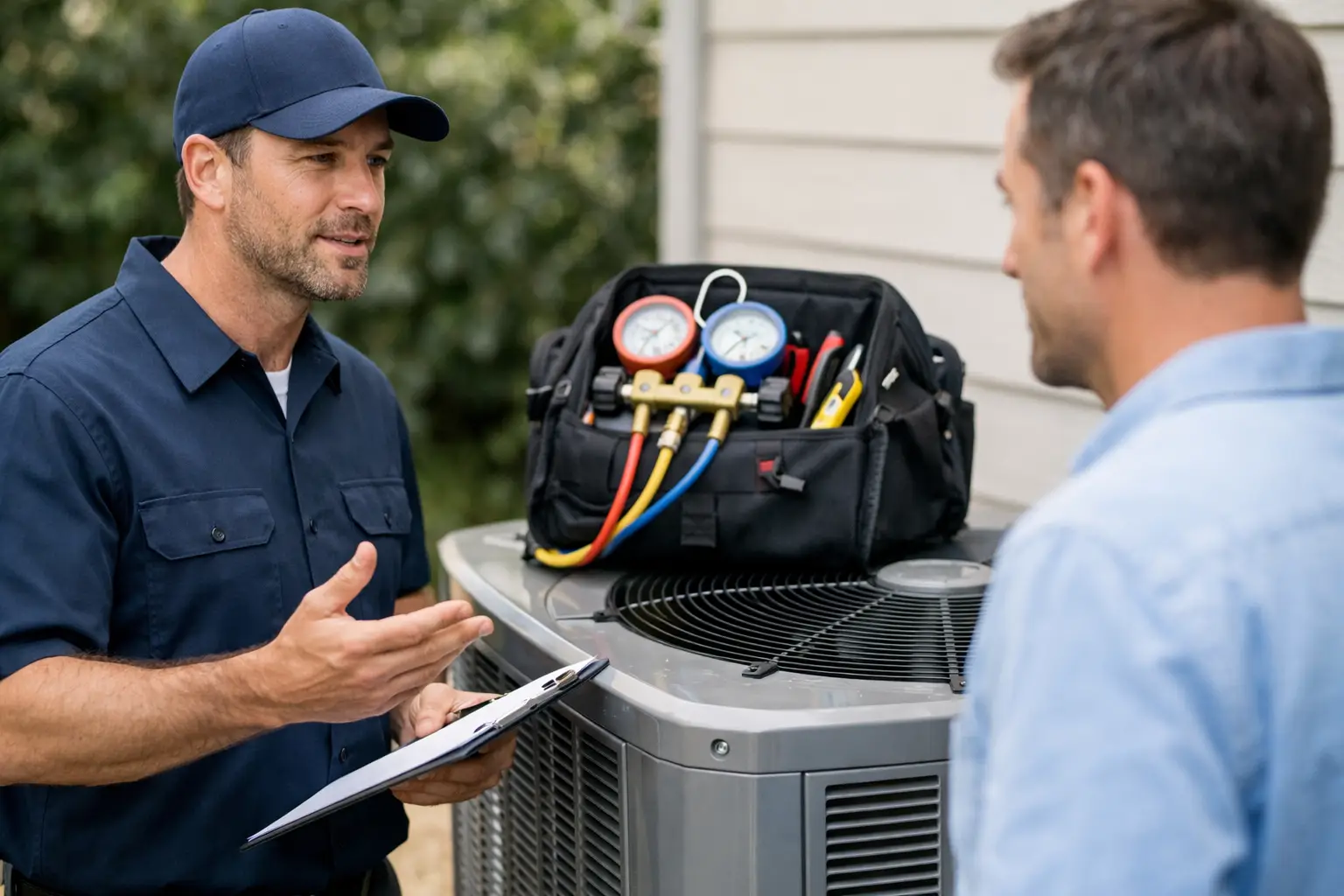
A new HVAC system can carry a 10-year parts warranty and still leave you with a repair bill when something fails. So, does HVAC warranty cover labor? In most cases, the manufacturer warranty covers a qualifying replacement part, while the homeowner pays the technician’s diagnostic time, labor, travel, refrigerant, and other job-related costs.
That distinction catches people off guard because “10-year warranty” sounds like complete protection. It is not necessarily a bad warranty. It is simply a parts warranty, and the fine print matters when a blower motor, control board, compressor, or coil needs attention.
Does HVAC Warranty Cover Labor?
Usually, no. The standard manufacturer warranty that comes with a furnace, heat pump, air conditioner, or air handler is designed to cover defects in specified components. It generally does not pay the HVAC contractor to diagnose the issue, remove the failed part, install the replacement, test the system, or return the equipment to normal operation.
Labor coverage may apply if your installer included a separate labor warranty. Some contractors provide one year of labor coverage with a new installation. Others offer longer labor protection through an extended warranty plan. These are separate from the manufacturer’s parts warranty, even when they are presented together at the time of installation.
The practical question is not just, “Is my system under warranty?” Ask two questions: “Is the failed part covered?” and “Who pays for the labor to replace it?” Getting a clear answer before authorizing work prevents an unpleasant surprise after the repair is complete.
Parts Warranty vs. Labor Warranty
A parts warranty is issued by the equipment manufacturer. Its purpose is to replace an eligible component that fails because of a covered manufacturing defect during the warranty period. Coverage varies by brand, model, registration status, and the part involved. A compressor may have a different warranty term than a capacitor or thermostat.
A labor warranty is typically provided by the installing contractor or purchased as an extended protection plan. It pays some or all of the labor associated with a covered repair. The terms can be very different from one plan to another. Some cover only labor, while others include diagnostic fees or trip charges. Some apply only to repairs completed by the original installer or an approved dealer.
There is also an installation workmanship warranty. This is the contractor’s promise to correct problems caused by the installation itself, such as a loose electrical connection, improper drain setup, or an airflow issue tied directly to workmanship. It does not mean every future equipment failure is free. A well-run contractor will explain the difference instead of using the word “warranty” as a blanket answer.
What You May Still Pay During a Covered Repair
Even when the manufacturer approves a part under warranty, several costs may remain. This is why an honest diagnosis should come before anyone promises a no-cost repair.
You may be responsible for:
- Diagnostic time to identify the actual failure and confirm warranty eligibility
- Labor to access, remove, and replace the failed component
- Service call or travel charges, especially outside normal business hours
- Refrigerant, shipping, supplies, permits, or modifications needed to complete the repair
- Damage caused by a separate issue that the warranty does not cover
For example, a warranty may provide a replacement evaporator coil, but not the labor to install it or the refrigerant needed to recharge the system. If the coil failed due to corrosion, poor maintenance, or an external source of damage, coverage may be denied altogether. The equipment and the reason for failure both matter.
When Labor Coverage Is More Likely
Labor coverage is most common during the first year after a new system installation. Many quality installers stand behind their work for that period, and the manufacturer may also provide limited coverage on certain early component failures. Still, read the paperwork. “One year labor” should state what is included and whether there are exclusions for maintenance, drain clogs, electrical issues outside the unit, or after-hours service.
Extended labor agreements can make sense for homeowners who want predictable repair costs, especially with high-efficiency systems that use specialized controls and communicating components. The trade-off is upfront cost and restrictions. A plan may require annual maintenance, use of participating contractors, or prompt registration. It may also exclude consumable parts and failures caused by neglect.
For commercial property owners, the decision depends on downtime risk. A restaurant, office, retail shop, or small medical practice may value faster service and cost stability more than a homeowner with a backup window unit. Review response-time expectations along with the labor terms. A warranty is less helpful if it does not support the operation when the equipment is down.
Registration Can Change the Warranty Term
Many HVAC manufacturers offer stronger parts coverage when the equipment is registered shortly after installation. If registration is missed, the warranty may default to a shorter period. The exact deadline and coverage vary by manufacturer, so do not assume a new system automatically has the longest advertised warranty.
Keep the model and serial numbers, installation invoice, warranty confirmation, maintenance records, and any extended labor agreement in one place. If the home is sold, ask whether the warranty transfers and whether a transfer fee or deadline applies. Some warranties reduce in length or become non-transferable after ownership changes.
If you cannot find your documents, a qualified HVAC technician can often help identify the system and check its warranty status. That should happen after diagnosing the problem, not instead of diagnosing it. A covered part will not solve an airflow restriction, clogged drain, failed breaker, duct issue, or thermostat setting problem.
Common Reasons HVAC Warranty Claims Are Denied
Manufacturer warranties are not maintenance plans or damage insurance. They usually exclude problems caused by conditions outside the manufacturer’s control. That may include improper installation, skipped maintenance, physical damage, pest damage, power surges, flood damage, fire, or unauthorized repairs.
In the Charlotte area, clogged condensate drains, dirty outdoor coils, weak capacitors, and electrical issues can all affect comfort but may not be covered as a warranty repair. Summer heat and humidity put real stress on air conditioning equipment. Routine maintenance helps catch problems before they turn into major failures, but it does not guarantee every issue will be warranty-covered.
Improperly matched equipment can create bigger problems as well. An oversized or undersized system, incorrect refrigerant charge, poor duct design, or limited airflow can shorten equipment life and complicate a claim. This is one reason system replacement should never be treated like a quick box swap. Proper sizing, installation, and startup testing protect comfort and protect your investment.
How to Handle a Possible Warranty Repair
When the system is not cooling, heating, or moving air correctly, start by checking the basics: thermostat settings, filter condition, breakers, and whether the outdoor unit is running. Do not keep resetting breakers or forcing the system to run if it is tripping, making unusual noises, or freezing up. That can turn a manageable repair into a larger one.
Then schedule a diagnostic visit with a licensed HVAC contractor. Ask for a plain-language explanation of the failure, the warranty status of the part, and a written breakdown of what is and is not covered. A trustworthy technician should be able to tell you whether repair is practical before steering you toward replacement.
If a repair is not covered or the cost is significant, compare it with the system’s age, condition, efficiency, repair history, and remaining warranty. A 12-year-old unit with a major compressor issue calls for a different conversation than a three-year-old system with a failed control board. There is no honest one-size-fits-all answer.
DDL Services approaches warranty concerns the same way it approaches any service call: find the real problem first, explain the options clearly, and repair what makes sense. A warranty can reduce the cost of a failure, but careful diagnosis is what keeps you from paying for the wrong fix.