

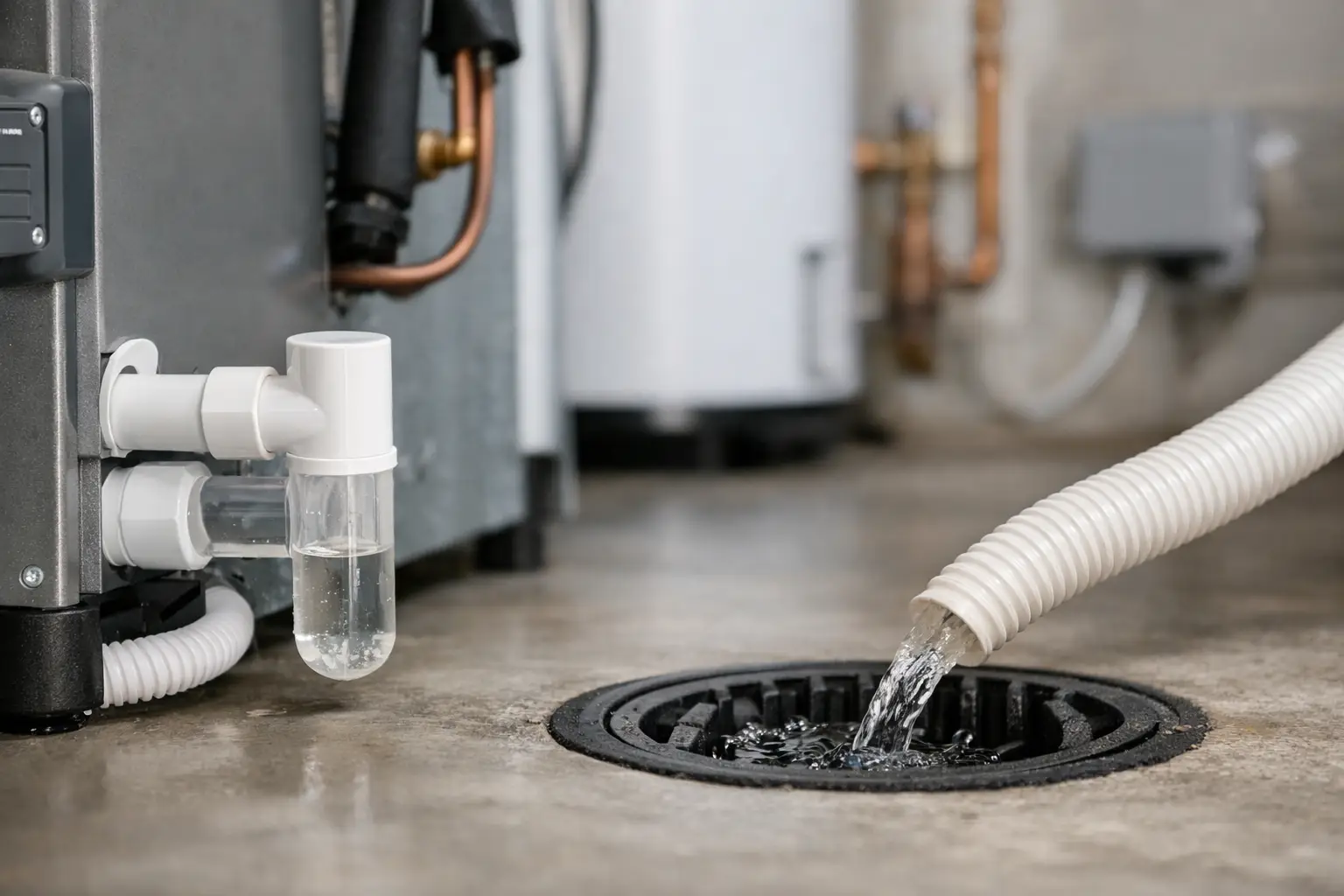
A puddle near an indoor air handler is easy to dismiss as a minor leak. It is not. During a humid Charlotte summer, a blocked AC condensate drain can put gallons of water in the wrong place, damaging drywall, flooring, ceilings, insulation, or equipment before the cooling problem gets your attention. This guide to AC condensate drains explains what that water is, where it should go, and when a simple maintenance issue has turned into a repair call.
What an AC Condensate Drain Does
Your air conditioner does more than lower the temperature. As warm indoor air passes over the cold evaporator coil, moisture in that air condenses into water. The water collects in a drain pan beneath the coil and flows through a condensate drain line, typically a PVC pipe, to a safe discharge point outside or into an approved plumbing connection.
That process is normal. In fact, a working air conditioner can produce a surprising amount of water on a humid day. The problem starts when algae, dust, rust, insulation debris, or biological growth collects inside the pan, trap, or drain line. Water then backs up instead of draining away.
Many systems have a secondary drain pan or a float safety switch. These protections can catch or shut down the system when the primary drain backs up, but they are backups, not a substitute for a clear drain. If you see water in a secondary pan or your AC shuts off unexpectedly during humid weather, the drain system deserves attention.
The Parts Homeowners Should Know
You do not need to take apart your HVAC system to understand the basic layout. Knowing the parts helps you describe the issue accurately and avoid guessing at a costly repair.
The evaporator coil sits inside the indoor portion of the system, often above a furnace or inside an air handler. Below it is the primary drain pan. From there, the primary condensate line carries water away. A trap in the line helps the system drain properly by preventing air pressure from interfering with water flow.
Depending on the installation, you may also have a cleanout opening, a secondary drain line, a secondary pan, and a float switch. The cleanout is often a capped vertical section of PVC near the air handler. It provides access for service and maintenance. The secondary line is an overflow path, not the main path. If water is coming from a pipe over a doorway, window, or exterior wall where it normally does not drip, treat it as a warning that the primary drain may be blocked.
Drain layouts vary. A system in an attic faces different water-damage risks than one in a crawl space, closet, or mechanical room. Commercial units can also have longer drain runs, multiple traps, and more complicated routing. That is why the right repair starts with finding where the restriction or drainage failure actually is.
Warning Signs of a Clogged Condensate Drain
A condensate issue is usually not subtle for long. Watch for these signs, especially during periods of high humidity:
- Water around the indoor unit, utility closet, attic access, or ceiling below an attic system
- A full secondary drain pan or water dripping from an unusual exterior drain outlet
- Musty odors near vents or the air handler
- An AC system that stops running even though the thermostat is calling for cooling
- Visible slime, standing water, or debris around the drain pan or cleanout
A float switch may be the reason the equipment will not start. That can feel like an AC failure, but the switch may be doing exactly what it was installed to do: preventing an overflow. Bypassing or taping down a float switch is not a repair. It removes a safeguard and can lead to water damage.
Not every puddle means the drain line is clogged. A cracked pan, disconnected pipe, improper drain slope, failed condensate pump, frozen coil, or air leak around the equipment can create similar symptoms. This is where accurate diagnosis matters. Clearing a line will not fix a cracked pan, and replacing equipment will not fix a drain pipe that was installed incorrectly.
Safe Steps Before You Call for Service
If you find active water near your indoor unit, turn the cooling system off at the thermostat. If water is close to electrical components, do not continue troubleshooting around the equipment. Protect the area, place towels or a shallow container where practical, and contact a qualified HVAC technician.
For a minor suspected clog, some homeowners can check the visible drain outlet outside. If the outlet is accessible and clear of mulch, dirt, insects, or leaves, gently remove the obstruction. Do not push objects deep into the pipe. A solid blockage may be farther inside, and forcing it can damage fittings or create a leak.
If your system has an accessible cleanout and you already know the proper maintenance procedure for your specific setup, flushing the line with water or using a wet/dry vacuum at the exterior outlet can sometimes remove light buildup. Stop if the line does not clear, water backs up into the unit, or you are unsure which pipe you are working with.
Avoid using harsh drain cleaners. Many are not designed for HVAC components and can damage materials, create fumes, or leave you with a more complicated service issue. Bleach is also not a universal answer. It can be hard on certain components, and it does not correct a sagging, improperly trapped, or broken line.
Why Condensate Drains Clog So Often
The condensate drain is a dark, damp environment, which makes it a natural place for buildup. Dust pulled through the system can mix with moisture in the pan. In humid North Carolina conditions, that mixture can support algae and biofilm growth. A neglected filter can make the problem worse by allowing more debris to reach the coil and drain pan.
Installation details matter too. A drain line needs appropriate slope so water moves consistently. The trap must be correctly configured for the unit. A line with dips, poor support, loose connections, or an incorrect vent arrangement may drain inconsistently even when it is not fully blocked. In some homes, the drain terminates at a condensate pump. If the pump fails, the system may leak or shut down despite a clear line.
That is why repeated clogs deserve more than another quick flush. If the same drain backs up every season, the system may need a correction to the piping, trap, pump, or safety setup. A practical repair now can prevent recurring emergency calls and avoidable property damage.
A Practical Guide to AC Condensate Drain Maintenance
Most homeowners benefit from having the condensate system checked during regular AC maintenance, preferably before the heaviest cooling season. A technician can inspect the pan, flush the primary line, verify drainage, test the float switch, look for leaks, and confirm that the drain configuration supports proper operation.
Between visits, keep the area around the indoor unit clear and change filters on schedule. A clean filter protects airflow and reduces the dust that eventually makes its way into the drain pan. Check the exterior drain termination occasionally, especially after landscaping work or severe weather. It should be open, visible, and draining where intended.
If your AC is in an attic, take water warnings seriously. A small backup can travel into insulation or ceilings without being obvious from the room below. For commercial properties, add condensate drain inspections to the maintenance plan rather than waiting for a leak to interrupt operations. The cost of a planned cleaning is usually far lower than water cleanup, tenant disruption, or equipment downtime.
When It Is Time for Professional Diagnosis
Call for HVAC service when water is actively leaking, the system shuts down repeatedly, a drain line will not clear, or the issue returns after basic maintenance. You should also call if you suspect a frozen coil. A frozen coil can produce a large volume of water as it thaws, and the underlying cause may be low airflow, a dirty coil, refrigerant trouble, or another issue unrelated to the drain itself.
A good technician should inspect the whole condensate path instead of treating every problem as a simple clog. That includes the pan, line, trap, fittings, slope, pump if present, float switch, and the condition of the evaporator coil. At DDL Services, the goal is to identify the actual failure and make the repair that fits it – not turn a drain problem into an unnecessary replacement recommendation.
A condensate drain is a small part of your AC system, but it protects much more than comfort. When something looks wrong, shut the system down if water is involved and address it early. A clear explanation and the right repair can keep a manageable maintenance issue from becoming a wet, expensive surprise.