

A cooling system can run for hours on a Charlotte summer afternoon and still leave the upstairs bedrooms warm. Before assuming the AC unit is too small or ready for replacement, it makes sense to seal leaky air ducts or at least determine whether duct leakage is part of the problem. Conditioned air lost in an attic, crawl space, garage, or utility room never reaches the rooms you are paying to cool.
Duct leaks are common, but they are not always obvious. Some can be corrected with accessible repairs. Others point to damaged ductwork, poor original installation, incorrect airflow, or a larger HVAC issue. The right answer comes from finding the actual source of the loss, not applying tape wherever a joint looks questionable.
What Leaky Ducts Actually Cost You
Your duct system is the delivery path for heated and cooled air. Supply ducts push conditioned air into rooms, while return ducts bring indoor air back to the equipment. Leaks on either side hurt performance, but they do it differently.
A leaking supply duct sends cooled or heated air into an unconditioned space. In summer, that may mean cold air pouring into a 130-degree attic. In winter, heated air can disappear into a crawl space or garage. The system runs longer, utility costs rise, and rooms at the far end of the duct run often suffer first.
Return-side leaks can be more troubling. They can pull hot attic air, crawl-space moisture, insulation fibers, dust, or garage fumes into the system. That added heat and humidity makes the equipment work harder. It can also contribute to uneven temperatures, excess dust, musty odors, and indoor air quality concerns.
Not every comfort complaint is a duct leak. A dirty filter, restricted coil, failing blower motor, refrigerant issue, undersized return, or poorly balanced system can create similar symptoms. This is why a real diagnosis matters before anyone recommends expensive equipment replacement.
Signs You May Need to Seal Leaky Air Ducts
Some evidence is easy to spot. Flexible ducts may be disconnected, crushed, sagging, or torn. Metal duct joints may have dried-out tape, visible gaps, or loose screws. Insulation around attic ductwork may look dirty at one location because air has been escaping through a nearby seam.
Inside the home or business, the clues are usually less direct. Watch for rooms that stay warmer or cooler than the thermostat setting, weak airflow at certain vents, unusually high heating and cooling bills, and dust that returns quickly after cleaning. A system that seems loud or runs almost constantly may also be compensating for lost airflow.
In commercial spaces, duct leakage can show up as tenant comfort complaints concentrated in one suite, hot spots near exterior offices, or equipment that cannot keep up during peak occupancy. A leaking duct system can affect more than comfort. It can make operating costs harder to control and put unnecessary strain on rooftop units, heat pumps, and air handlers.
Where Duct Leaks Usually Happen
Leaks are most common at connection points, not in the middle of a solid duct section. Look at the joints where ducts connect to the air handler, supply trunk, return plenum, takeoffs, boots, and branch runs. Flexible duct connections deserve close attention because they rely on proper mechanical fastening and sealing.
The duct boots behind wall, ceiling, and floor registers are another overlooked area. Air can escape into wall cavities or attics if the boot is not sealed to the surrounding structure. That does not always mean the visible grille needs attention. The problem may be behind it.
The biggest leaks are often near the HVAC equipment. A loose return plenum, unsealed filter cabinet, or gap around an air handler can draw in unfiltered air before it ever reaches the filter. Sealing those areas properly can improve both airflow and cleanliness, but it needs to be done without blocking service access or creating pressure problems.
How to Seal Leaky Air Ducts Safely
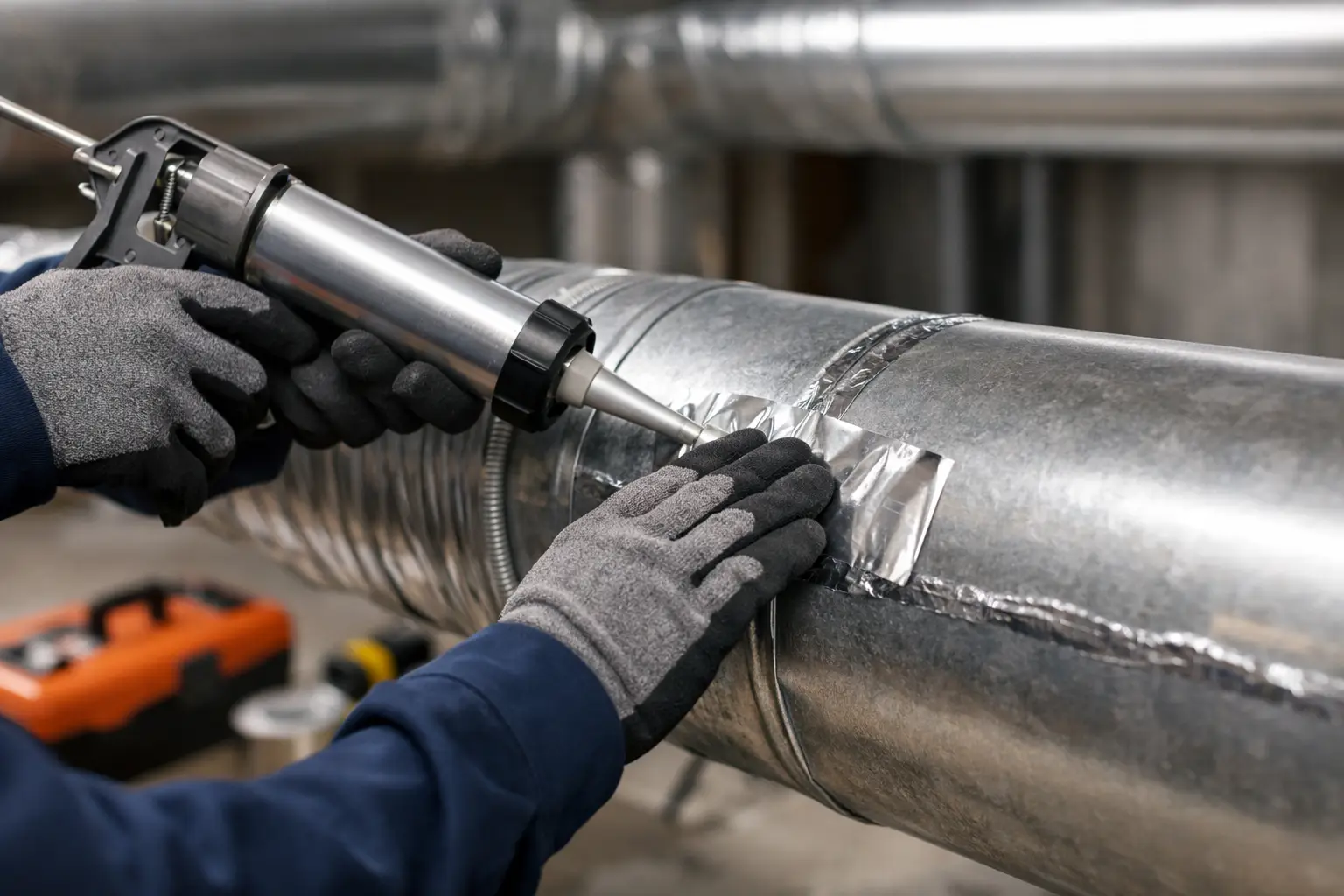
For accessible, minor leaks, the materials matter. Standard cloth-backed duct tape is not a long-term duct repair, despite the name. Attic heat, humidity, and age can cause it to fail. HVAC-rated foil tape and mastic sealant are the proper materials for most accessible joints and seams.
Start by turning off the HVAC system. Inspect exposed duct connections for gaps, loose straps, disconnected flex duct, or failed old tape. If a flexible duct has slipped off a collar, it should be reattached fully over the collar, mechanically secured as needed, then sealed with mastic or approved foil tape. The outer insulation jacket must also be pulled back into place and sealed so the duct remains insulated and protected from attic air.
For metal duct seams, mastic is often the more durable choice. It is brushed over the seam and allowed to cure, creating a flexible air seal. Foil tape works well on clean, dry surfaces and is especially useful for smaller seams or where a neat finish is needed. The surface must be clean enough for adhesion. Applying tape over dust, loose insulation, or crumbling old tape only delays the repair.
Do not cover damp duct insulation, seal over damaged wiring, or close off a duct path because it seems to have too much airflow. Closing registers or restricting ducts can raise static pressure and create new problems. Likewise, do not use spray foam inside ductwork. Duct systems need materials designed for HVAC use and repairs that preserve proper airflow.
When a DIY Repair Is Reasonable – and When It Is Not
A homeowner may be able to seal one visible attic joint or replace a small section of damaged insulation around an otherwise sound duct. That can be worthwhile when the issue is clearly accessible and the repair does not require disturbing equipment, electrical components, or large sections of ductwork.
The trade-off is that visible leaks may be only part of the problem. Ducts behind walls, under floors, above ceilings, and inside commercial soffits cannot be evaluated by a quick visual check. A system can also have airflow problems caused by duct sizing, return-air design, blower settings, or major restrictions. More sealant will not fix a duct system that was poorly designed or damaged throughout.
Professional inspection is the better choice when there is a disconnected duct, a suspected return leak, repeated comfort issues, moisture in a crawl space, signs of mold, damaged flex duct, or a major utility bill increase. It is also smart to call for help if the air handler cabinet or return plenum appears loose. Those areas affect the performance of the whole system and should be repaired correctly.
Testing Finds Leaks That Your Eyes Cannot
A qualified HVAC technician can inspect duct routing, connections, insulation, and airflow while checking the equipment that serves the duct system. Depending on the situation, testing may include static pressure measurements, temperature readings, airflow checks, and duct leakage testing. These measurements help separate a small repair from a larger distribution problem.
That distinction protects you from two costly mistakes: replacing an HVAC unit that is not the root problem, or spending money on duct sealing while ignoring a failing component. If the equipment is properly sized but the duct system is leaking or restricted, fixing the air distribution may make a noticeable difference. If both the equipment and ductwork have issues, you deserve a clear explanation of which repairs are urgent and which can be planned.
For older homes in Charlotte and surrounding communities, attic and crawl-space conditions add another layer. Heat, humidity, pests, and aging insulation can damage ducts over time. A repair plan should account for the full environment around the ductwork, not just the opening where air is escaping.
Keep Duct Repairs From Becoming a Repeat Problem
After duct repairs, regular HVAC maintenance helps catch loose connections and airflow changes before comfort suffers again. Replace filters on schedule, keep return grilles clear, and pay attention when a room begins taking longer to heat or cool. Those small changes can provide an early warning before a minor leak becomes a major loss.
If ducts are in an attic or crawl space, avoid stepping on flexible duct runs or using them to support stored items. Crushed or sharply bent flex duct can restrict airflow as much as a leak. Insulation should remain intact around ducts to reduce heat gain in summer and heat loss in winter.
A properly sealed duct system will not solve every HVAC problem, but it gives your equipment a fair chance to do its job. If your home or business has uneven temperatures, weak airflow, or unexplained energy costs, start with an honest inspection. The best repair is the one that fixes the real problem and keeps conditioned air where it belongs.