

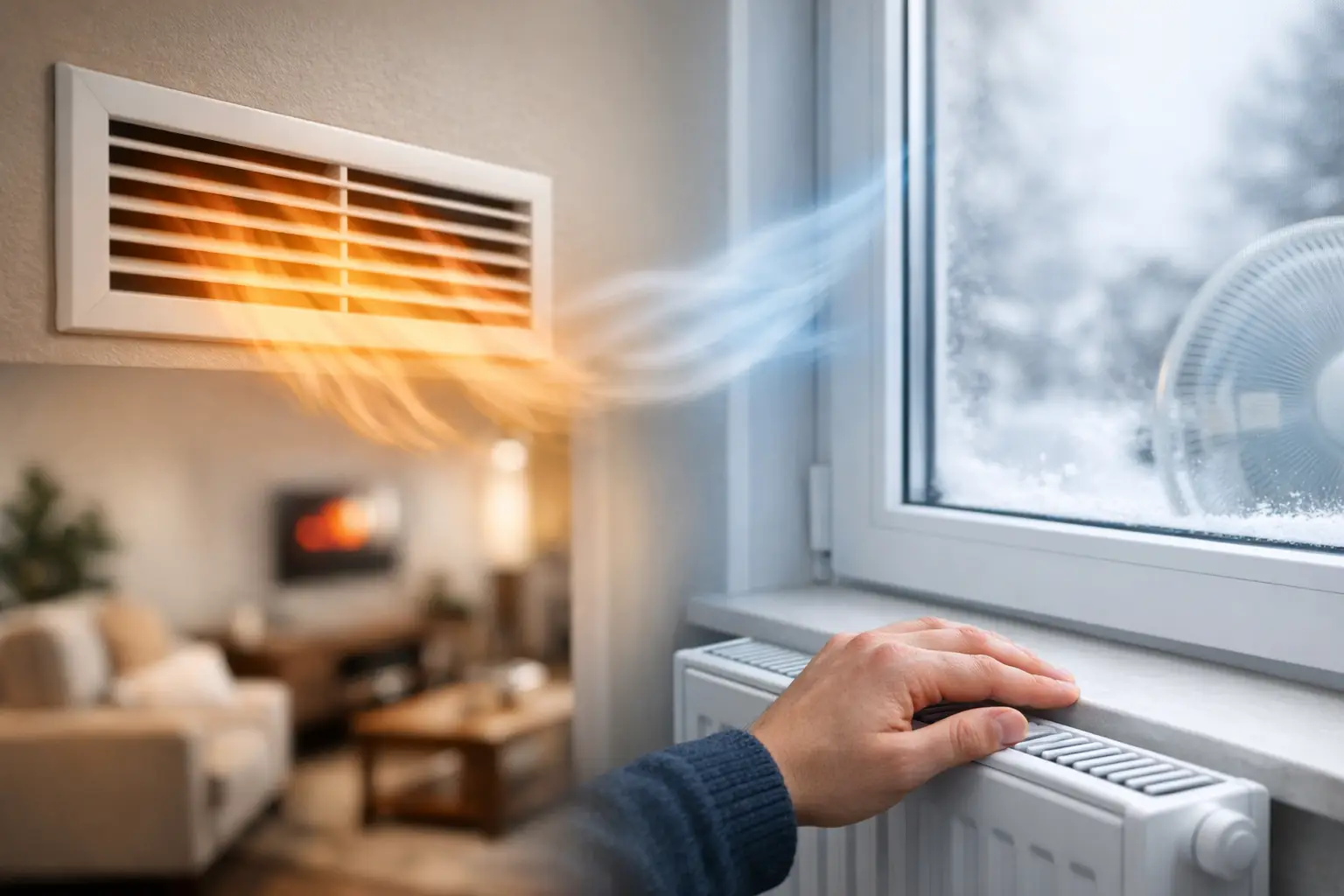
One bedroom feels like a freezer, the upstairs hallway stays stuffy, and the living room never seems to match the thermostat. If you are trying to figure out how to fix hot cold spots, the first thing to know is this: uneven temperatures usually point to a specific problem, not a whole system that suddenly needs to be replaced.
That matters because hot and cold spots are often caused by airflow restrictions, duct leaks, insulation gaps, thermostat placement, or equipment sizing issues. Some are simple. Some take testing to confirm. But the right fix starts with diagnosis, not guesswork.
Why hot and cold spots happen
Your HVAC system is supposed to move conditioned air evenly through the building and bring enough air back to be treated again. When that balance gets disrupted, certain rooms drift warmer or cooler than the rest.
In homes around Charlotte and nearby areas, this often shows up in upstairs rooms, bonus rooms over garages, sun-facing offices, older additions, and spaces at the end of long duct runs. Commercial properties can see the same thing in corner offices, server rooms, storefronts with large windows, or areas far from the main trunk line.
The cause is not always the equipment itself. In fact, many uneven comfort problems come from the distribution side of the system. If the air cannot get where it needs to go, or return properly, comfort suffers even when the AC or heat pump is technically running.
How to fix hot cold spots without wasting money
If you want to know how to fix hot cold spots the smart way, start with the low-cost checks before assuming you need major HVAC work. A few basic issues can create a big temperature difference.
Make sure supply vents are fully open and not blocked by furniture, rugs, or curtains. It sounds obvious, but partially closed registers and blocked returns are common in rooms that never feel right. Check the air filter too. A dirty filter can reduce system airflow enough to affect the farthest rooms first.
Next, look at the room itself. Large west-facing windows, thin attic insulation, recessed lighting leaks, and unsealed gaps around doors can make one room harder to cool or heat than the rest. If a room gains or loses heat faster than the system can keep up, it will feel like an HVAC issue even when the root cause is the building envelope.
If those basics are in order and the problem continues, the issue usually moves into one of four areas: ductwork, return air, thermostat control, or system design.
Duct leaks and airflow restrictions
Leaky or poorly routed ductwork is one of the most common reasons for uneven temperatures. If conditioned air is escaping into an attic, crawl space, or wall cavity, the room at the end of that run may never get enough airflow. Flexible duct that is kinked, crushed, or sagging can cause the same problem.
This is especially common in older homes, additions, and buildings that have had remodeling work done over the years. A room may have a vent, but that does not mean it is getting the right volume of air.
A proper fix depends on what testing shows. Sometimes sealing accessible duct joints solves it. Sometimes a section of duct needs to be resized or rerouted. Sometimes balancing dampers need adjustment. This is where real diagnostics matter, because adding a bigger unit will not fix bad duct delivery.
Return air problems
Supply air gets most of the attention, but return air is just as important. If a room can receive air but cannot send enough air back to the system, pressure builds up and circulation suffers. That room may get too hot in summer, too cold in winter, or feel stuffy year-round.
Closed bedroom doors often make this worse, especially in homes with limited return pathways. Undercut doors, transfer grilles, jumper ducts, or additional return design may be needed depending on the layout. There is no one-size-fits-all answer here, but there is usually a measurable reason the room is not breathing properly.
Thermostat location and control issues
A thermostat only reads the area around it. If it is located in a hallway, near a return grille, in direct sunlight, or close to a kitchen or exterior door, it may shut the system off before the rest of the building catches up.
That creates a familiar complaint: one area feels fine, while two other rooms are uncomfortable. In some homes, moving the thermostat helps. In others, zoning or better sensor placement is the more effective answer.
Zoning can work well, but it has to be designed correctly. Adding dampers and separate controls to the wrong system can create static pressure problems if the equipment and ductwork are not matched to that setup. Done right, zoning can solve persistent hot and cold spots. Done poorly, it creates a different set of problems.
When insulation is the real fix
Not every comfort problem belongs to the HVAC system. A room over a garage, a finished attic, or a top-floor office may be fighting radiant heat, air leakage, or poor insulation levels more than poor HVAC performance.
That is why honest contractors do not jump straight to equipment replacement. If a room is gaining heat through the roof deck, kneewalls, garage ceiling, or old windows, replacing the condenser will not change the fact that the space is losing the comfort battle.
This is one of the biggest trade-offs homeowners need to understand. HVAC repairs can improve delivery, but if the structure itself is weak, the room may still struggle during peak weather. The best result often comes from combining airflow corrections with insulation and air sealing improvements.
Could the system be too big or too small?
Yes, but this should be proven, not assumed.
An oversized system can cool a home too quickly without running long enough to distribute air evenly or remove humidity properly. A system that is too small may run constantly and still fail to keep up in the hottest or coldest parts of the building. Both situations can contribute to hot and cold spots.
Still, sizing is often blamed when the real issue is duct design, static pressure, or poor return setup. That is why load calculations and airflow testing matter. If someone recommends full replacement after a quick glance and no measurements, that is a red flag.
In commercial spaces, this gets even more important. Different occupancy levels, lighting loads, electronics, storefront glass, and after-hours schedules all affect comfort. What looks like a bad rooftop unit may actually be a control issue, an air distribution problem, or a space-use change that the original design never accounted for.
Signs you need a professional diagnosis
There are times when simple troubleshooting is enough, and times when testing is the only way to stop throwing money at the wrong fix.
If one room is always off by several degrees, if airflow feels weak at certain vents, if rooms change dramatically when doors close, or if comfort got worse after a renovation, you likely need more than a filter change. The same goes for rooms with persistent humidity, musty odors, or comfort problems that shift by season.
A proper diagnostic visit should look at airflow, duct condition, static pressure, equipment operation, and the layout of the affected spaces. That is the difference between finding the problem and guessing at it.
For homeowners and business owners who are tired of hearing that replacement is the only answer, this is where the right contractor stands out. DDL Services focuses on finding the real problem first, then recommending the repair or upgrade that actually fits the issue.
What the fix might look like
There is no universal answer for how to fix hot cold spots because the right repair depends on what is causing them. One property may need duct sealing and balancing. Another may need a return air solution. Another may need attic insulation improvements with only minor HVAC adjustment. Some buildings benefit from zoning, while others just need the existing system corrected and tuned properly.
That is the practical truth. Good comfort is the result of matched equipment, proper airflow, sound duct design, and a building that is not working against the system.
If you have been living with one room that never feels right, do not assume it is normal and do not assume replacement is your only option. Uneven temperatures usually leave clues. When someone takes the time to read those clues correctly, the fix is often much more straightforward than the sales pitch makes it sound.
Comfort should not depend on which room you walk into next.