

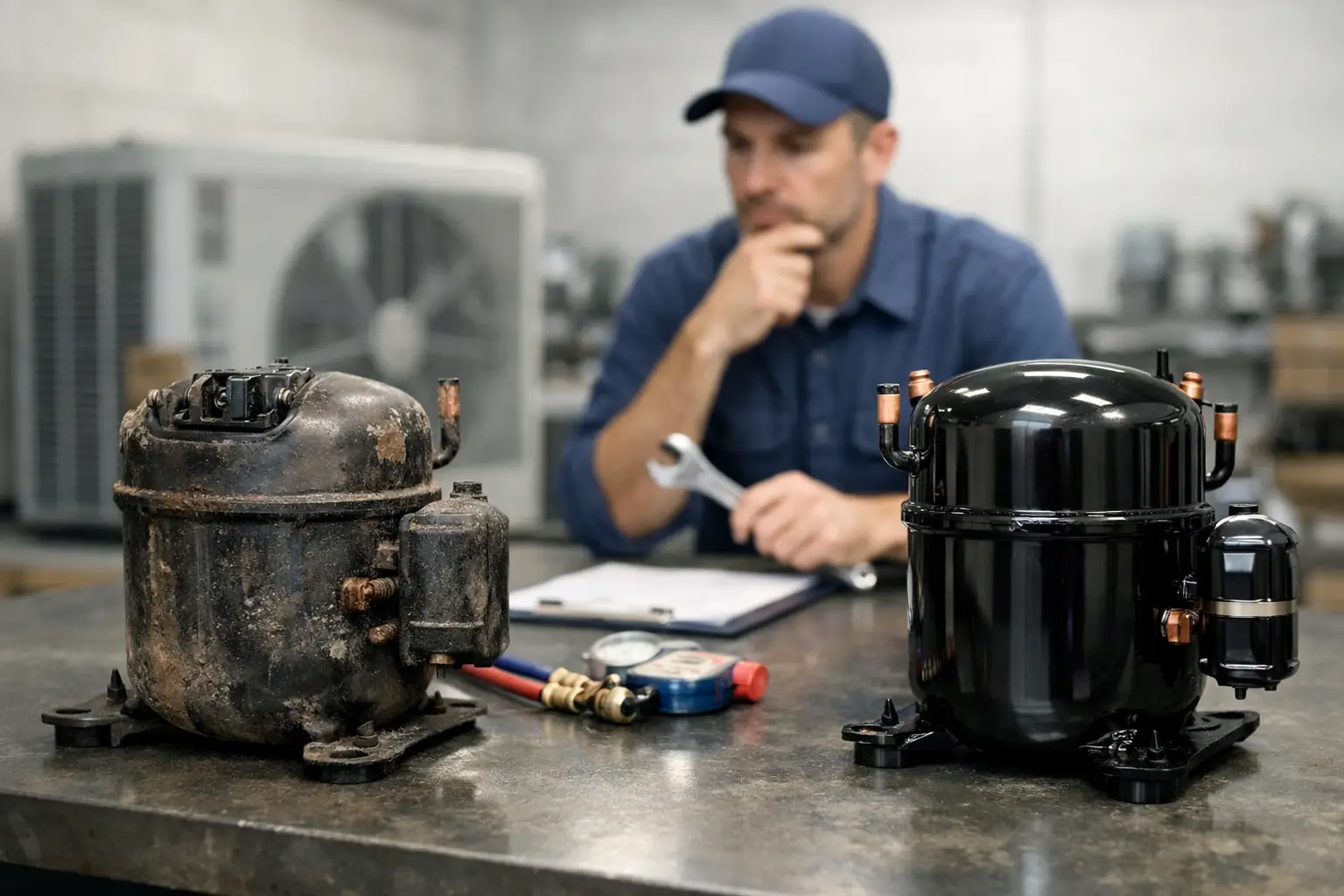
A failed compressor can turn a normal Charlotte summer afternoon into an expensive decision fast. The question is not simply repair versus replace compressor. First, a qualified technician needs to determine whether the compressor has actually failed, what caused the problem, and whether the rest of the system is worth protecting.
A compressor is the heart of an air conditioning or heat pump system. It circulates refrigerant so the system can move heat out of your home or business. When it stops working, the symptoms can look serious: warm air, a breaker that trips, loud buzzing, poor cooling, or an outdoor unit that will not start. But those symptoms can also come from a failed capacitor, contactor, wiring issue, refrigerant problem, dirty coil, or airflow restriction.
That distinction matters. Replacing a compressor when the real issue is electrical or airflow-related is not a repair plan. It is an expensive guess.
Repair Versus Replace Compressor: Start With Diagnosis
In most cases, the compressor itself is not rebuilt in the field. The real decision is often whether to repair the condition preventing it from running or replace the compressor as a major component. A technician should test electrical readings, inspect wiring and controls, check refrigerant pressures, evaluate airflow, and look for signs of overheating or internal damage before recommending either path.
For example, a weak capacitor may keep a compressor from starting even though the compressor is still sound. A burned contactor can prevent power from reaching the unit. Low refrigerant from a leak can cause a system to run hot and struggle. A clogged filter, dirty outdoor coil, or failing indoor blower can create poor heat transfer and put unnecessary stress on the compressor.
These are repairable issues, and addressing them early may save the compressor. This is why a quick statement such as “you need a new unit” without clear test results should raise questions. You deserve to know what failed, what caused it, and what each option will cost.
When a Compressor Repair Makes Sense
Repairing the underlying issue is usually the right call when the compressor is operating normally once the fault is corrected. It can also make sense to replace a failed compressor when the system is relatively new, otherwise well maintained, and covered by a manufacturer parts warranty.
Age matters, but it is not the only factor. A seven-year-old system with a failed capacitor is not close to replacement just because it stopped cooling. Even a compressor replacement may be reasonable on a newer unit if the indoor coil, outdoor coil, blower, refrigerant circuit, and electrical components are in good condition.
Warranty coverage can change the math. Many systems carry a longer parts warranty than a labor warranty. The compressor may be covered, but labor, refrigerant, diagnostic time, and related components may not be. Ask for the full out-of-pocket cost, not just whether the compressor itself is under warranty.
A good repair recommendation should also address why the compressor failed. If it overheated because the condenser coil was blocked with dirt and debris, the coil needs to be properly cleaned. If refrigerant was low, the leak needs to be found and addressed. Installing a replacement compressor without correcting the root cause can lead to another failure.
Signs Replacement May Be the Better Investment
There are situations where installing a new compressor is technically possible but not financially wise. If the system is near or beyond its expected service life, has multiple major issues, or uses outdated refrigerant, putting significant money into the compressor may only delay a larger replacement.
Consider full system replacement more seriously when:
- The compressor has failed from internal electrical or mechanical damage and the system is 12 to 15 years old or older.
- The unit uses R-22 refrigerant, which is no longer produced for new equipment and can be expensive to source.
- The indoor and outdoor equipment have mismatched components, repeated refrigerant leaks, or deteriorating coils.
- Several costly repairs are needed at the same time, such as a compressor, coil, blower motor, and control board.
- Cooling has been uneven, humidity has been high, and utility costs have climbed despite regular repairs.
No single item automatically means replacement. A 15-year-old system with a minor electrical repair may still have useful life left. On the other hand, a nine-year-old system with a failed compressor, leaking coil, and poor installation history may justify a replacement discussion. The honest answer depends on the condition of the whole system, not a sales formula.
Compare the Real Costs, Not Just Today’s Invoice
The lowest immediate price is not always the lowest cost over the next few years. A compressor replacement can cost substantially less than a complete system, especially when warranty coverage applies. But a full replacement may include a new warranty, improved efficiency, better humidity control, and fewer near-term repair risks.
When comparing options, look at the repair cost alongside the system’s age, maintenance history, refrigerant type, energy use, and likelihood of additional repairs. Also consider how long you plan to own the property. A homeowner planning to stay for another decade may value lower operating costs and a new equipment warranty. A property owner preparing a building for sale may need a more targeted solution, provided it is reliable and properly documented.
For commercial spaces, downtime belongs in the calculation. A restaurant, retail store, office, or medical practice cannot always wait through repeated repair visits during peak cooling season. Still, replacement should not be automatic. A well-documented diagnosis can identify whether a focused repair will return the equipment to dependable service without unnecessary capital expense.
The Condition of the Indoor Unit Matters Too
Air conditioning systems are designed to work as matched equipment. The outdoor condenser, indoor evaporator coil, blower, and refrigerant metering device all affect compressor performance. Replacing only one part of an aging system can sometimes create compatibility, efficiency, or warranty concerns.
This does not mean every compressor failure requires a complete system replacement. It means the indoor equipment needs to be inspected before a recommendation is made. A technician should verify coil condition, airflow, drain performance, electrical safety, and refrigerant compatibility. If the indoor coil is leaking or the blower is underperforming, a new compressor alone may not solve the full problem.
Proper sizing matters if replacement is recommended. Bigger is not automatically better. An oversized system can short cycle, remove less humidity, and create comfort problems. A properly matched installation considers the building’s layout, insulation, windows, ductwork, occupancy, and cooling load.
Questions to Ask Before Approving Work
You do not need to be an HVAC expert to make a sound decision. Ask the technician to explain what tests confirmed compressor failure and whether any less expensive component could be causing the same symptoms. Ask what caused the failure, whether a warranty applies, and what other parts of the system show wear.
Then ask for both paths when they are realistic: the cost to repair or replace the compressor, and the cost to replace the system. The estimate should explain what is included, such as refrigerant, electrical components, cleanup, startup testing, and warranty terms. Clear answers are a sign that the recommendation is based on the equipment, not a quota.
Protect the Compressor You Have
Many compressor failures begin with conditions that routine maintenance can catch. Clean filters, clear outdoor coils, correct refrigerant charge, secure electrical connections, and proper airflow reduce strain on the system. Ignoring weak capacitors, noisy contactors, frozen coils, or recurring breaker trips can turn a manageable repair into a major one.
If your system is not cooling, shut it off if you smell burning, hear severe grinding, or notice the breaker repeatedly tripping. Running equipment under those conditions can cause more damage. DDL Services approaches these calls by finding the actual failure first, then explaining practical options without pressure.
The best compressor decision is the one supported by real diagnostics and honest numbers. Whether the answer is a small repair, a compressor replacement, or a new matched system, you should be able to understand why it is the right move for your property.