
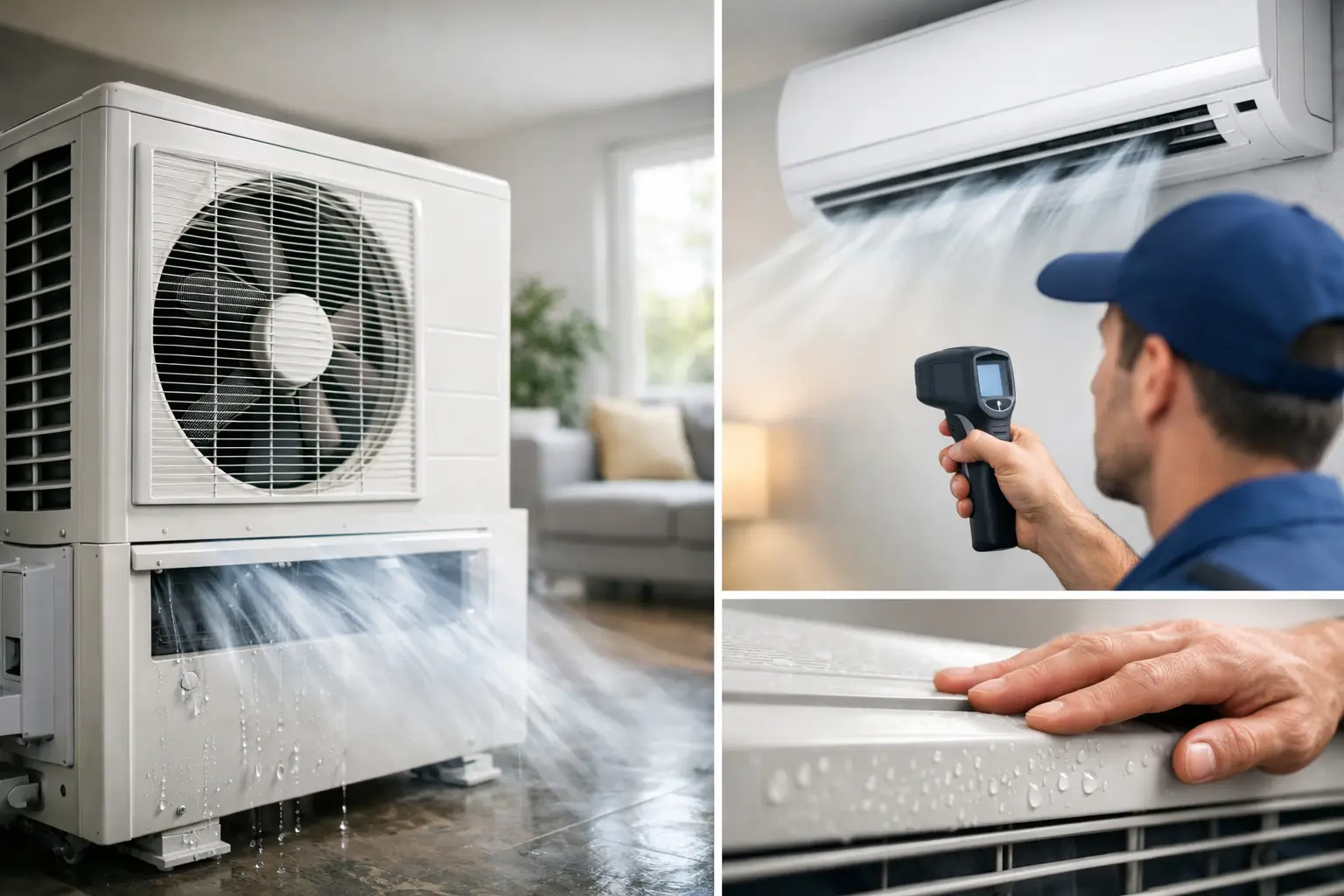
If your AC cools the house fast but never seems to make it feel comfortable, that is a red flag. One of the most common signs of oversized AC is a system that satisfies the thermostat quickly while leaving behind humidity, uneven temperatures, and higher-than-expected operating costs. Bigger is not better in air conditioning. It has to be matched correctly to the space.
A lot of homeowners assume an oversized unit means extra cooling power and fewer problems. In reality, the opposite is often true. When an air conditioner is too large for the home or building, it can create comfort issues, waste energy, and put unnecessary strain on major components. For commercial properties, the same problem can affect tenant comfort, equipment life, and monthly overhead.
Why an oversized AC causes problems
Air conditioners do two jobs at the same time. They lower temperature, and they remove moisture from the air. A properly sized system runs long enough to handle both. An oversized system often cools the space so quickly that it shuts off before it has removed enough humidity.
That quick on-and-off pattern is called short cycling. It may seem like the system is working hard because it starts often, but those short run times are inefficient. They prevent stable indoor conditions and increase wear on motors, capacitors, contactors, and compressors.
This is why proper sizing matters so much. The right answer is not the biggest unit that fits the budget. The right answer is the unit that matches the load of the building.
7 signs of oversized AC
1. The system short cycles
Short cycling is one of the clearest signs of oversized AC. If the unit turns on, runs for a few minutes, shuts off, and then starts again soon after, the system may be too large for the space.
There are other causes of short cycling, including thermostat issues, restricted airflow, low refrigerant, or electrical problems. That is why accurate diagnosis matters. Still, if this pattern has been present since installation or since a replacement was done, sizing should be part of the conversation.
2. Your home feels cool but clammy
Temperature and comfort are not the same thing. If the thermostat says the house is at the set point but the air still feels sticky, the system may not be running long enough to dehumidify properly.
This issue is common in the Carolinas, where summer humidity is part of daily life. An oversized AC can leave indoor air damp, which makes rooms feel uncomfortable even when they are technically cool. You may find yourself lowering the thermostat again and again just to feel normal.
3. Energy bills are higher than expected
Many people assume a larger AC should cool faster and save money. In practice, frequent starts and stops often use more electricity than steady, consistent operation. Startup is one of the more demanding parts of the cooling cycle.
If your bills feel high for the size of the property and your usage habits have not changed much, the equipment may be part of the problem. Oversizing is not the only reason for high utility costs, but it is a common one after a new installation that was not properly matched.
4. Temperatures vary from room to room
An oversized AC can create uneven cooling because it does not run long enough to move conditioned air evenly throughout the property. Rooms close to the thermostat may cool quickly, while farther rooms stay warmer.
In some buildings, duct design is the bigger issue. In others, the duct system and the oversized equipment combine to make the problem worse. Either way, uneven temperatures should not be brushed off as normal if the system is otherwise new or recently replaced.
5. The unit is louder and starts more often than you expected
Every AC makes some sound, but an oversized system can be more noticeable because it cycles on so frequently. That repeated startup noise can become frustrating, especially at night or in workspaces where steady comfort matters.
For commercial settings, frequent cycling can also affect how people experience the building. Employees, customers, and tenants tend to notice spaces that feel alternately cold, humid, or noisy. That is not just a comfort issue. It can become a productivity and satisfaction issue too.
6. Parts wear out sooner than they should
Frequent cycling puts more strain on electrical and mechanical components. Capacitors, relays, contactors, blower motors, and compressors all experience stress during startup and shutdown. Over time, that can lead to more repairs and a shorter system lifespan.
If a relatively new system already has recurring part failures, oversizing should be considered alongside maintenance history and installation quality. Equipment that is too large can age faster than equipment that runs in longer, more controlled cycles.
7. The system was replaced with a larger unit without a real load calculation
This may be the most overlooked warning sign. If a contractor recommended a bigger unit based mainly on the size of the old one, or said your home needs more tonnage without measuring the actual load, that is a problem.
System sizing should be based on the building itself, not guesswork. Square footage matters, but it is only part of the picture. Insulation levels, window placement, sun exposure, ceiling height, duct condition, occupancy, and air leakage all affect how much cooling a property really needs.
Oversized AC vs. other common problems
Not every comfort complaint means the unit is too large. A dirty filter, a poorly placed thermostat, low refrigerant, duct leakage, or a blower issue can create similar symptoms. That is exactly why homeowners and property managers should be careful with quick replacement recommendations.
A technician should look at the full system before calling it a sizing issue. Short cycling, humidity problems, and hot-and-cold spots can all come from more than one cause. The goal is to find the real problem, not jump to the most expensive answer.
This is where honest HVAC service matters. A system may not need to be replaced at all. In some cases, airflow corrections, thermostat adjustments, duct repairs, or control changes can improve performance. In other cases, the equipment really is oversized and the long-term fix is to install a properly matched system. It depends on what testing shows.
What happens if you ignore the signs of oversized AC
Ignoring the issue usually means living with ongoing discomfort and paying more than necessary to operate the system. Over time, it can also increase repair frequency. The unit may continue cooling, but that does not mean it is working well.
There is also an indoor air quality angle. When humidity stays too high, the space can feel stale and may be more prone to musty odors. In homes, that affects everyday comfort. In commercial buildings, it can affect how occupants perceive the entire property.
What to do next
If you suspect your system is oversized, the next step is not to assume replacement. The next step is proper diagnosis. A technician should evaluate runtime patterns, airflow, static pressure, humidity levels, duct performance, thermostat operation, and overall system condition. If the unit was recently installed, they should also review whether a real load calculation was performed.
For property owners in the Charlotte area, that kind of evaluation is far more useful than a sales pitch. DDL Services takes that technician-first approach because the right fix starts with an accurate diagnosis. Sometimes the answer is repair. Sometimes it is system adjustment. Sometimes it is replacement, but only when the facts support it.
A good AC system should keep you comfortable without constant thermostat changes, excessive humidity, or nonstop cycling. If your equipment cools fast but never feels right, pay attention to that. The problem may not be that your AC is too small or too old. It may be one of the classic signs of oversized AC, and catching that early can save you money, frustration, and unnecessary wear on the system.