

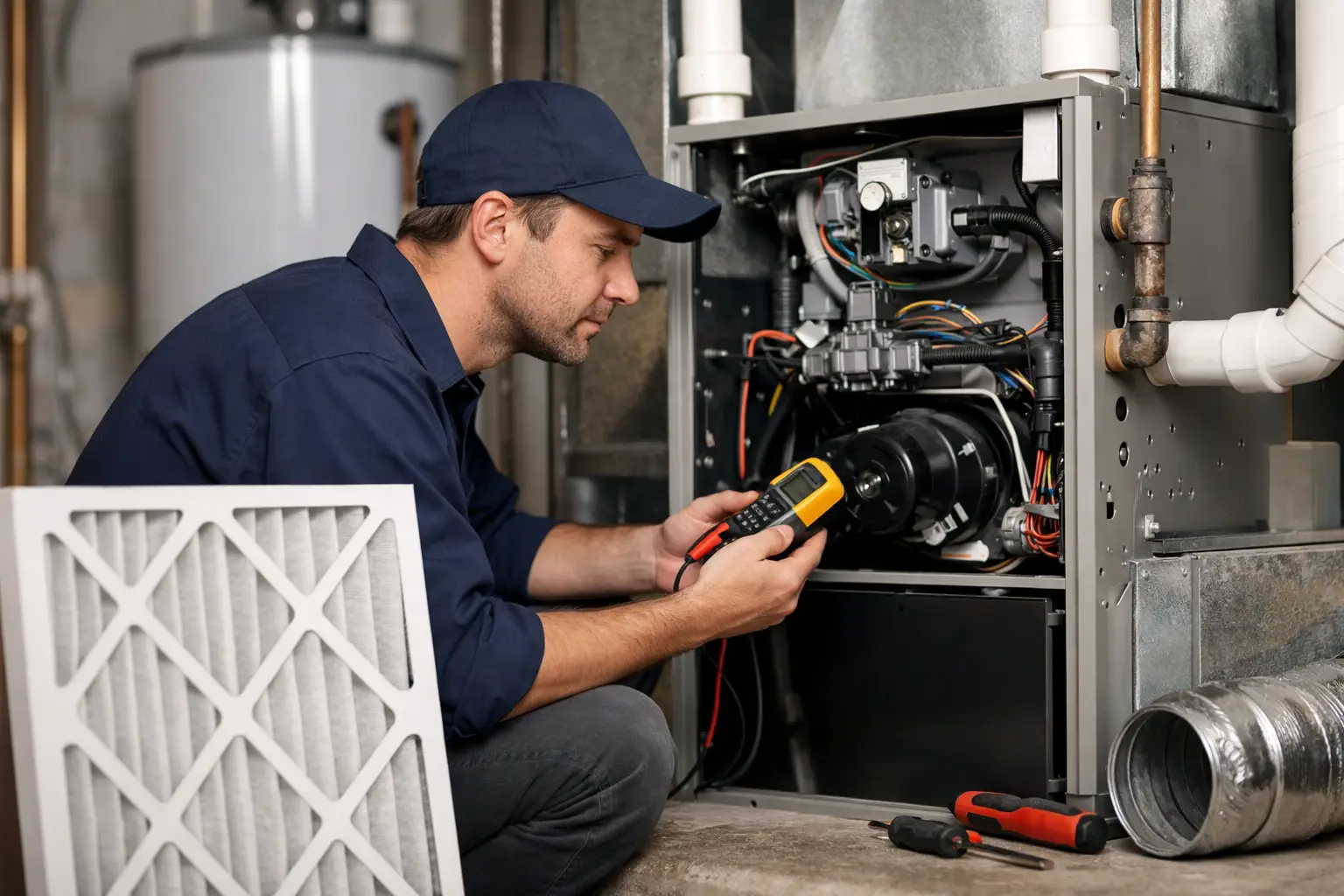
A furnace rarely fails at a convenient time. It usually shows up during the first cold snap, when a weak igniter, clogged filter, or airflow problem has been building for months. This guide to furnace maintenance basics explains what homeowners can safely handle, what should be left to a qualified technician, and which warning signs deserve prompt attention.
For Charlotte-area homes, furnace maintenance is not about chasing a sales pitch or replacing equipment before its time. It is about keeping the system clean, safe, and properly tested so a small issue does not turn into a no-heat call on a cold night.
Guide to Furnace Maintenance Basics: Start With Safety
Before touching the furnace, turn the thermostat off. If you are doing more than checking the filter or looking around the cabinet, shut off electrical power to the unit at its service switch or breaker. If you smell natural gas, do not try to troubleshoot the furnace. Leave the area, avoid switches and open flames, and contact your gas utility or emergency services from a safe location.
A gas furnace creates heat through combustion, which means safety checks matter as much as comfort checks. Every home with fuel-burning equipment should have working carbon monoxide detectors, including one near sleeping areas. Test them monthly and replace batteries as needed. Carbon monoxide has no odor, so waiting for a smell is not a safety plan.
Electric furnaces do not use gas or create combustion gases, but they still need clear airflow, sound electrical connections, and professional inspection. The maintenance approach overlaps in several areas, especially filters, vents, thermostat operation, and seasonal tune-ups.
Replace the Filter Before It Restricts Airflow
The air filter is the simplest maintenance item and one of the most overlooked. A dirty filter makes the blower work harder and limits the air moving across the heat exchanger. That can lead to uneven heating, higher energy use, overheating, and premature wear on the blower motor or limit switch.
Check the filter every month during heating season. How often it needs replacement depends on the filter type, household conditions, and system runtime. A basic one-inch filter may need changing every one to three months. Homes with pets, construction dust, smokers, or allergy concerns often need more frequent checks.
Use the size printed on the existing filter or furnace cabinet, and install the new filter with the airflow arrow pointing toward the furnace or air handler. Do not assume a higher-rated filter is always better. Very restrictive filters can create airflow problems if the system was not designed for them. A technician can help you choose a filter that balances indoor air quality with proper system performance.
Keep Return Vents and Supply Registers Open
Your furnace needs to move a specific amount of air to operate correctly. Closing multiple supply registers to force heat into certain rooms may seem practical, but it can increase duct pressure and reduce airflow through the system. The result can be hot and cold rooms, more noise, and unnecessary strain on equipment.
Walk through the home and make sure return grilles are not blocked by furniture, rugs, boxes, or drapes. Return vents pull air back to the furnace, while supply registers deliver heated air into rooms. Both need open pathways. Vacuum visible dust from grilles and registers, but do not push objects deep into the ductwork.
If one room is consistently colder than the rest of the house, the cause may be more than a register setting. Duct leakage, poor insulation, thermostat location, zoning problems, or an undersized return can all affect comfort. Closing vents is not a real fix for those issues.
Check the Thermostat and Heating Cycle
Set the thermostat several degrees above room temperature and listen as the furnace starts. A typical gas furnace sequence is straightforward: the thermostat calls for heat, the inducer motor starts, the igniter heats up, burners light, and the main blower begins after a short delay. When the thermostat reaches the set temperature, the burners shut down and the blower runs briefly to move remaining heat through the ducts.
You do not need to remove panels to observe this basic cycle. Pay attention to repeated clicking, delayed ignition, loud booming when burners light, frequent short cycles, or a blower that never starts. These symptoms can point to ignition, airflow, flame-sensing, venting, or control issues. They need diagnosis, not guesswork.
If the thermostat screen is blank, replace the batteries if your model uses them. Also confirm it is set to Heat and that the fan is set to Auto rather than On. A fan set to On runs continuously, which can make the home feel drafty between heating cycles.
Keep the Furnace Area Clear
The space around a furnace is not storage. Keep paint, gasoline, cleaning chemicals, cardboard, laundry, and other combustible items away from the equipment. A clear area gives the system room to draw air, gives technicians access for service, and reduces fire risk.
Look around the furnace cabinet for loose panels, water on the floor, rust, or signs of rodent activity. If the furnace is in an attic, crawl space, garage, or closet, check that the access area remains clear and dry. Water near a furnace may come from a humidifier, air conditioner condensate line, plumbing issue, or drainage problem. It is worth addressing before corrosion or electrical damage gets worse.
For high-efficiency furnaces, inspect the outdoor PVC intake and exhaust pipes from the ground when safe to do so. Leaves, mulch, ice, nests, or other debris can block these terminations. Do not disassemble the venting. Just make sure the openings are visibly clear and have not been damaged.
Know What a Professional Furnace Tune-Up Should Include
Home maintenance helps, but it does not replace an annual furnace inspection. A qualified HVAC technician has the tools to test combustion, electrical performance, safety controls, venting, temperature rise, and component condition. Those checks are especially important for gas furnaces because problems can affect both reliability and safety.
A proper maintenance visit should involve more than spraying a fragrance, changing a filter, and recommending a new unit. The technician should inspect the burners and ignition system, test the flame sensor, examine the heat exchanger for visible concerns, verify gas pressure where applicable, check the condensate system on high-efficiency equipment, and confirm safe venting. They should also inspect wiring, blower operation, capacitors, and the furnace’s temperature rise.
The exact work depends on the furnace type, age, and condition. A newer system may need routine cleaning and testing, while an older unit may need a closer look at wear items or signs of heat-exchanger deterioration. Honest maintenance means explaining what was found, what can be repaired, and what can reasonably wait. Replacement may eventually make sense, but it should follow accurate diagnosis rather than be the default answer.
Warning Signs That Should Not Wait
Some furnace issues need service quickly, even if the system still produces heat. Call a qualified HVAC technician if you notice any of the following:
- A gas odor, carbon monoxide alarm, soot, scorch marks, or a yellow, lazy burner flame instead of a mostly blue flame.
- Loud bangs at ignition, grinding, squealing, repeated clicking, or a furnace that starts and stops every few minutes.
- Cool air from supply vents when the thermostat calls for heat, or a furnace that runs but cannot maintain temperature.
- Water pooling around the furnace, frequent breaker trips, burning electrical smells, or an error code on the control board.
Do not repeatedly reset breakers or keep cycling the thermostat to force a furnace to run. That can hide the symptom while increasing the chance of component damage. If the furnace shuts down, it may be responding to a safety control for a reason.
Set a Simple Seasonal Routine
The best time for furnace service is before consistent cold weather arrives, but maintenance is useful anytime the system has been neglected. Start by checking the filter, testing carbon monoxide detectors, clearing vents and the furnace area, and running a heating cycle before you depend on it every day.
Then schedule professional maintenance once a year. For rental homes and commercial spaces, keep a simple record of filter changes, service dates, recurring comfort complaints, and repairs. That history helps identify patterns and supports better repair decisions over time.
A well-maintained furnace does not need to be flashy. It should start safely, heat evenly, and operate without demanding your attention. If it is doing anything else, a clear diagnosis from a technician who focuses on the actual problem is the right next step.