

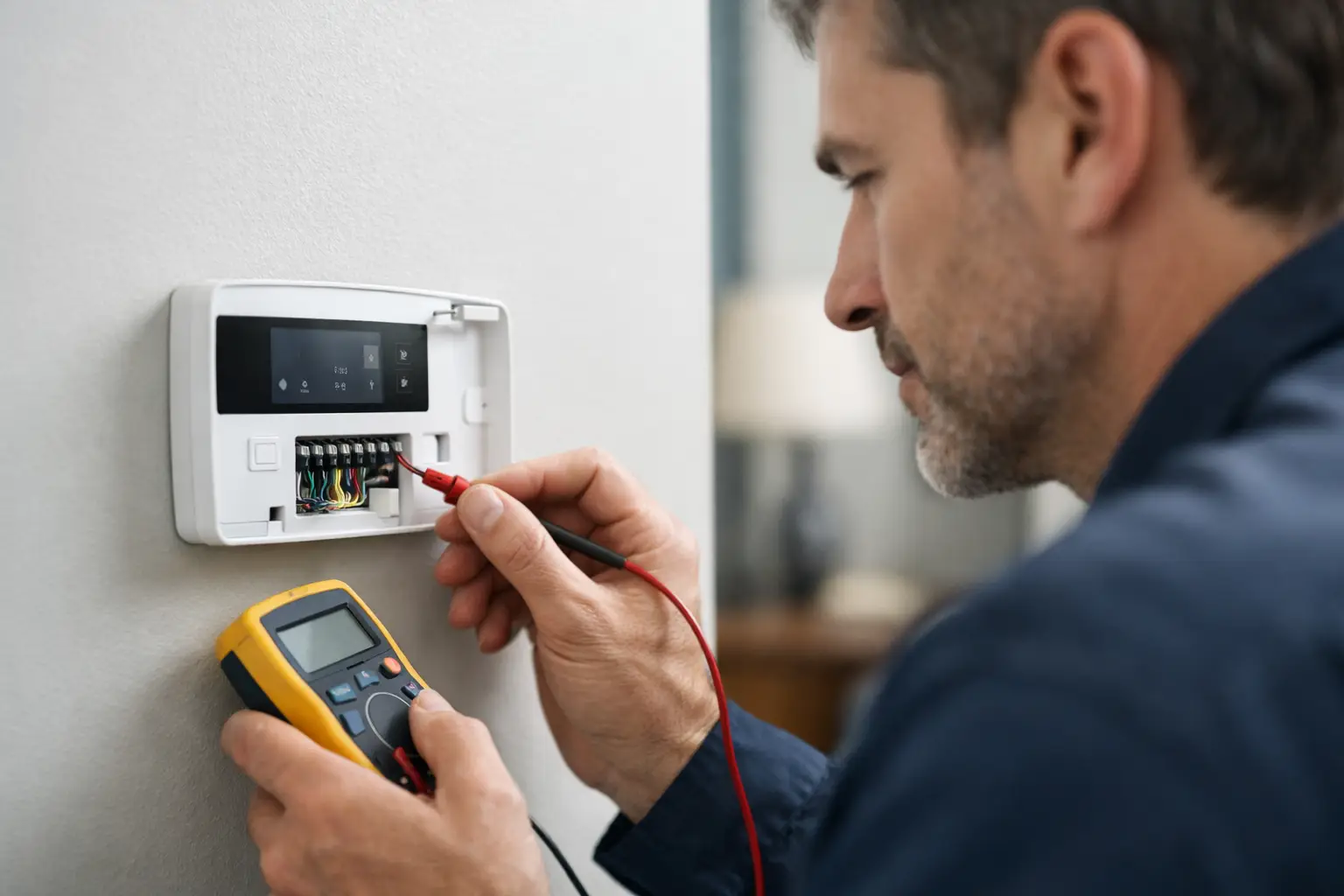
When the house feels wrong but the HVAC system is not obviously broken, the thermostat is one of the first places to look. If you are trying to figure out how to troubleshoot thermostat problems, start with this simple truth: a bad thermostat signal can look exactly like a furnace, heat pump, or AC failure. That is why careful diagnosis matters.
A thermostat does one basic job – it tells your system when to run and when to stop. But a lot can interfere with that job. Dead batteries, bad settings, wiring issues, sensor problems, power interruptions, and old equipment can all create symptoms that feel bigger than they are. Sometimes the fix is easy. Sometimes the thermostat is only exposing a deeper HVAC problem.
How to troubleshoot thermostat problems step by step
Start with the setting itself. It sounds obvious, but it gets missed all the time. Make sure the thermostat is set to the right mode – heat when you need heat, cool when you need cooling, and auto only if you understand how your system switches between the two. Then check the setpoint. If the room is 76 and the thermostat is set to cool at 78, the AC is not supposed to run.
Next, look at the fan setting. If the fan is set to On instead of Auto, the blower may run continuously even when the system is not actively heating or cooling. Homeowners often mistake that airflow for normal operation, then assume the AC or furnace is failing because the air coming out does not feel warm or cold enough.
If the display is blank or fading, check power. Many thermostats use batteries, even when they are wired into the wall. Replace the batteries first if your model has them. If the screen is still blank, look for a tripped breaker, a furnace switch that got turned off, or a blown low-voltage fuse in the air handler or furnace control board. A thermostat cannot control equipment if it is not getting power.
After that, lower the cooling setpoint or raise the heating setpoint by several degrees and wait a minute or two. Some systems have built-in delays to protect the equipment, especially air conditioners and heat pumps. If nothing starts after a short wait, pay attention to what is missing. Is the display working but the system silent? Is the indoor fan running but the outdoor unit not starting? Those details help narrow the problem down.
Common thermostat symptoms and what they usually mean
A thermostat that will not turn on often points to a power issue, not always a failed thermostat. Weak batteries are common. So is loss of 24-volt power from the HVAC equipment. If you recently changed a filter, cleaned around the furnace, or had electrical work done, something may have been switched off without anyone realizing it.
If the thermostat is on but not responding properly, the issue may be programming, calibration, or location. A thermostat installed near a sunny window, supply vent, exterior door, or kitchen can read the room incorrectly. That causes short cycling, temperature swings, or rooms that never seem comfortable. The thermostat may be working exactly as designed – it is just getting bad information from where it sits.
If the system starts and stops too often, the thermostat could be too sensitive, poorly located, dirty inside, or mismatched to the equipment. Short cycling can also come from airflow restrictions, refrigerant issues, overheating, or safety controls tripping. This is where thermostat troubleshooting has limits. The symptom starts at the wall, but the root cause may be in the equipment.
A thermostat that shows the wrong room temperature may have dirt buildup, internal sensor drift, or poor placement. Before assuming it is defective, compare it with another accurate thermometer placed nearby for 15 to 20 minutes. A slight difference is normal. A large difference suggests a sensor or placement issue.
Basic checks you can do safely
Remove the thermostat cover if your model allows it and look for dust, debris, or loose fit on the mounting plate. Older mechanical thermostats can be especially sensitive to dirt. If the unit looks dusty, a gentle cleaning with a soft brush can help. Do not force anything or touch wiring more than necessary.
Check whether the thermostat is level if you have an older mercury-style model. Those older units can lose accuracy when mounted crooked. Newer digital thermostats are less sensitive to that, but they can still have issues with loose terminals or poor wall contact.
If you recently installed a new thermostat and now nothing works right, compatibility should be high on the list. Not every thermostat works with every HVAC setup. Heat pumps, multi-stage systems, dual fuel systems, and commercial controls need the right thermostat and the right wiring. A mismatch can cause no heating, no cooling, constant fan operation, or equipment running at the wrong time.
You can also check your schedule settings. Programmable and smart thermostats sometimes create confusion because the system is doing what the program says, not what the user expects. A hold setting may have been removed. A schedule may be overriding a manual adjustment. Wi-Fi connected models can also lose settings after a power outage or software reset.
When wiring and equipment become the real issue
If you have gone through the basic checks and the thermostat still is not communicating with the system, the next possibility is low-voltage wiring. Loose wire connections, damaged thermostat cable, corrosion at terminals, and shorted wires can all interrupt control signals. In some cases, the thermostat is fine, but the signal never reaches the furnace, air handler, or outdoor unit.
This is also where people can make the problem worse by guessing. Shorting the wrong terminals, forcing wires into place, or installing the wrong thermostat can blow a fuse or damage a control board. That turns a simple service call into a bigger repair.
There is also the question of whether the thermostat is actually exposing a separate HVAC fault. For example, if the thermostat is calling for cooling but the outdoor unit does not run, the issue may be a contactor, capacitor, safety switch, float switch, condensate problem, or control board issue. If the thermostat calls for heat and nothing happens, the furnace may be locked out on ignition failure or another safety condition. In those cases, replacing the thermostat will not solve anything.
How to troubleshoot thermostat problems without guessing
The smartest approach is to separate user error, power loss, thermostat failure, and equipment failure one by one. That means checking settings first, then batteries and display power, then breaker and furnace power, then response to a call for heating or cooling. If those basics check out, the problem usually moves beyond simple homeowner troubleshooting.
For commercial spaces, the same logic applies, but with more variables. Multiple zones, tenant adjustments, locked controls, sensor placement, and rooftop unit communication can all complicate the picture. A thermostat complaint in an office or retail space may really be an airflow imbalance, a bad sensor, or a scheduling issue affecting occupied hours.
That is why honest HVAC diagnosis matters. A thermostat should not be blamed automatically, and neither should the whole system. The right technician verifies the signal path, checks power, confirms equipment response, and finds the actual failure before talking about replacement.
Signs it is time to call a professional
If the thermostat is blank after new batteries and breaker checks, if the system will not start after a clear call for heating or cooling, or if you see wiring issues, it is time to stop there. The same goes for repeated short cycling, major temperature inaccuracy, or a thermostat that seems to work only sometimes. Intermittent control issues can be especially frustrating because they often point to loose connections, failing boards, or safety switches opening under certain conditions.
A good service visit should leave you with a clear explanation. You should know whether the thermostat failed, the wiring failed, or the equipment itself has a separate problem. You should also know whether a repair makes sense or whether age, compatibility, and reliability issues are starting to stack up.
At DDL Services, that diagnostic mindset is a big part of the job. The goal is not to sell a thermostat or a new system by default. It is to find the real problem and fix what is actually broken.
If your thermostat has you second-guessing the whole HVAC system, slow down and work through the basics first. A careful check can save you money, and when the issue is bigger than a setting or battery, good diagnosis is what keeps a small control problem from turning into an expensive guess.