

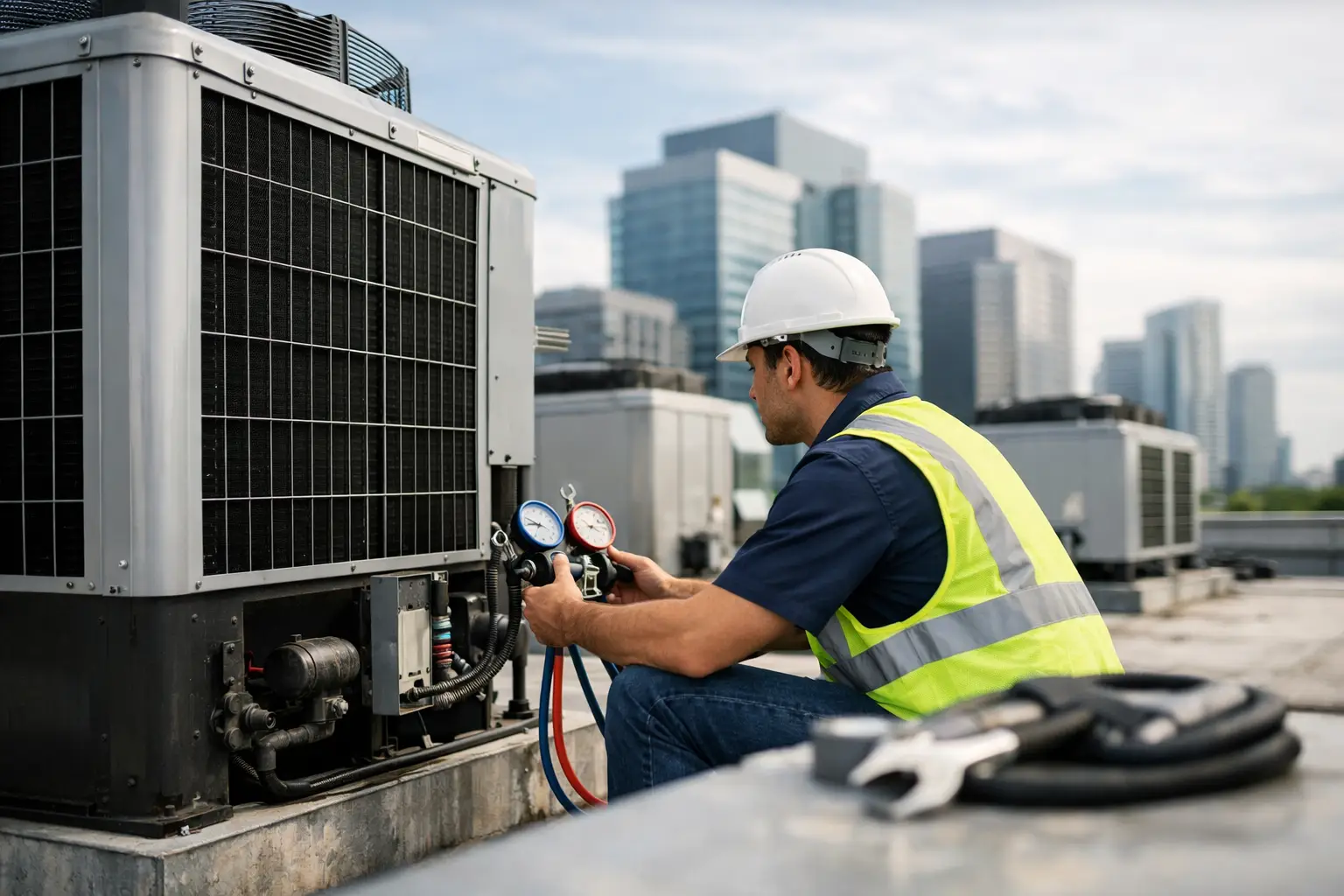
A commercial cooling fix reduced downtime only when it solves the problem causing the failure, not just the symptom that brought it to attention. For a Charlotte-area business, a warm sales floor, humid office, overheated server room, or uncomfortable restaurant dining area can disrupt staff, customers, equipment, and revenue quickly. The fastest path back to normal is accurate diagnosis followed by a repair that holds.
Commercial HVAC downtime is rarely convenient. It shows up during a heat wave, before a busy shift, or after a system has been working harder than usual for weeks. That is why a technician-led approach matters. Replacing equipment may sometimes be the right answer, but it should not be the first answer when a targeted repair can restore dependable cooling.
Why Cooling Failures Create More Than Comfort Problems
When commercial air conditioning is not keeping up, the impact reaches beyond the thermostat. Employees lose focus, customers leave sooner, and tenants may question whether a property is being maintained. In certain spaces, high temperatures can also put inventory, computers, networking equipment, and temperature-sensitive products at risk.
The cost of downtime depends on the business. A retail shop may lose foot traffic. A medical or professional office may need to reschedule appointments. A restaurant may face uncomfortable dining conditions and additional strain on refrigeration equipment. For a property manager, one rooftop unit problem can become several tenant calls in a single afternoon.
That is why “it is still blowing some air” is not a reason to wait. Weak airflow, rising indoor humidity, uneven temperatures, unusual cycling, and higher utility bills are often early signs of a condition that can become a full shutdown.
A Commercial Cooling Fix That Reduces Downtime Starts With Diagnosis
A cooling system can stop performing for many reasons, and several of them can look similar from the occupied space. A thermostat setting, failed capacitor, dirty condenser coil, restricted filter, low refrigerant charge, damaged contactor, blower issue, drain safety switch, or control problem can all lead to warm air or poor cooling.
Treating every issue as a replacement opportunity is not good service. Neither is replacing a part without confirming why it failed. For example, a unit with a failed capacitor may return to operation quickly after that part is replaced, but a technician should also check electrical readings and motor condition. Otherwise, the same failure may return during the next stretch of hot weather.
Proper diagnosis generally means checking the equipment under operating conditions, verifying airflow, inspecting electrical components, measuring system performance, and looking for underlying wear or maintenance issues. The exact process depends on the equipment and the complaint, but the goal is consistent: find the real problem and explain the practical repair options clearly.
Fast Repair Does Not Mean Guesswork
Businesses need speed, especially when customers and staff are affected. But speed without diagnosis can create a second service call, unnecessary parts costs, or a temporary repair that fails at the worst possible time.
The right balance is efficient troubleshooting and clear communication. A qualified HVAC technician should be able to explain what failed, what caused or contributed to the failure, what repair is needed now, and whether there are related concerns to plan for. That gives an owner or facility manager information to make a decision without pressure.
The Repairs That Often Keep Equipment in Service
Not every commercial cooling problem requires a new system. Many units can be restored with a properly performed repair, particularly when the equipment is otherwise in reasonable condition and has been maintained.
Common repair situations include failed capacitors and contactors, worn belts, blower motor issues, clogged condensate drains, dirty coils, refrigerant leaks, faulty thermostats, and electrical connection problems. Each requires a different response. Cleaning a coil can improve heat transfer, but it will not correct a refrigerant leak. Adding refrigerant without finding a leak may provide short-term cooling while allowing the actual problem to continue.
Age matters, but it is not the only factor. A newer unit with a major compressor issue may call for a different conversation than an older unit with a straightforward electrical repair. Repair cost, repair history, equipment efficiency, parts availability, and the role that system plays in the building should all be part of the decision.
A trustworthy contractor does not promise that every unit should be repaired forever. They also do not use the age of a unit as an automatic reason to recommend replacement. The best recommendation is the one supported by the condition of the equipment and the needs of the business.
Preventive Maintenance Is Downtime Control
The most affordable emergency repair is often the one prevented before summer demand peaks. Commercial systems run long hours, deal with outdoor debris, and may serve spaces with varying occupancy and heat loads. Small maintenance problems can build until a component fails under pressure.
A practical maintenance visit focuses on the parts of the system most likely to affect reliability and efficiency. Filters need to be checked and changed on an appropriate schedule. Indoor and outdoor coils need to remain clean enough for proper airflow and heat transfer. Electrical components, drain systems, refrigerant performance, belts, motors, and controls all need attention based on the equipment type.
Maintenance is not a guarantee against every breakdown. Parts can fail unexpectedly, and extreme weather exposes weaknesses that may not have been obvious earlier. Still, routine service makes failures easier to spot before they become business interruptions. It also gives owners a better view of which equipment is becoming costly to maintain.
Keep a Record of Repeat Problems
If the same unit has needed multiple repairs, do not treat each call as an isolated event. Keep a simple record of the date, symptoms, diagnosis, repair performed, and cost. Over time, that history helps identify whether the issue is a recurring maintenance gap, a design or sizing concern, or a sign that replacement planning is becoming more sensible.
This is especially useful for businesses with several units. A facility manager can prioritize the equipment that presents the greatest operational risk instead of waiting for a surprise failure to force a rushed decision.
Building Conditions Affect Cooling Reliability
Sometimes the air conditioner is working, but the building is asking more of it than it can reasonably deliver. A space that was remodeled, expanded, filled with additional equipment, or given new operating hours may have a different cooling load than it did when the system was installed.
Poor airflow can also make a functional system appear inadequate. Closed or blocked supply vents, damaged ductwork, dirty filters, failing blower components, and poorly balanced zones can leave one part of the building warm while another is overcooled. In these cases, simply installing a larger unit may not solve the underlying issue.
A good commercial cooling evaluation looks at the equipment and the space it serves. That includes occupancy, sun exposure, internal heat from equipment, ventilation needs, and changes to the layout. The solution may be a repair, an airflow correction, a control adjustment, a maintenance plan, or, when justified, a properly matched system upgrade.
What to Do When Your Commercial System Stops Cooling
Start by protecting the people, products, and equipment most affected by the heat. If possible, move sensitive electronics or temperature-sensitive inventory, limit heat-producing activities, and notify staff or tenants about the issue. Avoid repeatedly turning the system on and off in hopes that it will reset itself, particularly if it is tripping breakers or making unusual noises.
Before calling for service, note what you are seeing: whether the system is blowing warm air, whether airflow is weak, when the issue started, which areas are affected, and whether there are leaks, odors, or electrical concerns. That information can help speed up diagnosis.
Then call for qualified commercial HVAC service. If the problem affects operations after normal business hours, emergency support can make the difference between a manageable repair and a longer interruption. DDL Services approaches these calls with the same straightforward goal: identify the failure, explain the options, and repair what can be repaired without pushing equipment replacement that does not make sense.
The most reliable cooling systems are not the ones that never need attention. They are the ones serviced by people who catch problems early, diagnose failures honestly, and make repairs that keep the business moving.