

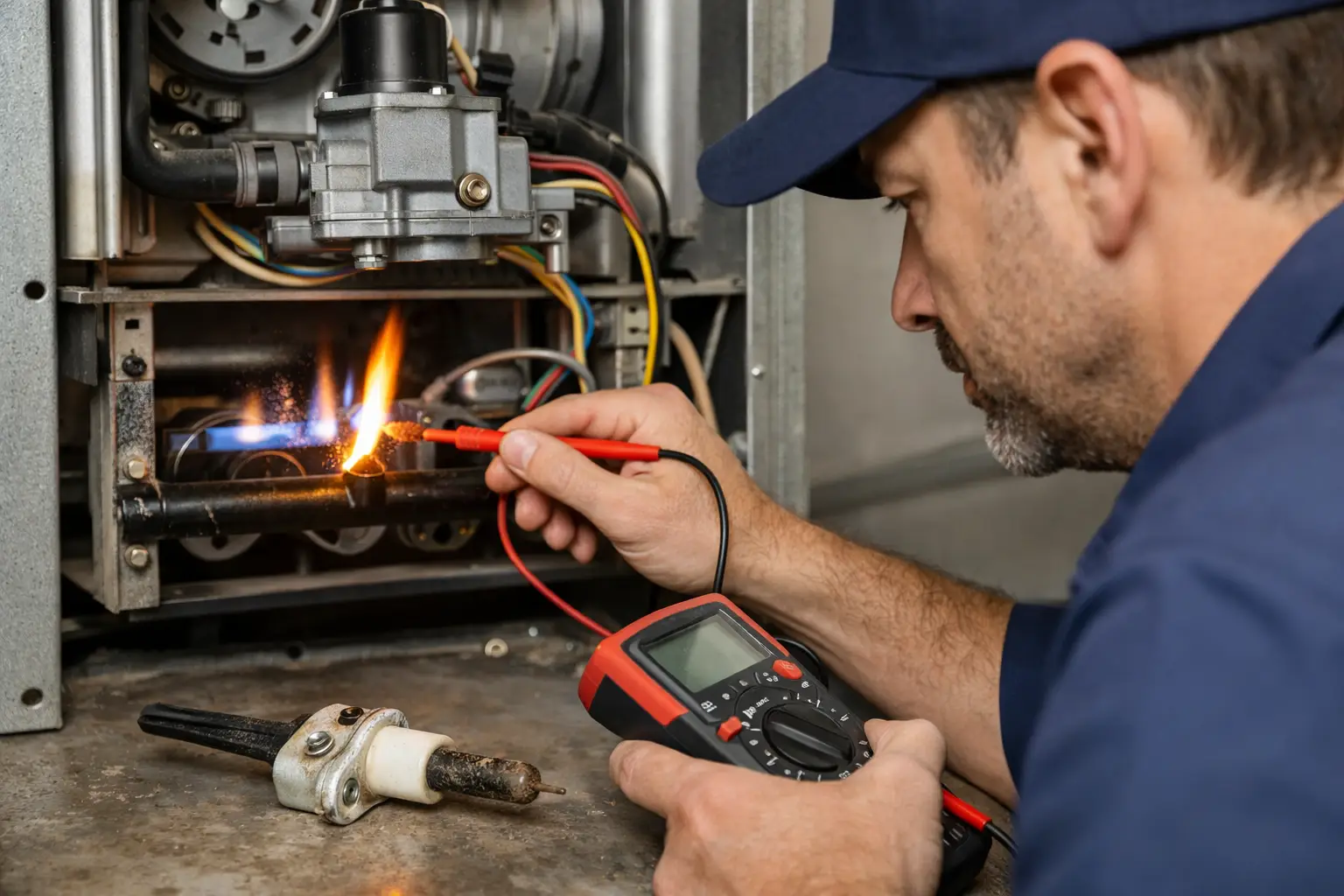
A furnace can sound like it is starting normally – the thermostat clicks, the blower comes on, and then the air never gets warm. Furnace ignition problems often show up this way, and they can turn a minor repair into an uncomfortable night quickly. The good news is that a failed ignition cycle does not automatically mean you need a new furnace. In many cases, the issue is a dirty sensor, a blocked vent, a weak igniter, or another repairable part.
Modern gas furnaces are designed to stop the heating cycle when they cannot confirm safe ignition. That safety response protects your home, but it also means guessing at the cause or repeatedly resetting the system can make diagnosis harder. A few basic checks are reasonable. Anything involving gas, wiring, burner components, or repeated shutdowns should be handled by a qualified HVAC technician.
How Furnace Ignition Problems Usually Happen
Most newer furnaces use an electronic ignition system rather than a standing pilot light. When your thermostat calls for heat, the furnace control board begins a specific sequence. The inducer motor starts, a pressure switch confirms proper venting, the igniter heats up or sparks, the gas valve opens, and the burners light. A flame sensor then confirms that a flame is present.
If one step fails, the furnace shuts down or locks out to prevent unsafe operation. That sequence gives a trained technician useful clues. For a homeowner, the sounds and timing can help narrow down whether the problem is likely simple or requires prompt service.
The furnace never starts the heating cycle
If you do not hear the furnace attempt to start, begin with the thermostat. Make sure it is set to Heat, the temperature is set several degrees above the room temperature, and the batteries are not weak if your thermostat uses them. Check that the furnace switch is on and that the circuit breaker has not tripped.
A clogged return-air filter can also contribute to heating issues, although it usually causes overheating and short cycling rather than a direct ignition failure. Replace an obviously dirty filter with the correct size and type. Do not run the furnace without a filter or install a filter so restrictive that it limits airflow.
The furnace starts, but burners do not light
When the inducer motor runs but you never see a glow from the igniter or hear burners light, the cause may be a failed hot-surface igniter, a faulty pressure switch, a blocked intake or exhaust vent, or a control-board problem. Outside vent pipes can be obstructed by leaves, nests, ice, or debris. From the ground, look for visible blockages around the vent termination only. Do not dismantle venting or force tools into the pipe.
A hot-surface igniter is especially fragile. It can crack from age, vibration, or handling. Even if it looks intact, it may not heat to the temperature needed to ignite gas. Replacing it requires the correct part and proper testing, not a guess based on appearance.
The burners light, then shut off within seconds
This is one of the most common furnace ignition complaints. The burners may light normally, then go out after a few seconds while the furnace tries again. A dirty or failing flame sensor is often the reason.
The flame sensor is a small metal rod positioned near the burners. It verifies that gas is burning. When the sensor cannot read the flame correctly, the furnace closes the gas valve as a safety measure. Cleaning or replacing a flame sensor is often a straightforward repair for a technician, but the same symptom can also result from burner problems, poor grounding, a weak flame, or a control issue. Treating every short ignition cycle as a sensor problem can miss the real cause.
Common Causes of Furnace Ignition Problems
Ignition failures are not all alike, and the repair should match the actual failed component. The most frequent causes include:
- A worn or cracked hot-surface igniter that no longer gets hot enough to light the burners.
- A dirty, damaged, or poorly connected flame sensor that cannot confirm a stable flame.
- A blocked combustion-air intake or exhaust vent that prevents the pressure switch from confirming safe venting.
- A malfunctioning pressure switch, inducer motor, gas valve, control board, or wiring connection.
- Dirty burners or gas-supply issues that create delayed, weak, or uneven ignition.
- A furnace lockout caused by several failed ignition attempts.
Age matters, but it is not the whole story. An older furnace may need an igniter or sensor and continue running reliably after repair. A newer system can have an ignition issue caused by installation details, drainage problems, venting, or a failed electrical part. A trustworthy diagnosis looks at the whole ignition sequence before anyone recommends replacement.
Safe Checks Before Calling for Furnace Repair
There are a few things you can check without taking apart the furnace. Confirm the thermostat settings, inspect the filter, and make sure the furnace has power. If you have a high-efficiency furnace with plastic intake and exhaust pipes outside, clear loose debris from around the openings if it can be done safely.
You can also check the furnace access panel. Many furnaces will not run when the panel is not seated correctly because it holds down a safety switch. Turn off power before reinstalling a loose panel. Then restore power and allow the system one normal attempt to start.
Avoid repeatedly cycling the breaker, bypassing safety switches, or trying to light burners manually. Do not clean internal parts with sandpaper, spray cleaners, or household chemicals. A furnace that locks out is communicating that it did not complete a safe startup sequence. Resetting it over and over can delay the repair and, in some cases, put extra strain on components.
When an Ignition Issue Needs Immediate Attention
Turn the furnace off and seek professional help promptly if you smell gas, hear a boom or delayed ignition when burners light, see soot around the furnace, or experience headaches, dizziness, or nausea in the building. Leave the area if you suspect a gas leak and contact the gas utility or emergency services from a safe location.
Carbon monoxide alarms should be installed and working on every level of a home, especially near sleeping areas. They are not a substitute for furnace maintenance, but they provide critical warning if combustion or venting problems create a hazardous condition.
For commercial properties, an ignition failure can affect more than comfort. Cold indoor temperatures can disrupt employees, customers, equipment, and plumbing. A technician should assess recurring lockouts, inconsistent heating across zones, and any signs of combustion or venting trouble before a small failure creates longer downtime.
What a Proper Furnace Diagnosis Should Include
A real diagnosis is more than replacing the part that appears most likely to fail. The technician should verify thermostat operation, electrical power, fault codes, airflow, venting, inducer performance, pressure-switch operation, ignition, flame-sensor readings, burner condition, and gas pressure where appropriate. The goal is to find out why the furnace failed to complete its ignition sequence.
That approach matters because one failed part can be a symptom of another problem. For example, a dirty flame sensor may be the immediate reason a burner shuts down, but venting issues, burner contamination, or electrical grounding may be contributing. Replacing parts without testing can get heat back temporarily while leaving the root cause behind.
At DDL Services, the focus is on explaining what failed, why it failed, and what repair makes sense for the equipment’s condition. If a repair is practical, it should be presented clearly. If replacement is genuinely the better financial or reliability decision, you should receive a straightforward reason, not a sales pitch.
Preventing Future Ignition Failures
Annual heating maintenance is the best opportunity to catch ignition-related wear before the first cold spell. During a proper tune-up, a technician can inspect and clean ignition components, test safety controls, check venting and drainage, examine burners, and identify worn electrical parts. Homeowners can help by changing filters regularly, keeping outside vents clear, and paying attention to new noises or repeated startup attempts.
If your furnace is clicking, trying to start, or locking out, do not assume the entire system is finished. A clear diagnosis can separate a manageable repair from a true replacement decision – and get dependable heat back where it belongs.