

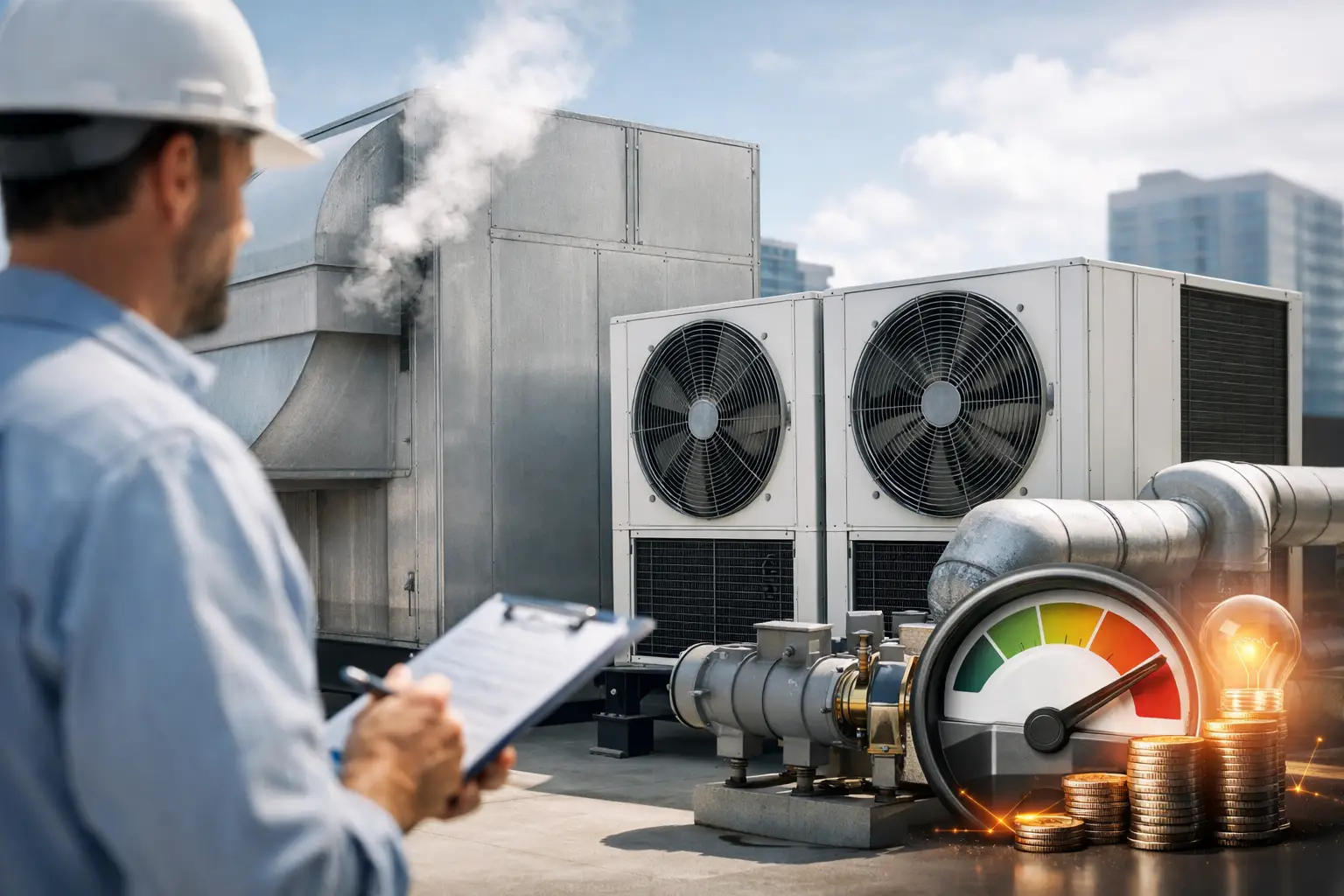
A house that cools fast is not always a house that cools well. The same goes for a small office or retail space. If you have ever been told that bigger equipment is automatically better, it is fair to ask: can oversized systems waste energy? In many cases, yes. An HVAC system that is too large for the space can cycle improperly, miss humidity control, and cost more to run than a properly sized unit.
That does not mean every high-capacity system is a problem. Some buildings have unusual heat loads, poor insulation, large sun exposure, or equipment demands that justify more capacity. The issue is not the number on the label. The issue is whether the system actually matches the building and the way it is used.
Why oversized HVAC systems can waste energy
The simplest reason is short cycling. When an air conditioner or heat pump is too large, it satisfies the thermostat setting too quickly and shuts off before it has run long enough to do its job efficiently. Then it starts again a short time later. That repeated stop-and-start pattern uses extra energy and puts more wear on components.
Most HVAC equipment operates best during stable run times. Startup is one of the harder parts of the cycle. Compressors, blower motors, and electrical components all experience stress during frequent starts. A properly sized system tends to run in longer, steadier cycles, which is usually better for both efficiency and comfort.
In cooling mode, short cycling creates another problem that homeowners in Charlotte and surrounding areas know well – humidity. Your AC does not just lower temperature. It also removes moisture from indoor air. When the system shuts off too quickly, it may cool the room enough to satisfy the thermostat without running long enough to pull out enough humidity. The result is a space that feels cold and damp instead of cool and comfortable.
That is one of the biggest reasons the answer to can oversized systems waste energy is not just about utility bills. Oversizing can waste comfort too. People often respond by lowering the thermostat even further, which pushes energy use higher while still not fully fixing the muggy feeling.
Bigger equipment is not the same as better performance
A lot of replacement mistakes start with good intentions. A property owner says the old system struggled in summer, so the new one should be larger. On the surface, that sounds reasonable. But if the old unit struggled because of a dirty coil, leaking ductwork, low refrigerant, bad airflow, poor insulation, or failing controls, adding more tonnage does not solve the real issue.
It can actually make it worse. An oversized system may blast conditioned air into the space, hit the thermostat quickly, and shut down before temperatures even out from room to room. That can leave hot spots, cold spots, and uneven airflow across the building.
For commercial spaces, oversizing can be especially expensive. A small office, restaurant, or storefront may have varying occupancy throughout the day. If the unit is too large, those changing conditions can trigger constant cycling. That means more wear, less stable indoor conditions, and higher operating costs over time.
How oversizing affects heating, too
This is not only an air conditioning issue. Oversized furnaces can create similar problems in winter. A furnace that is too large can heat the space too quickly and shut off before air has circulated evenly. That can lead to temperature swings and rooms that never quite feel steady.
Frequent cycling also reduces efficiency in real-world use, even if the equipment has a strong efficiency rating on paper. Laboratory ratings matter, but field performance depends heavily on installation, duct design, airflow, controls, and sizing. That is why a high-efficiency system can still disappoint if it is not matched correctly.
With heat pumps, proper sizing is even more important because the system handles both heating and cooling. The right setup has to account for the building envelope, duct condition, indoor comfort goals, and local climate patterns.
Signs your system may be oversized
Some symptoms show up quickly. Others are easy to miss because people assume they are normal. If your system turns on and off every few minutes, cools the house fast but leaves it humid, or creates sharp temperature swings, sizing could be part of the problem.
You may also notice unusually high energy bills for the amount of runtime, noisy starts and stops, or rooms that never stay consistently comfortable. In commercial buildings, staff may complain that the office feels cold one hour and sticky the next. Those comfort swings often point to a system that is not operating in long, balanced cycles.
Of course, these signs do not prove oversizing by themselves. A thermostat issue, airflow restriction, duct leakage, zoning problem, or maintenance issue can look similar. That is why diagnosis matters. Honest HVAC service starts with testing and inspection, not a guess.
Why oversized systems get installed in the first place
Sometimes it is simple habit. Some contractors use rough rules of thumb instead of performing load calculations. Others oversize equipment on purpose because they want to avoid callbacks from customers who worry about capacity during extreme weather.
There is also a sales problem in this industry. Bigger units can sound like an upgrade, especially when the conversation is rushed or technical details are skipped. But more capacity is not automatically more value. If the equipment does not fit the load, the customer may pay more upfront and more every month after that.
In existing homes and commercial buildings, replacement sizing can get distorted by old assumptions. Maybe the original system was oversized. Maybe the building has since had insulation improvements, window upgrades, air sealing, or occupancy changes. Replacing old equipment with the same size without evaluating the current load can repeat the same mistake.
The right way to size an HVAC system
Proper sizing starts with measurements and real conditions, not guesswork. That includes square footage, yes, but also ceiling height, insulation levels, window orientation, duct layout, occupancy patterns, lighting, appliances, infiltration, and how the space is actually used.
For homes, a load calculation gives a much better picture than a rule like “one ton per so many square feet.” For commercial spaces, the calculation often needs to account for business hours, internal heat from equipment, customer traffic, and ventilation needs.
Sizing is also connected to ductwork. A correctly sized unit installed on undersized or leaky ducts will still struggle. So will a well-sized system with poor airflow, dirty coils, or incorrect refrigerant charge. HVAC performance is a system issue, not just an equipment issue.
That is one reason DDL Services focuses on finding the real problem before jumping to replacement. If the issue is repairable, it should be repaired. If replacement is truly the right move, the new system should be matched to the building instead of sold on the idea that larger is safer.
Can an oversized system ever make sense?
Sometimes there is nuance. Variable-speed and inverter-driven equipment can handle changing loads better than single-stage equipment because they can ramp output up and down. In some cases, that gives a little more flexibility. But even advanced systems should still be sized thoughtfully. Too much capacity is still too much capacity.
There are also buildings with unusual demands, high occupancy swings, server rooms, kitchen loads, or sun exposure that justify higher capacity in certain zones. That is why blanket advice is rarely reliable. The right answer depends on the building, the equipment type, and how the space is used day to day.
The main point is simple. Oversizing should never be the default answer. It should only happen when real calculations and job conditions support it.
What to do if you think your system is too large
Start with an inspection, not a replacement quote. A technician should look at cycle length, airflow, duct conditions, static pressure, thermostat operation, temperature split, humidity performance, and overall load assumptions. If the system is oversized, there may still be ways to improve comfort depending on the equipment and the building.
In some cases, airflow adjustments, duct improvements, control changes, or humidity solutions can help reduce the symptoms. In others, especially where the sizing mismatch is severe, replacement may eventually be the practical answer. But that decision should come after diagnosis, not before.
If a contractor recommends larger equipment without discussing load calculations, duct condition, or why the current system underperformed, that is a red flag. The right HVAC advice should be clear, test-based, and easy to explain.
A properly sized system is not about selling less equipment. It is about delivering better comfort, better efficiency, and fewer headaches over the life of the system. If your home or building never feels quite right, the problem may not be that your equipment is too small. It may be that nobody took the time to match it correctly in the first place.