

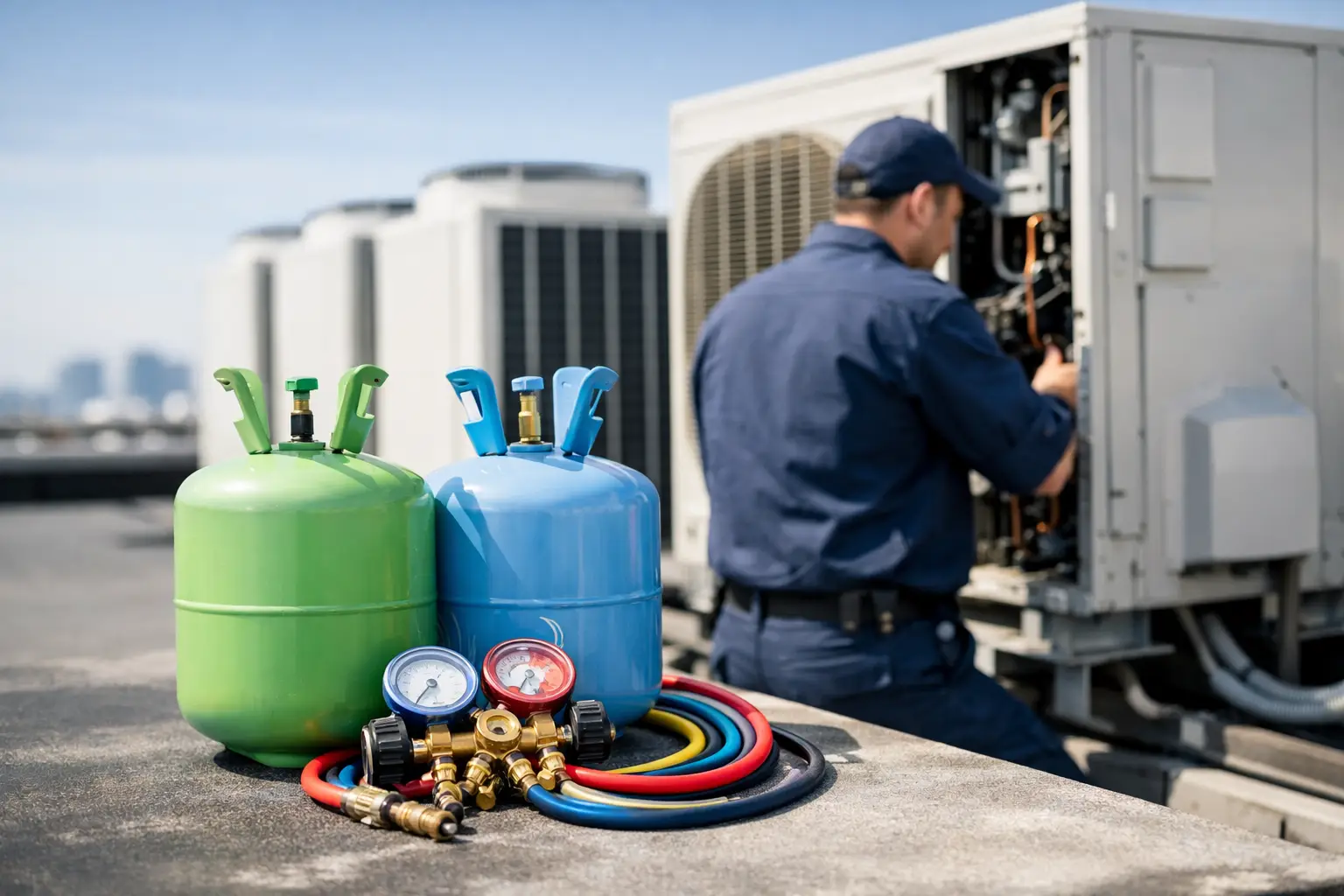
If you have been told you need a new AC because of the hvac refrigerant rules 2026, slow down for a minute. The refrigerant transition is real, but it does not automatically mean every existing system is obsolete, illegal, or beyond repair. A lot of homeowners and property managers are hearing half-true versions of the story, and that usually leads to rushed decisions and bigger invoices than necessary.
What is changing in 2026 is mostly about new equipment and the refrigerants used in that equipment. The goal is to reduce environmental impact by moving away from higher global warming potential refrigerants, especially R-410A, in many new comfort cooling systems. That matters, but the details matter more. If you own an existing system, the right next step depends on its age, condition, repair history, and what refrigerant it already uses.
What the HVAC refrigerant rules 2026 actually change
The short version is this: manufacturers are moving new residential and light commercial air conditioning and heat pump equipment toward lower-GWP refrigerants. In many cases, that means newer systems will use refrigerants such as R-32 or R-454B instead of R-410A.
For customers, the biggest practical effect is not that your current system suddenly becomes illegal. It is that the market for new equipment is changing, product designs are changing, and installation practices are becoming more specific because some of the newer refrigerants are classified differently for flammability. They are still approved for HVAC use, but they require proper equipment selection, installation, charging, leak checking, and technician training.
That is where confusion starts. People hear “new refrigerant rules” and assume all older systems must be ripped out. That is not how this works. Existing systems can often still be serviced, and many can continue running for years if they are in solid condition.
Does 2026 mean your current AC has to be replaced?
Usually, no.
If your system is running properly, cooling well, and not suffering from major compressor damage, repeated leak issues, or severe efficiency decline, there is usually no reason to replace it just because the calendar changed. Regulations aimed at new equipment do not automatically force replacement of functioning equipment already in service.
That said, there are situations where replacement starts making more sense. If you have an older R-410A unit with a major refrigerant leak, a failed compressor, or a coil replacement coming on top of other ongoing repairs, the math can shift quickly. Parts availability, refrigerant cost, labor, and the system’s remaining lifespan all matter.
This is where honest diagnostics matter more than sales talk. A refrigerant transition is not a diagnosis. It is just one factor in the decision.
Why newer refrigerants change installation and service
The refrigerants being used in newer systems are intended to lower environmental impact, but they also come with different handling requirements. That means contractors need to follow updated installation standards, use the correct tools, and understand the design of the specific equipment they are working on.
For homeowners and business owners, the main takeaway is simple: matching equipment and proper commissioning matter even more now. A system is not just a box swap. Line set sizing, factory specifications, leak testing, airflow setup, electrical checks, and refrigerant charge all need to be right. If they are not, you can end up with poor performance, nuisance shutdowns, shortened equipment life, and warranty issues.
This is one reason the lowest bid can become the most expensive option. During a refrigerant transition, shortcuts tend to show up faster.
The difference between old inventory and new equipment
One wrinkle is that the market does not change overnight in a perfectly clean line. Depending on manufacturing dates, distribution, and local inventory, contractors may still be working through equipment produced under prior standards while newer refrigerant models become more common.
That means two neighbors replacing systems around the same time may not get identical refrigerant types or equipment configurations. It does not necessarily mean one got outdated equipment or the other got upsold. It may simply reflect timing, availability, and the exact application.
What homeowners should expect from HVAC refrigerant rules 2026
If you are a homeowner in the Charlotte area, there are three practical things to expect.
First, replacement quotes may look different than they did a few years ago. New refrigerant-compatible systems may carry different equipment costs, and installation details may vary by brand and model.
Second, repair-versus-replace decisions may get more nuanced. A small repair on an otherwise healthy system can still be the right move. A large repair on an aging system may not be. There is no honest answer without checking the actual condition of the equipment.
Third, you may hear more urgency from sales-focused companies. Some of that urgency is real if a system is failing badly. Some of it is just pressure. The fact that refrigerant rules are changing does not mean you should approve a replacement without a clear explanation of what failed, what can be repaired, and why replacement is being recommended.
What commercial property owners should watch closely
Commercial clients have a slightly different risk profile. Downtime matters more, occupancy comfort matters more, and budgeting is often planned around longer cycles. If you manage an office, retail space, church, restaurant, or small industrial property, refrigerant changes should be part of your HVAC planning, not a reason to panic.
If your building relies on multiple split systems, rooftop units, or heat pumps of varying ages, now is a good time to know what refrigerants are in service, which units are showing repeat issues, and which ones are worth preserving with maintenance versus phasing out over time. A staged replacement strategy usually beats emergency replacement at the hottest point of summer.
This is also where maintenance records become valuable. A system with stable pressures, no history of leak repairs, and good electrical performance is a different conversation than one with repeated refrigerant loss and compressor stress.
Repair, retrofit, or replace?
This is the part most people actually want answered, and the honest answer is that it depends on the equipment.
Repair makes sense when the issue is isolated and the system still has real service life left. A failed capacitor, contactor, blower motor, drain issue, or control problem usually has nothing to do with refrigerant regulations. Even some refrigerant-side repairs can be worthwhile if the system is otherwise sound.
Retrofit is more limited than many customers expect. Not every system can or should be converted to a different refrigerant. In many cases, approved drop-in options are either not available, not ideal, or not supported in a way that makes long-term sense. When someone suggests a quick refrigerant swap as a cure-all, that should raise questions.
Replacement makes sense when the repair cost is high, refrigerant leaks are recurring, major components are failing, efficiency has dropped badly, or the equipment was mismatched to begin with. It also makes sense when reliability matters more than squeezing a final season out of a worn-out unit.
A good contractor should be able to explain which category your system falls into and why, in plain language.
Questions to ask before approving any major HVAC recommendation
Before you sign off on a large repair or replacement, ask what exactly failed, whether the system is leaking refrigerant or just low on charge, whether the coil or compressor damage has been confirmed, and whether the existing system can still be repaired safely and responsibly. Ask what refrigerant your current system uses and what refrigerant the proposed new system will use.
Also ask whether the new equipment is properly matched, whether existing line sets can be reused or need to be replaced, and what startup procedures will be performed after installation. These are not small details. They directly affect comfort, efficiency, and equipment life.
If the answers are vague, you are not getting a technical recommendation. You are getting a sales pitch.
The real bottom line for 2026
The HVAC refrigerant rules 2026 matter, but they are not a reason to panic-replace good equipment or ignore practical repairs. They are a reason to work with a contractor who knows how to diagnose problems correctly, explain the trade-offs clearly, and recommend the option that fits the actual condition of your system.
At DDL Services, that is the standard we believe customers deserve. Not every unit should be replaced, and not every old system should be kept alive at all costs either. The right answer starts with finding the real problem.
If your AC is cooling fine, keep maintaining it. If it is struggling, leaking, or failing, get a straight answer before you spend real money. Refrigerant rules will keep evolving, but honest HVAC advice should stay simple: fix what makes sense, replace what no longer does, and make sure the recommendation matches the equipment in front of you.