

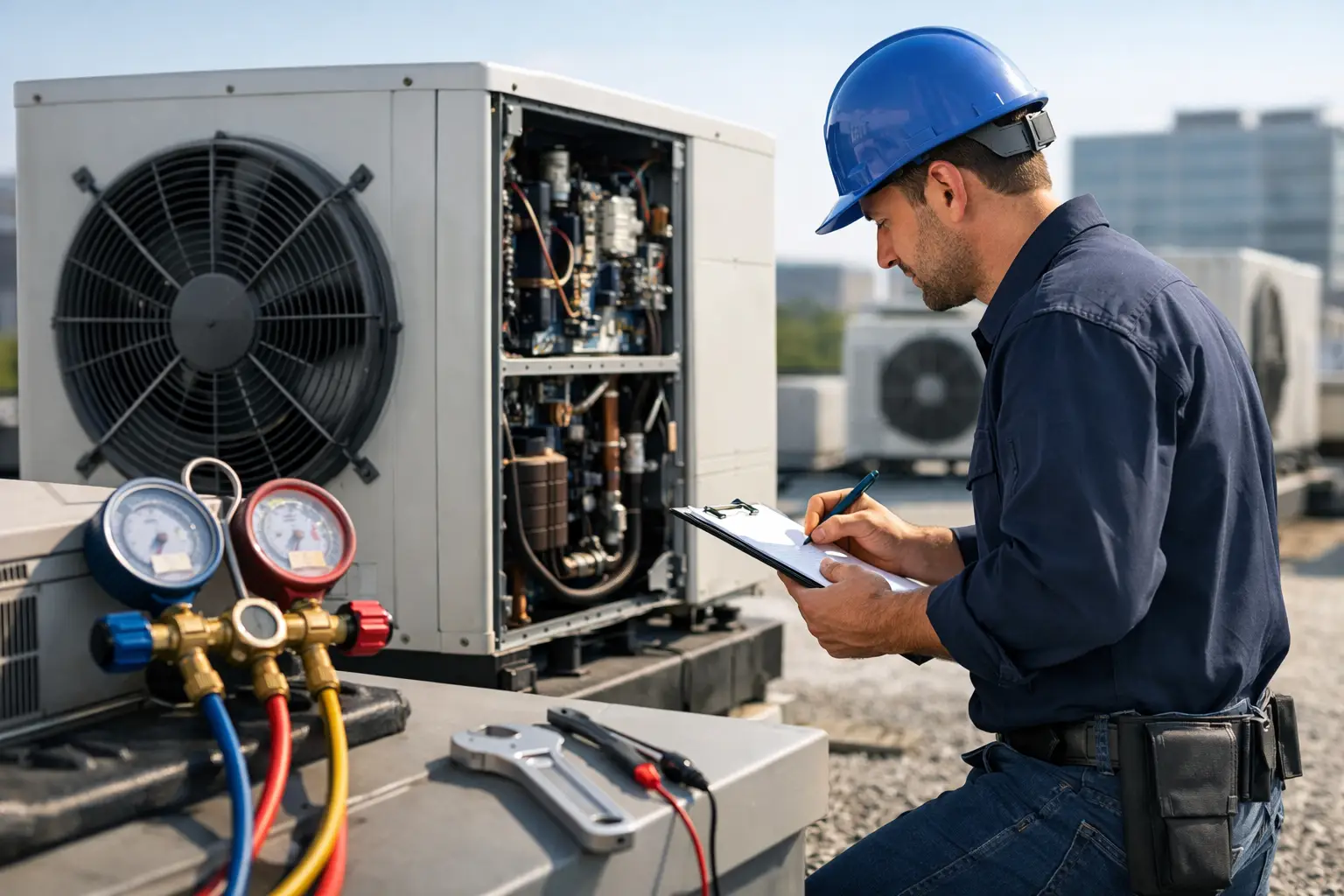
A rooftop unit rarely fails at a convenient time. It quits during a heat wave, right before a tenant walkthrough, or in the middle of a packed workday when comfort complaints start piling up. That is why a solid commercial hvac maintenance checklist matters. It gives business owners and facility managers a clear way to catch wear, airflow problems, drain issues, and control faults before they turn into expensive downtime.
The goal is not to create paperwork for the sake of paperwork. The goal is to protect equipment, keep occupants comfortable, and avoid the kind of service calls that start with, “It was working yesterday.” Good maintenance also helps you make better decisions. Sometimes a system needs a straightforward repair. Sometimes it needs a deeper correction. And yes, sometimes replacement is the right move – but not before the actual problem is diagnosed.
What a commercial HVAC maintenance checklist should do
A useful checklist should help you answer three basic questions. Is the system operating safely? Is it moving the right amount of air and conditioning it properly? And is there anything developing now that will become a failure later?
That sounds simple, but commercial systems are rarely simple in practice. A small office with one packaged unit has very different needs than a retail space with multiple zones, kitchen exhaust, and occupancy swings throughout the day. That is why the best checklist is structured, but not rigid. It should cover the basics every time while leaving room for technician judgment.
Core commercial HVAC maintenance checklist items
Air filters and airflow
Filters are one of the first things to inspect because restricted airflow causes a long list of problems. Dirty filters increase static pressure, reduce comfort, strain blower components, and can contribute to coil icing in cooling season. In a commercial setting, filter loading can happen fast depending on foot traffic, construction dust, warehouse activity, or indoor air quality demands.
A proper inspection should confirm filter condition, correct sizing, proper installation, and replacement interval. If filters are being changed frequently, that is worth investigating rather than just accepting. Excess dust, building pressure issues, or duct leakage may be part of the reason.
Thermostats, sensors, and controls
Commercial HVAC problems are often control problems before they become equipment problems. Schedules drift. Sensors go out of calibration. Tenants override settings. A unit may be mechanically capable of cooling, but poor control logic can still produce hot and cold complaints.
Maintenance should include checking thermostat operation, occupied and unoccupied schedules, sensor accuracy, setpoint reasonableness, and communication between controls and equipment. This is especially important in multi-zone spaces where one bad sensor can make the whole building feel unreliable.
Coils and refrigerant performance
Evaporator and condenser coils need to be inspected for dirt buildup, damage, and signs of poor heat transfer. A dirty condenser coil can drive up head pressure and energy use. A dirty evaporator coil can reduce capacity and airflow. Neither problem usually fixes itself.
Refrigerant should not be treated casually. If pressures or temperatures suggest a low charge, the right move is not to top it off and walk away. Refrigerant circuits are sealed systems. If charge is low, there is a reason. A checklist should prompt performance testing and, when needed, leak diagnosis instead of guesswork.
Drain lines and condensate management
Clogged drains create some of the most avoidable service calls in commercial buildings. Overflow can damage ceilings, insulation, walls, and flooring long before the HVAC issue gets attention. In humid weather, a neglected drain system can become a recurring problem.
Inspection should include drain pans, drain lines, traps, float switches, and signs of standing water. If algae, sludge, or rust is present, that should be addressed before it becomes a shutdown or water damage claim.
Blowers, belts, and motors
Blower assemblies do the daily work of moving conditioned air through the building. Maintenance should include checking motor amperage, bearings where applicable, wheel cleanliness, mounting condition, belt wear, pulley alignment, and tension. A loose or worn belt can reduce airflow enough to create comfort issues without causing a total failure, which makes it easy to miss if nobody is looking closely.
For direct-drive systems, vibration and motor condition still matter. Unusual noise, overheating, or weak airflow often points to developing component wear.
Electrical components and safeties
Electrical problems are common in commercial HVAC equipment, especially where systems cycle heavily or operate in harsh rooftop conditions. Contactors pit. capacitors weaken. Connections loosen. Breakers trip for a reason.
A good commercial hvac maintenance checklist includes checking voltage and amperage, inspecting contactors and relays, testing capacitors, tightening electrical connections where appropriate, and verifying safety controls. Burn marks, heat damage, or repeated nuisance trips should never be treated as normal.
Ductwork, economizers, and ventilation
Comfort complaints are not always equipment complaints. Damaged ductwork, disconnected runs, poor balancing, and stuck dampers can all affect temperature control and indoor air quality. In commercial buildings, outside air ventilation also matters because under-ventilated spaces feel stale while over-ventilated spaces can waste energy and create humidity problems.
Economizers deserve special attention. When they work properly, they can reduce cooling load. When they fail, they can pull in too much hot, humid air or stay shut when fresh air is needed. Maintenance should include damper movement, actuator function, linkage condition, and basic ventilation performance.
Seasonal timing matters
The same checklist should not be applied exactly the same way in every season. Before summer, the focus should lean toward cooling performance, condenser cleanliness, refrigerant circuit behavior, and condensate drainage. Before winter, attention should shift toward heat exchangers, ignition components, gas pressure where applicable, and heating safeties.
Spring and fall are usually the best times for scheduled maintenance because you are testing systems before demand peaks. Waiting until the first extreme weather week puts you in line with everyone else who waited too long.
What business owners can watch between service visits
Even if you are not the one opening panels, there are warning signs worth paying attention to. Uneven temperatures, rising utility bills, longer run times, weak airflow, frequent thermostat adjustments, and water around equipment all deserve attention. So do unusual noises and occupant complaints that show up at the same time every day.
Patterns matter. If one zone is always warm in the afternoon, that may point to airflow, controls, sun load, or duct issues. If a unit resets after rain, that may point to an electrical or drainage problem. The earlier those clues are reported, the easier they usually are to fix.
Why checklists fail in the real world
The problem is usually not the checklist itself. The problem is when maintenance turns into a quick box-checking exercise. Commercial HVAC equipment does not benefit from rushed inspections, vague notes, or automatic replacement talk every time a component shows wear.
A belt can be replaced. A drain can be cleaned. A control issue can be diagnosed. A coil can often be cleaned and performance-tested before anyone starts talking about major capital expense. That is where an honest, technician-led approach matters. DDL Services works with the mindset that the real problem should be identified first, then fixed based on condition, not sales pressure.
Building a checklist around your property
Not every commercial property needs the same maintenance frequency. A small professional office may do well with routine seasonal service. A restaurant, daycare, medical office, gym, or light industrial space may need more frequent attention because of occupancy, contaminants, ventilation demand, or longer operating hours.
Age matters too, but not in the way some contractors suggest. Older equipment is not automatically at the end of the road. Plenty of systems keep running reliably with proper repairs and consistent maintenance. On the other hand, a newer system with poor installation, bad airflow, or neglected service can become a recurring headache fast.
That is why your checklist should reflect equipment type, building use, run hours, and service history. If you keep seeing the same issue, the checklist needs to evolve. Repeating the same maintenance visit without addressing root cause is just a slower way to reach the same breakdown.
Documentation is part of maintenance
A checklist has more value when it creates a service record you can actually use. Notes should show what was inspected, what readings were taken, what changed from the last visit, and what needs follow-up. That helps with budgeting, warranty support, and repair decisions.
It also helps separate urgent problems from items that can be planned. Not every worn part needs immediate replacement, but every worn part should be documented honestly. That gives property owners room to schedule repairs before they become emergencies.
The best commercial maintenance plan is simple: inspect thoroughly, document clearly, fix what is actually wrong, and keep small issues from turning into expensive ones. If your system is critical to daily operations, a real checklist is not extra. It is basic protection for your building, your tenants, and your budget.