

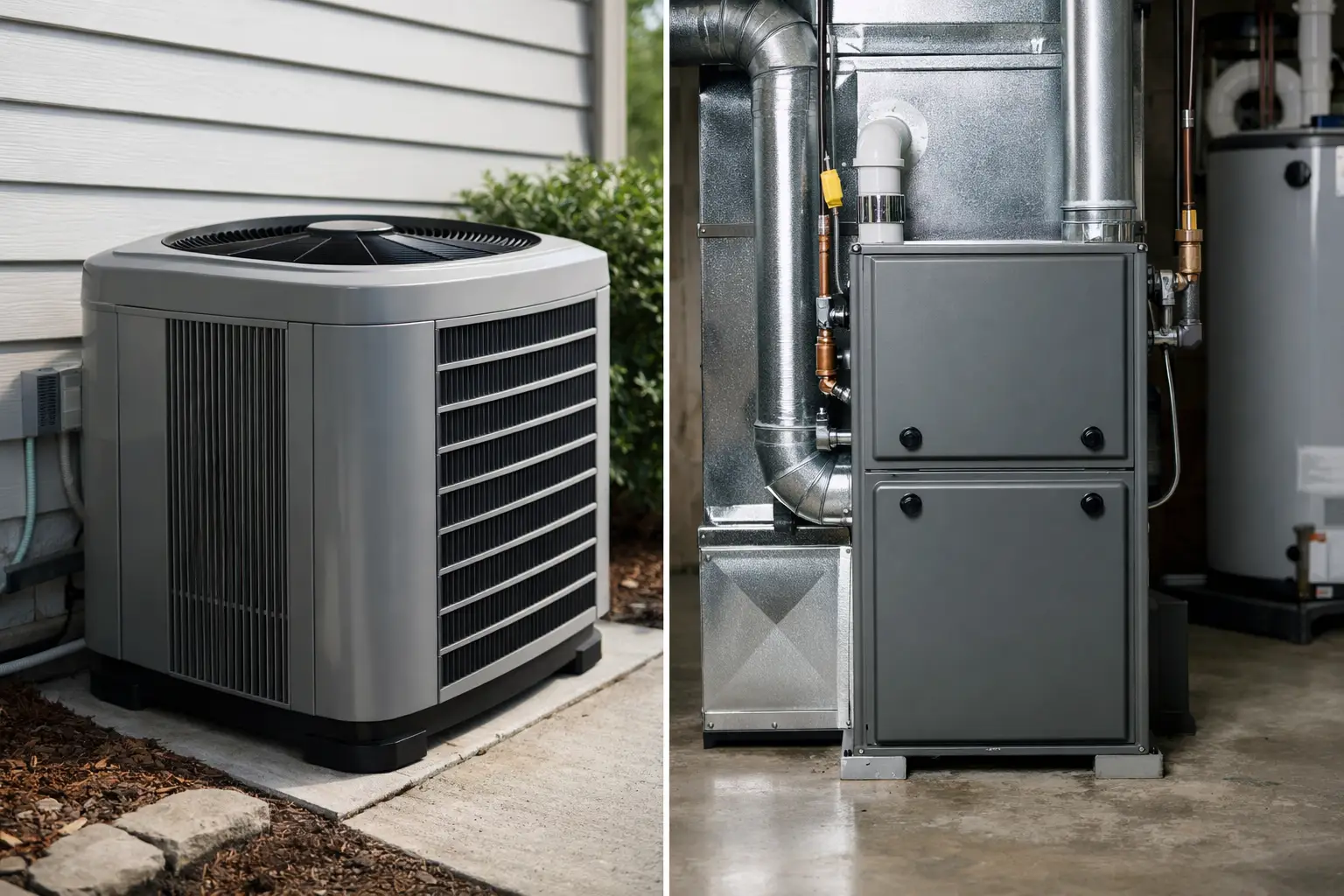
The first cold snap of the year is when a lot of property owners start asking the same question: heat pump versus furnace – which one actually makes more sense for this building, this budget, and this climate? That is the right question to ask, because the best answer is not whatever a salesperson wants to move this month. It depends on how the system will be used, what condition your current equipment is in, and how your home or commercial space is built.
In the Charlotte area, this decision is not as simple as “one is better.” Our winters are usually moderate, but we still get cold stretches that expose weak equipment, poor installation, and bad duct design. A system that looks efficient on paper can still disappoint if it is oversized, undersized, or solving the wrong problem.
Heat pump versus furnace: the basic difference
A furnace creates heat. Most residential furnaces in our area run on natural gas, propane, or electricity. When the thermostat calls for heat, the furnace generates it and pushes warm air through the duct system.
A heat pump works differently. It does not create heat in the same way. It moves heat from outside to inside during winter, and it reverses direction in summer to cool the building. That means one system handles both heating and air conditioning.
This matters because when people compare a heat pump versus furnace, they are often comparing a dual-purpose system to a heating-only system. If you choose a furnace, you also need an air conditioner for cooling season. If you choose a heat pump, the heating and cooling functions are combined.
What usually makes a heat pump attractive
For many Charlotte-area homes, a heat pump is a strong fit because our winters are not as severe as they are farther north. Heat pumps perform especially well in mild to moderately cold conditions, which matches much of the heating season here.
The biggest advantage is efficiency. Because a heat pump transfers heat instead of generating it through combustion, it can use less energy in the right conditions. That can mean lower operating costs, especially if your current system is older or if you are replacing electric resistance heat.
There is also the simplicity of having one piece of equipment for year-round comfort. That can be appealing for homeowners who want fewer separate systems to maintain and for commercial spaces where equipment footprint matters.
Comfort is another factor. A heat pump typically delivers gentler, more even heat. Instead of short blasts of very hot air, it tends to run longer at lower intensity. Some people prefer that steadier feel, especially in well-insulated homes.
Where a furnace still has an edge
A furnace can be the better answer when outdoor temperatures stay low for extended periods, when a building loses heat quickly, or when the owner wants stronger heat output during winter. Furnaces produce hotter supply air, so they often feel warmer coming through the vents.
That difference matters more than people think. A homeowner may say, “My house is heated, but it never feels warm.” Sometimes the issue is insulation or duct leakage. Other times, it is simply that they prefer the hotter air a furnace delivers.
Gas furnaces also remain a practical option where natural gas is available and energy costs favor it. In some cases, a properly sized gas furnace can provide lower winter operating costs than a heat pump, especially during colder weather or in buildings with higher heating demand.
There is also a durability argument. Furnaces only handle heating. A heat pump runs year-round for both heating and cooling, so it generally logs more operating hours. That does not mean heat pumps are unreliable. It means usage patterns are different, and maintenance becomes even more important.
Cost is more than the sticker price
This is where a lot of bad advice starts. Someone asks for a comparison, and they get a quick answer based only on installation price. That is not enough.
When comparing heat pump versus furnace costs, you need to look at the full picture: equipment, labor, ductwork compatibility, fuel source, electrical upgrades, thermostat controls, and long-term operating expenses. You also need to know whether your existing system has a problem that can be repaired instead of replaced.
A furnace installation usually pairs with an air conditioner, so the actual comparison is often heat pump versus furnace plus AC. If someone quotes a furnace alone and leaves out the cooling side, that is not an apples-to-apples comparison.
Repair history matters too. If your current system has one isolated failure, replacement may not be the smart first move. A failed inducer motor, bad capacitor, control issue, or airflow problem does not automatically justify a full system change. Honest HVAC service starts with diagnosis, not assumptions.
Performance in North Carolina weather
Climate should drive this decision more than trends do. In the Charlotte region, heat pumps have a real advantage because winters are generally manageable for modern systems. Newer heat pumps are better in cold weather than many people realize.
Still, cold-weather performance is not unlimited. As outdoor temperatures drop, heat pump efficiency declines. At some point, supplemental heat may kick in. In an all-electric setup, that often means electric heat strips, which can raise power usage.
A furnace does not have that same cold-weather drop-off. If the gas supply is available and the unit is operating properly, it can maintain strong heating output during colder snaps.
So if you are trying to choose between the two, the question is not only, “What works in North Carolina?” Both do. The better question is, “How does this building behave when temperatures swing, and what will it cost to keep it comfortable?”
Your ductwork and insulation may matter more than the equipment
A lot of heating complaints are blamed on the equipment when the real issue is elsewhere. Leaky ducts, poor return air design, low attic insulation, bad airflow balancing, and oversized equipment can all make a good system perform badly.
This is one reason replacement-only sales pitches cause problems. Switching from a furnace to a heat pump, or the other way around, will not fix comfort issues caused by duct leakage or static pressure problems. You can spend a lot of money and still end up with hot and cold rooms, high bills, or short cycling.
Before choosing a new system, the building itself needs an honest look. That includes square footage, insulation levels, window performance, sun exposure, occupancy patterns, and duct condition. For small commercial properties, internal heat loads from equipment, lighting, and foot traffic also matter.
Repairs, maintenance, and service reality
Both systems need maintenance. That is not optional if you want reliability.
A furnace needs routine inspection of burners, heat exchanger condition, ignition components, safeties, blower performance, and venting. A heat pump needs attention on both the heating and cooling sides, including refrigerant charge, defrost operation, electrical components, coils, airflow, and thermostat function.
Because a heat pump works all year, maintenance timing matters. Skipping service can lead to poor heating in winter and poor cooling in summer from the same neglected equipment.
For property owners who want the simplest answer, here it is: the best system is the one that is correctly selected, installed properly, and maintained consistently. A premium unit installed badly will underperform. A mid-range unit installed and serviced correctly often does better.
Who should lean toward a heat pump
A heat pump often makes sense for homeowners who want one system for heating and cooling, who live in a reasonably well-insulated home, and who want better efficiency in a moderate climate. It can also be a solid fit for offices, retail spaces, and light commercial buildings where year-round HVAC performance and electric operation are priorities.
It is especially worth considering if you are replacing older electric heat, if you do not have natural gas available, or if your current AC and heating equipment are both near the end of service life.
Who should lean toward a furnace
A furnace may be the better fit if you prefer hotter supply air, already have gas service, have a building with higher heating demand, or want stronger performance during cold snaps. It can also make sense when the cooling side of the system is separate and still in good condition, depending on equipment compatibility and age.
In some cases, the right answer is not a complete switch. It may be keeping part of the existing setup, repairing what is repairable, and replacing only what truly needs replacement. That kind of recommendation usually comes from a contractor focused on the actual problem, not the biggest invoice.
Choosing between a heat pump and a furnace should leave you with a system that fits the building and the budget, not a sales story. If the diagnosis is honest and the installation is done right, the decision gets a lot clearer – and you are far more likely to end up comfortable when the next cold morning hits.