

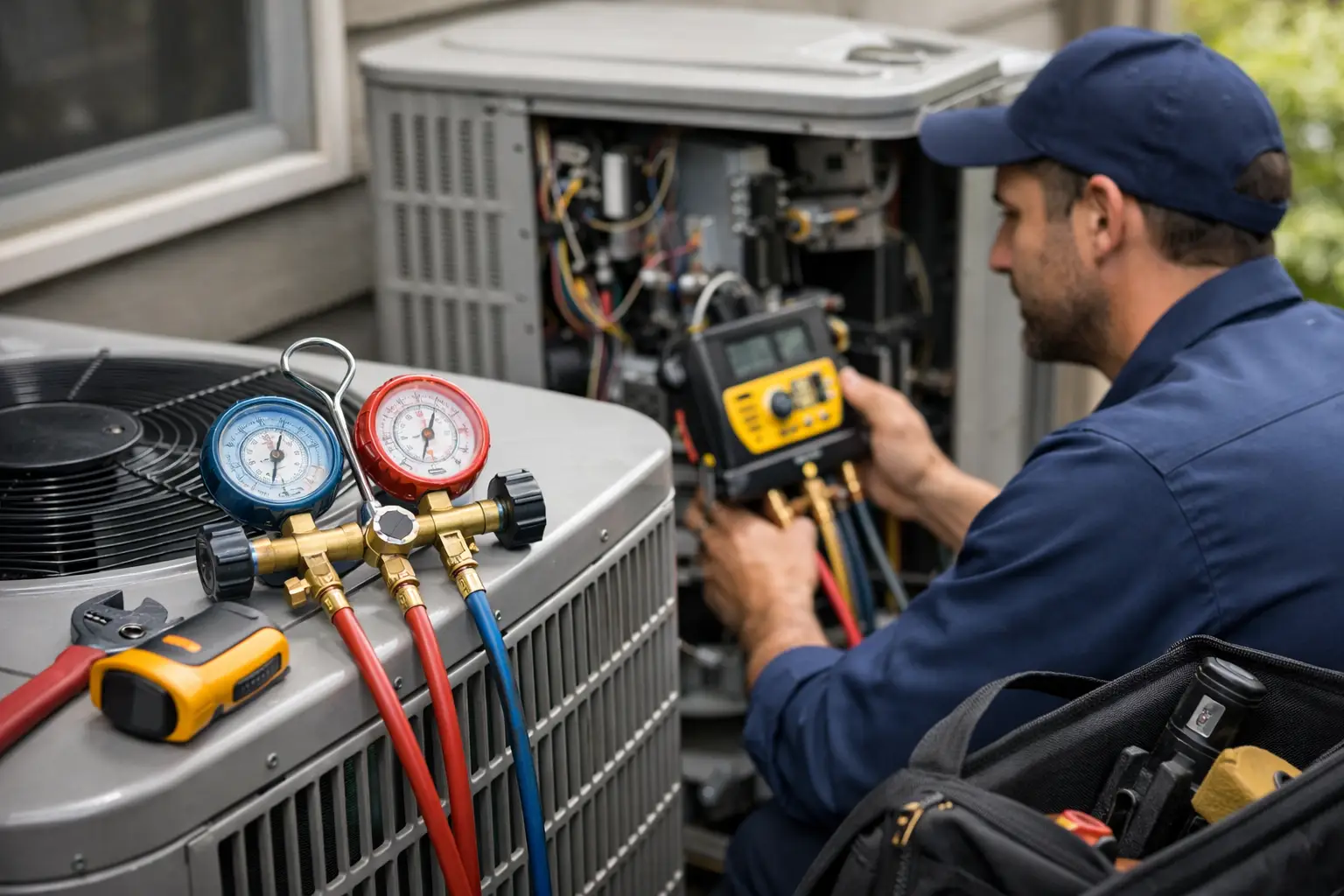
If you have ever paid for maintenance and still wondered what the technician actually did, you are asking the right question. Homeowners and property managers hear the phrase what does HVAC tune up include all the time, but the answer matters because a real tune-up should do more than put a sticker on the unit and call it done.
A proper HVAC tune-up is a detailed inspection, cleaning, testing, and adjustment of the system’s main components. The goal is simple – catch wear early, improve performance, reduce the chance of breakdowns, and give you a clear picture of what is working, what is starting to fail, and what does not need to be replaced yet. That last part matters, especially in an industry where some companies use maintenance visits to push new equipment before a real diagnosis is done.
What does HVAC tune up include for most systems?
For most residential and light commercial systems, a tune-up includes checking electrical components, measuring system performance, cleaning critical parts, inspecting moving parts, and testing safety controls. The exact checklist can vary depending on whether the system is an air conditioner, heat pump, gas furnace, or package unit, but the core purpose stays the same – make sure the equipment is operating safely and close to its intended performance.
A good technician is not just looking for obvious failure. They are also looking for small warning signs like weak capacitor readings, dirty coils, loose wiring, high amp draw, poor temperature split, low airflow, and clogged drains. These are the kinds of issues that turn into no-cooling calls on the hottest day of the year or no-heat calls during a cold snap.
The cooling side of an HVAC tune-up
When the air conditioning side is being serviced, the outdoor condensing unit usually gets close attention first. The technician should inspect the condenser coil for dirt and debris, check the fan motor and blades, test the contactor, and measure the capacitor. Refrigerant pressures may be checked when needed, along with operating temperatures, to see whether the system is cooling within range.
This is also where experience matters. Refrigerant readings alone do not tell the whole story. A system can look low on charge when the real issue is airflow, a dirty evaporator coil, or a restriction. Honest maintenance means reading the full system, not jumping straight to refrigerant or replacement.
Inside, the evaporator side should also be evaluated. That includes checking the indoor coil condition if accessible, inspecting the condensate drain and drain pan, replacing or checking the air filter, and measuring airflow conditions. The blower assembly may be inspected for dirt buildup, because even a strong outdoor unit cannot perform well if the indoor side is struggling to move air.
What’s included on the heating side
Heating tune-ups depend on the type of system. For a gas furnace, the technician should inspect the burners, flame sensor, igniter, heat exchanger area, venting, gas pressure where appropriate, and safety controls. The system should be observed through an operating cycle to make sure it starts, runs, and shuts down correctly.
For a heat pump, heating-mode testing includes checking the reversing valve operation, defrost controls, auxiliary heat, electrical components, and overall system balance. Heat pumps are especially sensitive to airflow and electrical problems, so a tune-up should not skip those basics just because the unit is still running.
Safety is a major part of heating maintenance. If a furnace has signs of combustion issues, cracked components, rollout concerns, or venting problems, that should be clearly explained. A tune-up is not only about efficiency. It is also about making sure the system can be used safely.
Electrical testing is a bigger deal than most people realize
Many HVAC failures start with electrical wear. Capacitors weaken over time. Contactors pit and burn. Wires loosen. Motors pull higher amperage as they age or as airflow gets restricted. During a tune-up, electrical testing helps identify these issues before they become emergency calls.
A technician should check voltage, amperage, capacitor values, and visible wiring condition. They may also inspect disconnects, breakers, and electrical connections at both the indoor and outdoor equipment. These checks are not glamorous, but they are often what separates preventative maintenance from a basic visual once-over.
When companies skip testing and just rinse the coil, customers miss the real value of maintenance. You want to know whether a part is weakening, not just whether the cabinet looks cleaner.
Cleaning is part of a tune-up, but not every cleaning is included
This is where expectations need to be clear. Standard tune-ups usually include basic cleaning of accessible components, such as the condenser coil surface, drain line treatment, debris removal from the outdoor cabinet, and sometimes light cleaning around the blower compartment. Filter checks or replacement are also common, depending on the service agreement and whether the customer provides the filter.
Deep cleaning is different. If the evaporator coil is heavily impacted, the blower wheel is caked with dirt, or the condenser needs a full chemical cleaning due to severe buildup, that may be a separate repair or cleaning service. The reason is simple – those jobs take more time, more disassembly, and more labor than a routine maintenance visit.
That does not mean they should be ignored. It means a trustworthy technician should explain the condition honestly, show why it matters, and tell you whether it is urgent or can be planned.
What a tune-up should tell you about your system
A good tune-up does not end with “everything looks fine” or “you need a new unit.” It should give you a practical status report. Is the system operating normally? Are there worn parts that are still running but likely to fail soon? Is airflow weak? Is the drain starting to clog? Are there signs of deferred maintenance that are hurting efficiency?
This is where customers often feel the difference between a service-minded contractor and a sales-driven one. A technician-first company explains what is happening, what needs attention now, what can wait, and what does not justify replacement. That kind of clarity helps you plan instead of reacting under pressure.
What does HVAC tune up include if your system is older?
Older systems often need more than a standard checklist. The technician may need to spend more time evaluating performance trends, checking for worn motors, inspecting insulation on refrigerant lines, reviewing blower operation, and watching for signs that multiple smaller issues are stacking up.
Age alone does not mean replacement. Some older systems are worth maintaining, especially if the major components are sound and repairs are still practical. Others become expensive to keep alive because efficiency has dropped, parts are failing repeatedly, and comfort problems are growing. A tune-up should help you understand which side of that line your system is on.
That is especially useful for business owners and facility managers. If a commercial split system or package unit is aging, maintenance should help you budget and prioritize rather than forcing last-minute decisions during a failure.
What a tune-up does not include
A tune-up is preventative service, not a full repair visit. If the technician finds a failed capacitor, a refrigerant leak, a cracked drain pan, a bad motor, or a control board issue, that repair is usually outside the tune-up itself. The maintenance visit identifies the problem and confirms system condition. Repairing the issue typically requires authorization and additional work.
It also does not guarantee your system will not fail later. HVAC equipment has moving parts, electrical parts, and components that can fail without much warning. What maintenance does is lower the odds of surprise breakdowns and catch many problems before they become urgent.
That is a realistic way to look at it. Tune-ups reduce risk. They do not eliminate it.
How often should you schedule HVAC maintenance?
Most systems benefit from service twice a year – once before cooling season and once before heating season. Heat pumps often need that full twice-year schedule because they run in both seasons. Some commercial systems may need more frequent service depending on use, occupancy, air quality, and equipment type.
If you have pets, construction dust, high system usage, or recurring drain and airflow issues, more attention may be needed. Maintenance is not one-size-fits-all. The right schedule depends on how hard the equipment works and how clean the operating conditions are.
Why the right tune-up matters
The best maintenance visit is not the cheapest one. It is the one that actually tells the truth about your system. That means checking performance, testing components, cleaning what should be cleaned, and explaining findings in plain language. It also means not using every small issue as a reason to sell a complete system.
For homeowners and commercial customers in the Charlotte area, that honest approach matters. Companies like DDL Services have built trust by focusing on diagnostics and practical repairs first, because many HVAC problems are still repairable when someone takes the time to find the real cause.
If you are scheduling maintenance, ask what is tested, what is cleaned, and how findings are documented. A real tune-up should leave you with answers, not a sales pitch. And when the next hot week or cold night hits, that peace of mind is worth more than a rushed visit ever will be.