

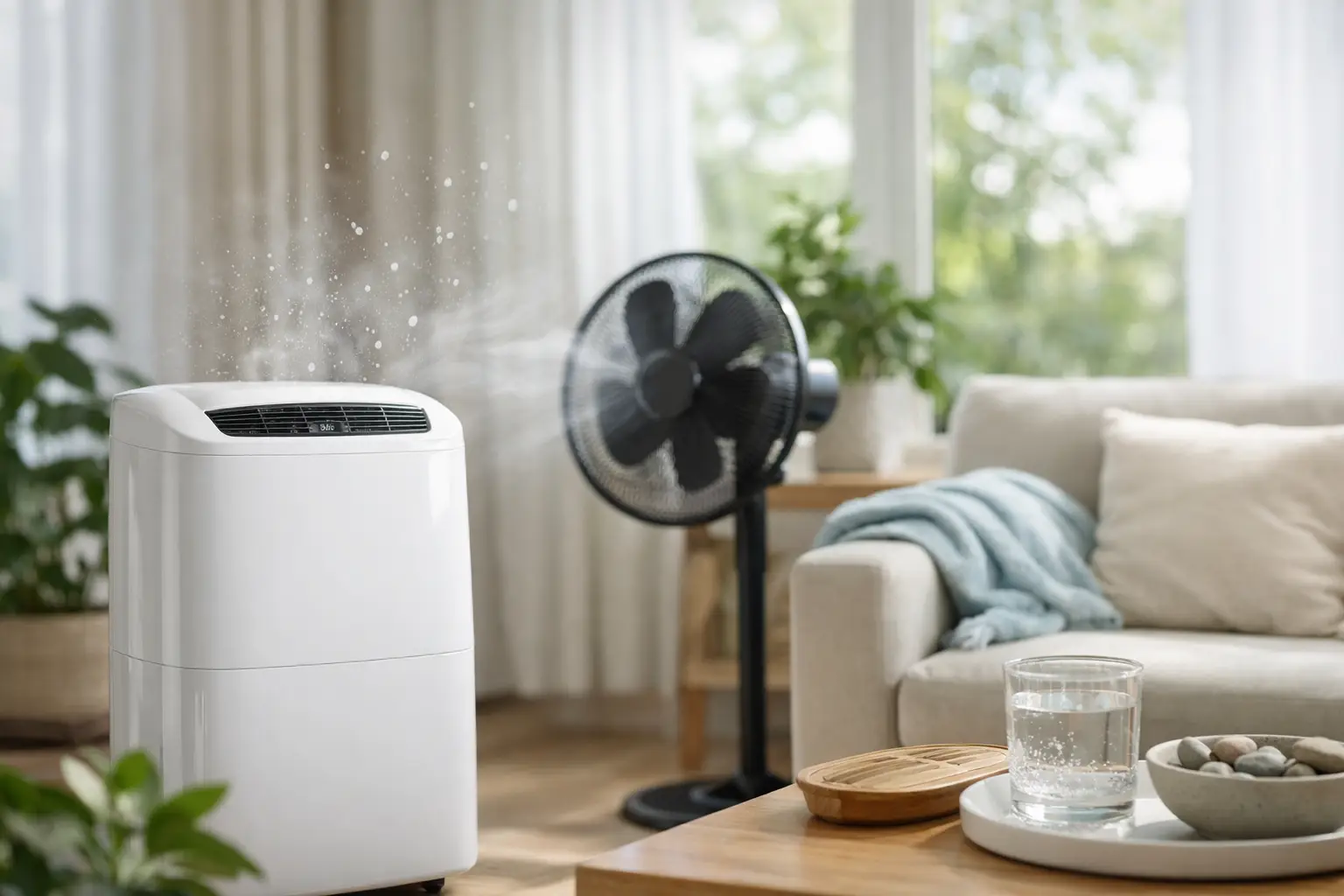
If your house feels sticky even when the AC is running, you are not imagining it. That clammy feeling, musty smell, fogged windows, or damp air usually points to one thing: excess moisture. Knowing how to lower indoor humidity starts with finding where that moisture is coming from and whether your HVAC system is actually removing it the way it should.
In the Charlotte area, high outdoor humidity is part of the climate. But indoor humidity should still stay under control. In most homes, a good target is around 30% to 50%. Once you get much above that, comfort drops fast. You may also start seeing mold growth, warped wood, condensation, and poor indoor air quality.
How to lower indoor humidity without guessing
A lot of homeowners get told to buy a bigger system, replace equipment, or add accessories before anyone checks the basics. That is backwards. Indoor humidity problems often come from a repairable issue, a ventilation problem, or day-to-day moisture sources that are easy to overlook.
Start by checking the actual humidity level with a hygrometer. They are inexpensive and much better than guessing based on how the house feels. If the reading stays above 50% for long periods, especially with the AC running, there is a reason.
Then look at the pattern. If humidity spikes only after showers or cooking, the issue may be local exhaust. If the whole house feels damp all day, it may point to the AC system, duct leakage, outside air infiltration, or a hidden moisture problem.
Check whether your AC is doing its job
Air conditioning does more than cool the air. It also removes moisture. When indoor humidity stays high, the system may be running, but not dehumidifying well.
One common issue is an oversized AC. Bigger is not always better. If a unit cools the house too quickly, it shuts off before it has enough time to pull much moisture out of the air. The temperature may look fine on the thermostat while the house still feels damp. This is one reason properly matched equipment matters.
A dirty evaporator coil, clogged filter, low refrigerant, or blower setting problem can also reduce moisture removal. So can a clogged condensate drain. These are not small details. If the system cannot move air correctly or drain water correctly, humidity control suffers.
If your AC seems to cool but the home still feels muggy, that is worth a real diagnostic. This is where honest HVAC service matters. A contractor should check performance, airflow, runtime, drain function, and equipment sizing before talking about replacement.
Signs your HVAC system may be part of the problem
You do not need to be a technician to spot warning signs. If the house feels cool but clammy, the AC short cycles, certain rooms feel wetter than others, or you notice a musty smell near vents, the system may not be controlling humidity well. Water around the indoor unit or a full secondary drain pan can also point to a condensate issue.
In commercial spaces, the signs can show up a little differently. You may see window condensation, odor complaints, uneven comfort, or paperwork and products reacting to moisture. The root cause still comes back to moisture control, airflow, or ventilation balance.
Reduce moisture at the source
If you want to know how to lower indoor humidity in a practical way, start with the places where moisture is being added every day. Bathrooms, kitchens, laundry rooms, crawl spaces, and basements are the usual trouble spots.
Run the bathroom exhaust fan during showers and leave it on for at least 20 minutes afterward. Use the range hood when cooking, especially when boiling water. If your dryer is not venting properly to the outside, fix that right away. A dryer dumping warm, wet air indoors can raise humidity quickly.
Small habits help too. Shorter showers, lids on pots, and avoiding air-drying large loads of laundry inside can make a difference. These are not cure-alls, but they reduce the load on your HVAC system.
Seal air leaks and control outside air
In North Carolina summers, warm outdoor air carries a lot of moisture. If that air is leaking into the home through gaps, bad weatherstripping, attic bypasses, or poorly sealed ductwork, your system has to work harder to keep up.
This is where humidity control gets more technical. Not every home needs to be sealed the same way, and not every ventilation issue has the same fix. But in general, stopping humid outdoor air from sneaking in helps a lot. Leaky return ducts in attics or crawl spaces are especially problematic because they can pull in hot, wet air and distribute it through the system.
If humidity is worst on the first floor or near a crawl space, that area should be checked. Moisture from the ground can migrate upward, especially if there is no proper vapor barrier or drainage issue has been ignored.
Use a dehumidifier when the house needs extra help
Sometimes the AC is working properly and the home still needs more moisture removal. That can happen in shaded homes, tight homes with limited runtime, basements, crawl spaces, or shoulder seasons when it is humid outside but not hot enough for the AC to run much.
A portable dehumidifier can help in a single problem area. A whole-home dehumidifier is a better fit when high humidity affects the entire house. The right option depends on square footage, layout, and how persistent the moisture problem is.
This is another area where overselling happens. Not every damp house needs a whole-home add-on. But if humidity stays high despite good AC performance and basic moisture control, a properly selected dehumidifier can make a real difference in comfort and mold prevention.
Do not ignore hidden water problems
Not all humidity issues come from the air conditioner or the weather. Sometimes there is a water source hiding behind the scenes.
A plumbing leak, roof leak, wet crawl space, foundation seepage, or poorly draining condensate line can keep feeding moisture into the home. In those cases, no thermostat setting will solve the problem. You have to fix the source.
Watch for stained drywall, peeling paint, soft wood, mildew smells, or flooring that feels damp. If one room is much worse than the rest of the house, it may not be an HVAC problem at all. It could be a leak or insulation issue causing condensation.
How to lower indoor humidity in summer
Summer is when most people notice humidity problems first. The combination of outdoor moisture, longer AC run times, and frequent door openings can push indoor conditions in the wrong direction.
Keep windows closed when the AC is on. That sounds obvious, but even occasional open windows can bring in a lot of moisture. Set the fan to AUTO instead of ON at the thermostat. When the fan is set to ON, it can keep blowing across a wet coil after the cooling cycle ends, which may send some moisture back into the house.
Make sure the air filter is clean and the condensate drain is clear. Both affect how well the system removes moisture. If the home still feels muggy after that, the issue may be airflow, charge, sizing, or duct leakage, and that takes testing, not guesswork.
When to call an HVAC professional
If your humidity stays above 50% to 55% for days at a time, if the house feels clammy despite cooling, or if you see repeated signs of moisture buildup, it is time for a closer look. The right service call should focus on diagnosis first.
A technician should be looking at system performance, not leading with a replacement quote. That includes checking temperature split, airflow, coil condition, drain operation, refrigerant performance, and whether the equipment is sized correctly for the building. In some cases, the fix is straightforward. In others, it may involve ventilation changes, duct repairs, or adding dehumidification. It depends on the real cause.
For homeowners and business owners who are tired of sales-first answers, that distinction matters. DDL Services works from the same principle we believe every customer deserves: find the actual problem and fix it properly.
Indoor humidity is not just about comfort. It affects air quality, building materials, and how hard your HVAC system has to work every day. The good news is that most humidity problems can be improved once you stop treating the symptom and start addressing the source. A drier home usually comes from a handful of practical corrections, not a sales pitch.