

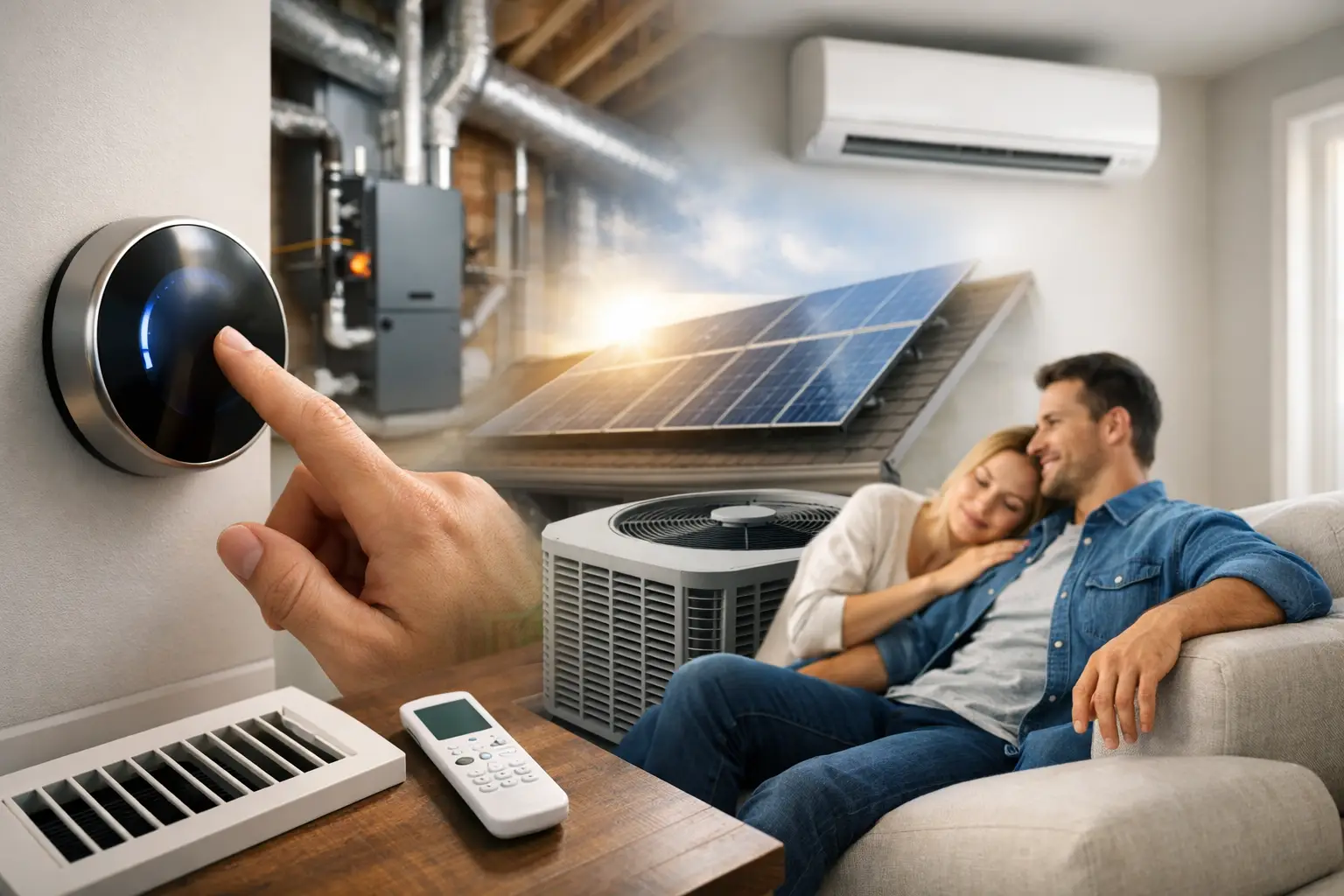
If your house has hot upstairs bedrooms, cold spots near certain vents, or humidity that never feels right, the best HVAC upgrades for comfort are not always the biggest or most expensive ones. In many homes and small commercial spaces, comfort problems come from airflow, control, or air quality issues that can be corrected without jumping straight to a full system replacement.
That matters because a lot of people get sold equipment before anyone really diagnoses the problem. A larger unit will not fix bad duct design. A new thermostat will not solve a weak blower motor. And a high-end system cannot perform the way it should if the home is poorly balanced. Real comfort comes from matching the upgrade to the actual issue.
How to choose the best HVAC upgrades for comfort
Before looking at specific upgrades, it helps to define what “comfort” actually means in your space. For one homeowner, it means getting rid of one stubborn hot room. For another, it means cleaner air during allergy season. For a business owner, it may be steady temperatures across offices without employees adjusting the thermostat all day.
Comfort usually comes down to four things: even temperature, proper humidity, good airflow, and clean indoor air. The best upgrade depends on which of those is failing. That is why a technician-led evaluation matters. You want someone to test, inspect, and explain – not just point at the oldest piece of equipment and recommend replacing it.
1. Smart thermostats improve control, not magic
A smart thermostat is one of the most common comfort upgrades because it gives you better control over when and how your system runs. If your schedule changes throughout the week, or if parts of the day leave the house empty, smart scheduling can help maintain a more consistent indoor temperature.
It can also help identify patterns. Some models show runtime history, humidity readings, and maintenance reminders. That gives homeowners better visibility into how the system is behaving.
But this upgrade has limits. A smart thermostat cannot overcome poor airflow, undersized ductwork, or an aging system with mechanical problems. It is a good control upgrade, not a cure-all. If your comfort issues are room-specific, thermostat placement and system design matter more than app features.
2. Zoning is one of the best HVAC upgrades for comfort in larger homes
If one floor is always warmer than the other, or certain rooms are rarely used, zoning can make a major difference. A zoned system uses dampers and separate thermostat controls to direct heating or cooling where it is actually needed.
This is especially useful in two-story homes, houses with bonus rooms, or commercial spaces with different occupancy patterns. Instead of conditioning the entire building the same way, zoning breaks it into areas that can be controlled independently.
The upside is obvious – better temperature balance and less fighting over the thermostat. The trade-off is that zoning needs to be designed correctly. Adding dampers to a system that is not set up for it can create airflow problems, pressure issues, and unnecessary equipment strain. Done right, it is one of the most effective comfort upgrades available. Done poorly, it creates a new set of problems.
3. Variable-speed equipment offers steadier comfort
Traditional single-stage systems tend to run at full output and then shut off. That works, but it can lead to temperature swings, louder operation, and weaker humidity control. Variable-speed blowers and multi-stage systems adjust output more gradually, which helps keep conditions more stable.
For homeowners in the Charlotte area, humidity control is a big part of comfort. A system that runs longer at lower capacity often removes moisture better than one that cycles on and off in short bursts. That can make the house feel cooler without dropping the thermostat as much.
This upgrade makes the most sense when your existing equipment is already near the end of its service life, or when a major component replacement is on the table. If the current system is mechanically sound and your discomfort is caused by duct leakage or poor return air, replacing equipment may not be the first move.
4. Duct sealing and airflow corrections are often overlooked
This is where many comfort problems actually live. If conditioned air is leaking into the attic, crawl space, or wall cavities, your system has to work harder just to deliver air where it belongs. If supply or return ducts are undersized, kinked, disconnected, or badly designed, rooms may never get enough airflow no matter how new the equipment is.
Duct sealing and airflow correction are not flashy upgrades, but they can make a bigger difference than a thermostat or upgraded condenser. You may notice rooms reaching temperature faster, more even airflow at registers, and less strain on the equipment.
In commercial settings, airflow balance matters just as much. Uneven temperatures across offices, retail areas, or back rooms often point to distribution problems, not just equipment capacity. A practical contractor will check static pressure, inspect duct condition, and verify airflow before recommending a bigger unit.
5. Whole-home dehumidifiers solve a different kind of discomfort
A lot of people think temperature is the problem when humidity is really the issue. If the house feels sticky, musty, or clammy even when the AC is running, a whole-home dehumidifier may be the better answer.
This is especially helpful in homes with tight construction, shaded lots, crawl spaces, or persistent moisture issues. Lower indoor humidity can make the home feel more comfortable, reduce that damp feeling on furniture and bedding, and support better indoor air quality.
There is a clear difference between what your air conditioner does and what a dedicated dehumidifier does. AC removes some moisture as part of cooling, but it is not always enough, especially during mild but humid weather. A whole-home dehumidifier targets moisture more directly.
The catch is that it should not be used to ignore other issues. If humidity is coming from a duct leak, drainage problem, or oversized AC system short-cycling, those root causes still need attention.
6. Better filtration and air purification help comfort too
Comfort is not just about temperature. If indoor air feels dusty, stale, or irritating, filtration upgrades can make the space more livable. High-quality media filters, air cleaners, and certain purification add-ons can help reduce airborne particles such as dust, pollen, and other common irritants.
For families dealing with allergies, pets, or frequent dust buildup, this can be one of the more noticeable quality-of-life improvements. In small commercial settings, cleaner air can also support a better experience for staff and customers.
That said, higher-efficiency filtration has to be matched to the system. If the filter creates too much resistance for the blower, airflow can suffer. This is another area where the right product depends on the equipment and duct setup already in place. The goal is cleaner air without choking the system.
7. Adding or improving return air can fix stubborn room problems
Many buildings have enough supply vents but not enough return air pathways. That creates pressure imbalances and weak circulation, especially in bedrooms, additions, closed offices, or finished upper levels.
When return air is inadequate, conditioned air may enter a room but not circulate back effectively. The result is uneven temperature, stuffiness, and poor performance overall. Adding a return, enlarging an existing one, or improving transfer airflow can dramatically change how a room feels.
This is not a one-size-fits-all upgrade, but in the right situation it solves comfort complaints that people have lived with for years. It is also a good example of why diagnostics matter. The issue may not be your AC unit at all.
When a full replacement makes sense
Sometimes the right comfort upgrade is replacing major equipment. If the system is oversized, badly matched, unreliable, or near complete failure, continuing to patch it may not be cost-effective. In those cases, a properly sized and properly installed replacement can improve comfort, efficiency, and dependability all at once.
But “properly” is the key word. The replacement should be based on load calculation, duct condition, airflow needs, and how the building is actually used. Swapping in a bigger unit because the old one struggled is often the wrong answer.
That is where an honest contractor stands apart. Companies like DDL Services focus on finding the real cause first, then recommending the repair or upgrade that fits the problem. That approach protects customers from overspending and usually leads to better long-term comfort.
What should you upgrade first?
If you are trying to decide where to start, start with the symptom that affects daily comfort the most. Uneven temperatures usually point to airflow, zoning, or return air issues. Sticky indoor conditions suggest humidity control. Dust and irritation may call for filtration improvements. Poor control and inconsistent schedules often make a smart thermostat worthwhile.
The best first step is not shopping for equipment online. It is getting a real evaluation from someone willing to inspect the full system and explain the trade-offs. Some upgrades are worth every dollar in the right home and a waste of money in the wrong one.
Comfort should feel predictable, not like a constant workaround. When the upgrade matches the actual problem, the house gets easier to live in and the system has a better chance of doing its job for years to come.