

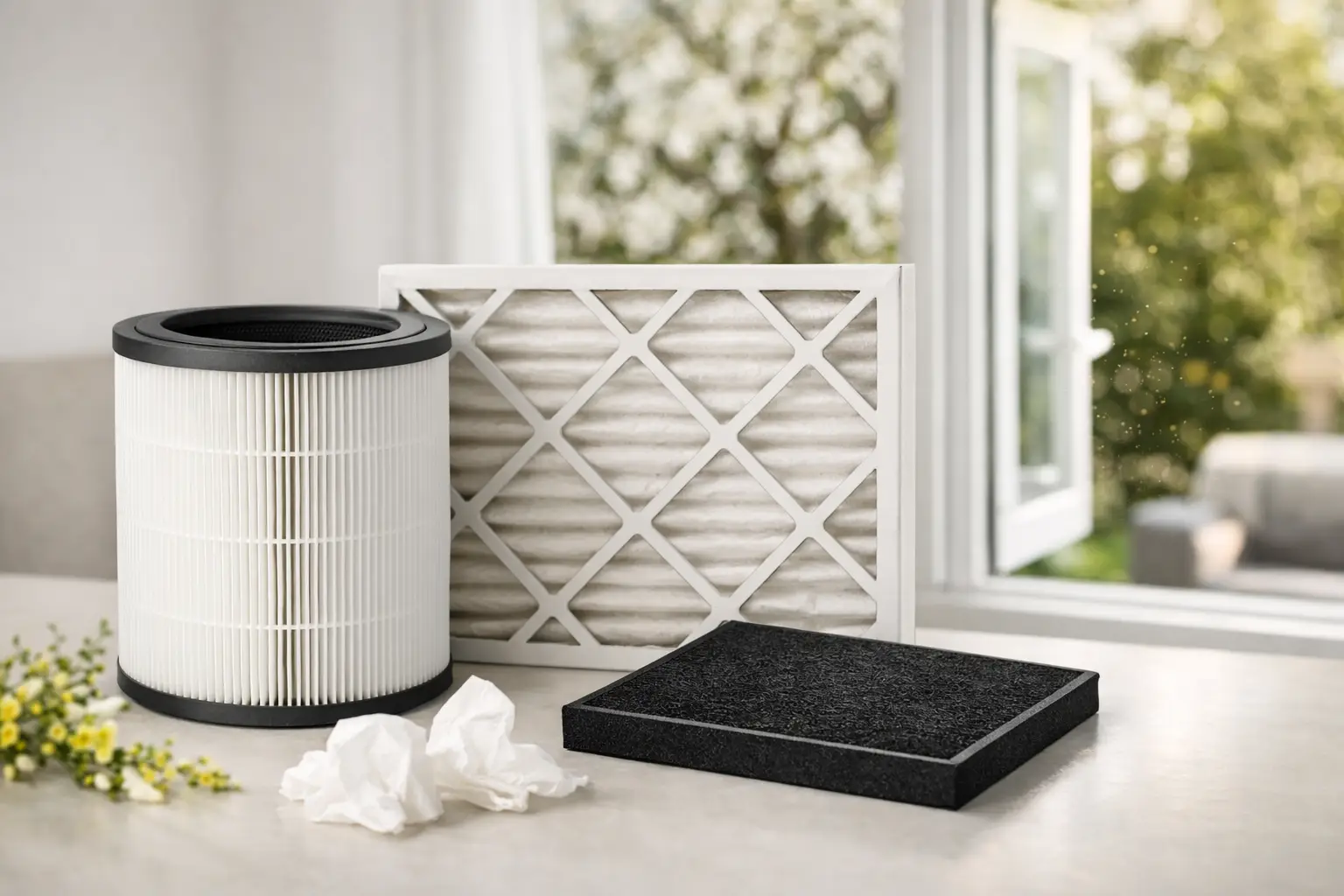
If allergy symptoms get worse when the heat or AC kicks on, the filter in your HVAC system may be part of the problem. Choosing the best air filters for allergies is not about buying the most expensive option on the shelf. It is about using the right filter for your system, your indoor air conditions, and the kind of particles you are actually trying to remove.
That matters because a filter can help with pollen, dust, pet dander, and some mold spores, but only if the system can handle it. We see plenty of cases where homeowners install a very restrictive filter hoping for cleaner air, then end up with weak airflow, comfort problems, or strain on the equipment. Cleaner air should not come at the expense of your HVAC system.
What actually makes an air filter good for allergies
For most homes, the goal is simple. You want a filter that captures smaller airborne particles without choking off airflow. That balance is usually measured by MERV rating, which stands for Minimum Efficiency Reporting Value.
A higher MERV rating means the filter can trap smaller particles more effectively. For allergy control, that sounds great, and often it is. But there is a trade-off. As filtration gets denser, air has a harder time moving through it. If your system was not designed for that level of resistance, a filter that looks better on paper can create real performance issues.
For allergy sufferers, the sweet spot is often somewhere in the middle rather than at the extreme. A quality pleated filter with the right rating for the equipment usually does more good than a super-high-efficiency filter that your system cannot support.
Best air filters for allergies by filter type
There is no single best choice for every home. The right answer depends on whether you are filtering air through a central HVAC system, using a room air purifier, or dealing with heavier indoor particle loads from pets, remodeling dust, or older ductwork.
MERV 8 filters
MERV 8 filters are a step above the cheap fiberglass filters many systems still have. They can capture larger dust particles, lint, and some pollen, but they are usually not the strongest choice for households with moderate to severe allergies.
They work best when the main concern is basic dust control and protecting the equipment. If someone in the home deals with seasonal allergies, pet dander sensitivity, or ongoing indoor irritation, MERV 8 may be better than nothing, but it is often not enough.
MERV 11 filters
MERV 11 is a strong middle-ground option for many homes. It improves capture of pollen, pet dander, mold spores, and finer dust without becoming as restrictive as some higher-rated filters. For a lot of residential systems, this is where better air cleaning and reasonable airflow start to meet in a practical way.
If a homeowner asks for a straightforward upgrade from a basic filter, MERV 11 is often worth considering first. It is especially useful in homes with pets, carpet, or higher dust levels from everyday activity.
MERV 13 filters
For many allergy sufferers, MERV 13 is one of the best air filters for allergies if the HVAC system can handle it. These filters do a much better job with smaller airborne particles and can noticeably improve indoor air quality in the right setup.
That said, MERV 13 is not automatic. Some systems can operate well with it, and some cannot. Older units, undersized return ducts, and systems already struggling with airflow can run into trouble. If you install MERV 13 and suddenly notice reduced airflow, longer run times, or uneven temperatures, the filter may be too restrictive for the system as configured.
HEPA filters
HEPA filters are often seen as the gold standard for allergy control, and in terms of particle capture, that reputation is deserved. A true HEPA filter can trap extremely small particles very effectively.
The catch is that most standard residential HVAC systems are not built to use a true HEPA filter in the main return without modifications. HEPA media is usually too dense for typical central air systems. That is why HEPA is often more realistic in portable room purifiers or in specialized whole-home filtration setups designed for it.
If you want HEPA-level filtration, the practical path is usually a dedicated air purifier for key rooms or a professionally designed filtration upgrade rather than just forcing a HEPA filter into a standard filter slot.
The best filter rating for most homes with allergies
In many homes, MERV 11 or MERV 13 is the most practical range. MERV 11 is often a safe improvement over entry-level filters. MERV 13 can be excellent for allergy relief when the system has the airflow capacity to support it.
That is the part many articles skip. The best filter is not just about particle capture. It also has to work with static pressure, blower performance, duct design, and filter size. A one-inch high-MERV filter may create more resistance than a thicker media filter cabinet designed for better airflow. Thickness matters. Surface area matters. System condition matters.
If your allergies are significant and your HVAC system is older, it is smart to think beyond the filter alone. Sometimes the better fix is a properly sized media cabinet, duct improvements, return air corrections, or an added purification strategy.
Signs your current filter choice may be wrong
A bad filter choice does not always show up as a dramatic failure. Sometimes the warning signs are gradual.
If your allergy symptoms are still strong indoors despite regular filter changes, the filter may not be capturing enough. If rooms feel stuffy, airflow seems weak, or your system runs longer than usual after switching to a denser filter, the opposite may be happening. The filter may be too restrictive.
You might also notice more dust buildup than expected, especially around vents and furniture, which can point to filter bypass, leaky ducts, or poor filter fit. In those cases, replacing the filter with a more expensive version will not solve the real issue.
Filter quality matters, but so does replacement timing
Even the best filter cannot help much if it is overdue for replacement. A loaded filter loses effectiveness and increases resistance. In a house with pets, heavy use, construction dust, or high pollen levels, a filter may need attention sooner than the packaging suggests.
The common habit of changing every 90 days is not wrong, but it is not universal. Some one-inch filters need replacement closer to every 30 to 60 days, especially during peak heating and cooling seasons. Thicker media filters may last longer, but they still need to be checked.
If anyone in the home has allergies, checking the filter monthly is a good habit. That does not mean replacing it every month automatically. It means looking at real conditions instead of guessing.
What air filters will not fix
A better filter can reduce airborne allergens, but it will not fix every indoor air problem. If there is moisture in the system, mold growth in ductwork, dirty evaporator coils, or poor housekeeping of return grilles and vents, filtration alone will only go so far.
The same goes for homes with major air leakage. If outdoor pollen and dust are constantly being pulled in through gaps, attic bypasses, or leaky return ducts, the system is fighting a losing battle. This is why honest HVAC diagnosis matters. Air quality problems are often a mix of filtration, airflow, cleanliness, and building conditions.
For commercial spaces, the same principle applies. Offices, retail shops, and light commercial buildings can benefit from better filtration, but the right rating depends on occupancy, operating hours, and the design of the HVAC equipment. A stronger filter is not automatically the right call if it creates performance issues or higher maintenance costs.
How to choose the best air filters for allergies without guesswork
Start with your system specifications if you have them. Check what filter size and MERV range the manufacturer allows. If that information is not easy to find, pay attention to how the system performs now. If airflow is already marginal, jumping straight to the highest-rated filter is risky.
Next, think about your actual indoor conditions. A home with one mild seasonal allergy sufferer may do well with MERV 11. A home with multiple pets, strong pollen exposure, and year-round symptoms may justify MERV 13 or a combination of upgraded central filtration and portable HEPA purifiers.
Finally, pay attention after the change. Better filtration should help with dust and symptoms over time without causing comfort or airflow problems. If it does cause those problems, the answer is not to keep forcing the issue. The answer is to reassess the system and solve it properly.
At DDL Services, that is how we look at indoor air issues – not as a sales opportunity, but as a system problem that needs the right fix. Sometimes that fix is a better filter. Sometimes it is airflow correction. Sometimes it is both.
If you are trying to get allergy relief at home, keep it simple. Use the best filter your system can actually support, change it on time, and do not ignore signs that the real issue goes beyond the filter. Cleaner air usually comes from good decisions made in combination, not one product with a high price tag.