

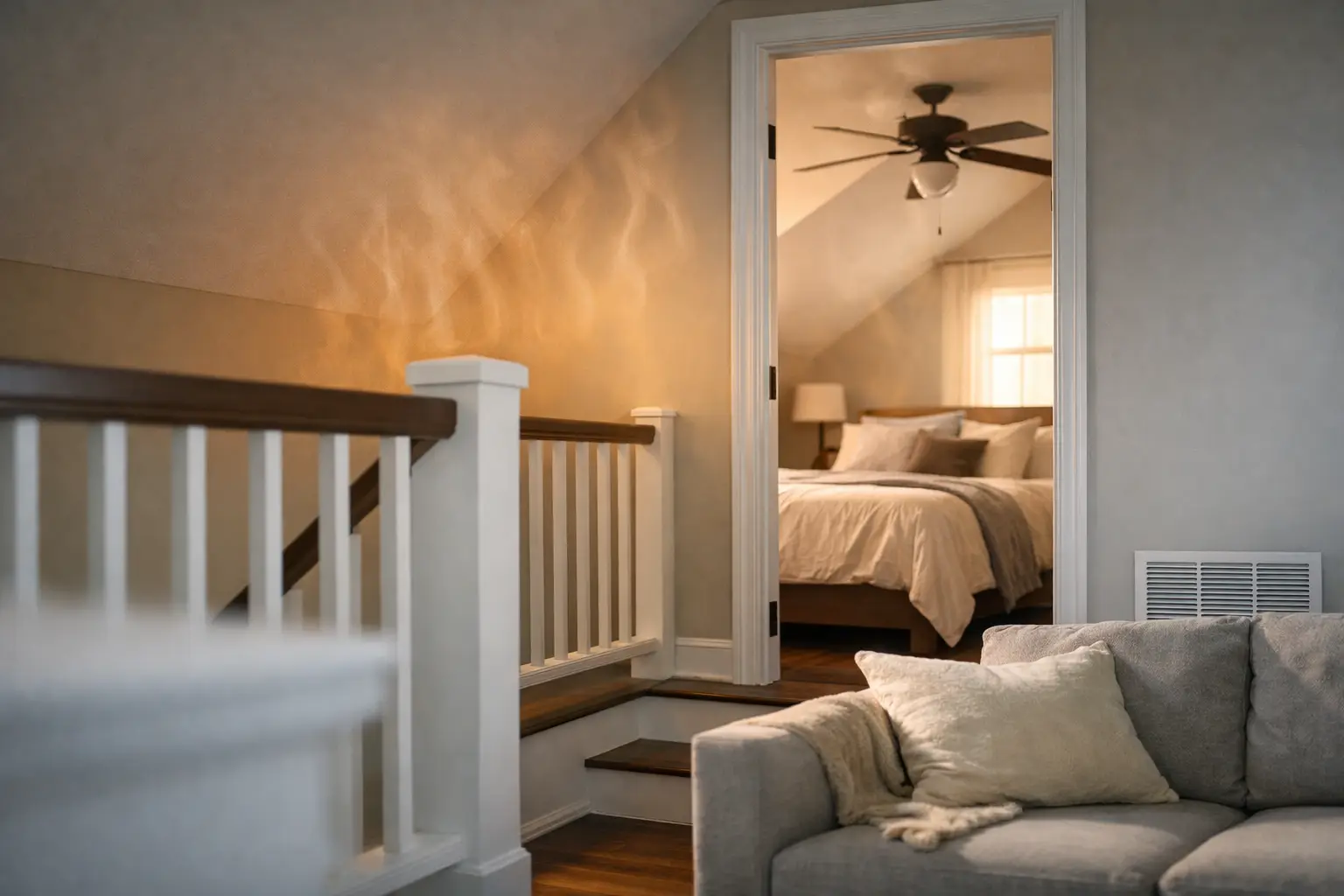
You set the thermostat to a reasonable temperature, the downstairs starts to feel fine, and the second floor still feels like a different season. If you have been asking, why is my upstairs hotter, you are dealing with one of the most common comfort problems in homes across the Charlotte area. It is also one of the most misunderstood, because the answer is not always that you need a whole new HVAC system.
In many homes, the problem comes down to airflow, insulation, duct design, thermostat location, or an HVAC system that is running but not distributing cooling evenly. The right fix depends on the real cause. That matters, because this is exactly the kind of issue that gets oversimplified into expensive recommendations when a proper diagnosis should come first.
Why Is My Upstairs Hotter? The Short Answer
Heat rises, but that is only part of the story. Upstairs rooms usually take on more heat because they are closer to the roof, often get stronger sun exposure, and can be harder to cool if the ductwork is poorly balanced. If your thermostat is downstairs, the system may shut off before the second floor ever reaches the temperature you actually want.
That means an upstairs that runs 3 to 8 degrees warmer than the first floor is not unusual in a lot of homes. The question is whether the difference is normal for the house, or a sign that something is wrong and getting worse.
The Most Common Reasons Your Upstairs Stays Hot
Your attic is adding too much heat
If the attic is under-insulated or poorly ventilated, it can trap extreme heat during the day and transfer that heat into the rooms below. Second-floor ceilings and walls end up absorbing that load for hours, especially in the late afternoon and early evening.
In North Carolina summers, attics can get brutally hot. Even a good AC system will struggle if the house is constantly gaining heat faster than the system can remove it. This is one reason homeowners sometimes think the air conditioner is failing when the real issue is part HVAC and part building envelope.
Your system has weak airflow upstairs
A central AC system cools by moving air. If the second floor is not getting enough supply air, those rooms will stay warm no matter how long the system runs. This can happen because of leaking ducts, undersized ductwork, crushed flex ducts, dirty filters, blocked vents, or blower performance issues.
Airflow problems are common because they are not always obvious. The unit may turn on, cool air may come out of some vents, and the house may feel partly comfortable. But if the upstairs airflow is weak compared to downstairs, comfort will always be uneven.
The thermostat is in the wrong place
A thermostat on the main floor only measures the temperature where it is installed. If that area cools quickly, the AC shuts off, even if the bedrooms upstairs are still too warm.
This is especially common in two-story homes where the thermostat sits near a large return, in a shaded hallway, or in an area that naturally cools faster than the rest of the house. The system is not necessarily doing nothing. It is just responding to incomplete information.
Your ductwork is out of balance
Air distribution needs to be balanced for the layout of the house. Second-floor rooms often need more conditioned air than first-floor spaces because of the extra heat load. If the duct system was never adjusted properly, or if dampers were set incorrectly, too much air may be going downstairs and not enough upstairs.
This is one of those problems that can look like equipment failure from the homeowner’s point of view. In reality, the equipment may be fine while the distribution system is doing a poor job.
Sun exposure is working against you
Rooms with west-facing windows often get significantly hotter in the afternoon. If those rooms are upstairs, the effect gets worse. Thin blinds, older windows, and dark roofing materials can all add to the problem.
When one side of the house bakes in the sun, the second floor may feel uneven from room to room, not just hotter overall. That pattern can be a useful clue.
Your AC is losing performance
Sometimes the upstairs is hotter because the entire system is not cooling as well as it should. A dirty evaporator coil, low refrigerant, a weak blower motor, a clogged condensate issue affecting operation, or a condenser struggling outdoors can all reduce capacity.
When that happens, the second floor usually shows the problem first because it is the hardest area to cool. Homeowners often notice it upstairs before they notice the rest of the home slipping behind.
When It Is More Than a Normal Two-Story Problem
Some temperature difference between floors is expected. But if the upstairs suddenly got hotter than it used to be, that points to a change somewhere in the system or the house.
Watch for signs like weak airflow from upstairs vents, rooms that never reach set temperature, longer cooling cycles, rising electric bills, or humidity that feels worse on the second floor. If the issue is getting more noticeable over time, it is usually not just because hot air rises. Something has shifted.
What You Can Check Before Calling for Service
There are a few practical things worth checking first. Start with the air filter. A badly clogged filter can reduce airflow through the entire system and make the farthest rooms suffer most.
Then check that all supply vents upstairs are open and not blocked by furniture, rugs, or closed doors. Make sure return grilles are clear too. Restricted return air can hurt circulation and create pressure problems between rooms.
If you have ceiling fans, use them correctly in summer so they push air downward. That will not lower the actual temperature, but it can make upstairs rooms feel better and reduce some of the load on the AC.
You can also look at windows in the hottest rooms. Closing blinds or blackout curtains during peak sun can make a noticeable difference, especially in late afternoon.
If your home has manual dampers in the duct system, do not start adjusting them blindly unless you know what they control. Improper damper changes can make comfort worse in other parts of the house.
Why Is My Upstairs Hotter Even With the AC Running?
If you are asking why is my upstairs hotter even when the AC never seems to stop, that usually points to one of two issues. Either the system is losing cooling capacity, or the upstairs heat load and airflow needs are not being matched correctly.
That distinction matters. A contractor who skips diagnosis may jump straight to system replacement because the house is uncomfortable. But an oversized replacement does not automatically fix bad ductwork, poor insulation, thermostat placement, or air balance issues. In some cases, it can create shorter run times and even worse humidity control.
A proper service call should look at temperature split, static pressure, airflow, duct condition, refrigerant performance, and how the home itself is contributing to the problem. That is how you avoid paying for the wrong fix.
What the Real Fix Might Look Like
The right solution depends on the cause. Sometimes it is basic maintenance and airflow correction. Sometimes it is sealing or repairing ducts, improving attic insulation, adjusting blower settings, or correcting system balance. In other homes, a zoning solution or ductless unit for a problem area makes sense.
And yes, sometimes the equipment is too old, too worn out, or improperly sized for the home. But that should be the conclusion after the actual problem has been confirmed, not the opening sales pitch.
For homeowners and small property operators, that difference is important. The goal is not to push the biggest possible install. The goal is to make the building comfortable, efficient, and dependable with the most sensible repair or upgrade.
When to Bring in an HVAC Professional
If the upstairs has always been a little warmer, but now it is becoming hard to sleep, hard to cool, or expensive to manage, it is time for a real diagnostic visit. The same goes for cases where airflow feels weak, one room is much hotter than the others, or the system runs constantly without catching up.
At DDL Services, this is the kind of issue that should be inspected methodically. Good HVAC work starts by identifying why the second floor is hotter, not by assuming the answer before the testing starts.
A hotter upstairs is frustrating, but it is usually telling you something specific about airflow, heat gain, or system performance. Once the real cause is identified, the fix tends to make a lot more sense than guesswork ever will.