

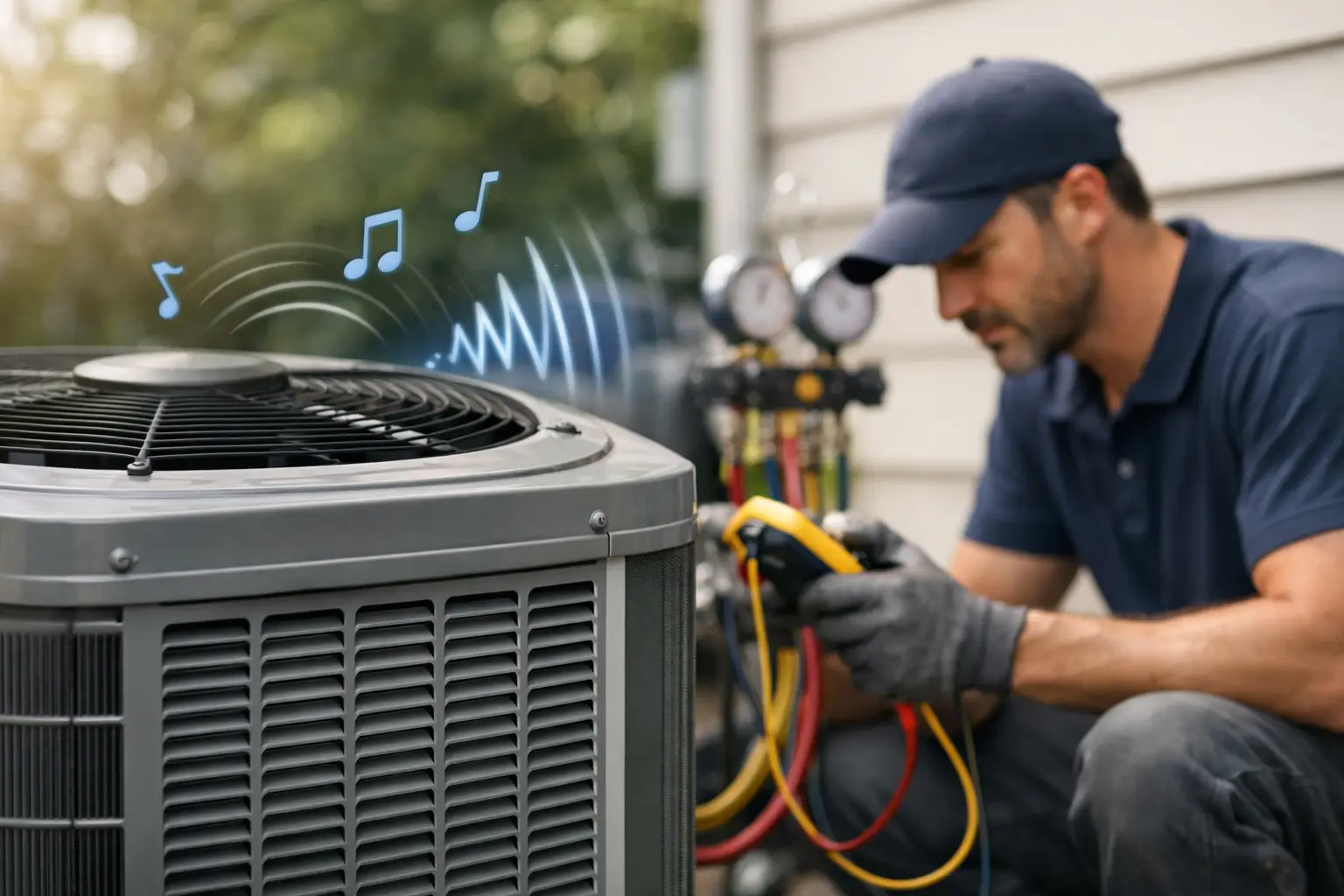
A new AC sound can turn a normal summer afternoon into a worry fast. If you are asking, “why is AC making noise?” the answer depends on the type of sound, where it is coming from, and whether your system is still cooling correctly. Some noises point to a minor loose part. Others can signal an electrical problem, a failing motor, or damage that gets more expensive if the unit keeps running.
The goal is not to guess or jump straight to replacing the system. A good diagnosis starts by identifying the sound and checking the equipment that actually produces it.
Why Is AC Making Noise? Start With the Sound
Air conditioners are not silent. You should expect a steady airflow sound from indoor vents and a low mechanical hum from the outdoor unit when it starts and runs. What is not normal is a sudden change in volume, a sharp metallic sound, repeated clicking, or a noise that continues after the system shuts off.
Try to notice when the sound occurs. Does it happen only at startup? Does it get louder during the cooling cycle? Is it coming from the indoor air handler, the outdoor condenser, a return grille, or the ductwork? Those details help narrow down the cause and keep a service call focused on the real issue.
Rattling or Vibrating
Rattling is one of the most common AC complaints in Charlotte-area homes and businesses. It can be as simple as a loose access panel, screw, refrigerant line cover, or piece of debris against the outdoor unit. A bent fan guard or loose mounting hardware can also vibrate as the condenser runs.
Inside, a rattling return grille or loose duct connection may be the source. Ductwork expands and contracts with temperature changes, particularly in attics, crawl spaces, and commercial ceiling cavities. A light tick or occasional pop may be normal movement. Persistent rattling that is loud enough to hear throughout the room is worth checking.
Turn the thermostat off before inspecting anything. You can remove leaves, sticks, and other debris from around the outdoor unit, but do not reach through the fan guard or remove electrical panels. If tightening an obvious exterior screw does not stop the noise, have a technician check the fan assembly, cabinet, and duct connections.
Buzzing or Humming
A brief hum when your AC starts can be normal. Continuous buzzing, a loud electrical hum, or a buzz paired with poor cooling is different. Possible causes include a failing capacitor, contactor, compressor issue, loose wiring, or a condenser fan motor that is struggling to start.
Buzzing can also come from an outdoor unit clogged with debris or ice. Restricted airflow forces components to work harder, and it can lead to overheating. A dirty air filter indoors can contribute to airflow problems, too.
Electrical issues are not a do-it-yourself repair. If the AC is buzzing loudly, repeatedly tries to start, trips a breaker, smells hot, or stops cooling, turn it off at the thermostat and call for service. Continuing to run it can turn a manageable component repair into compressor damage.
Squealing or Screeching
A high-pitched squeal often points to a motor or fan problem. Older belt-driven systems may squeal when a belt is worn, misaligned, or slipping. Most newer residential systems do not use belts, so squealing is more likely related to a failing blower motor, condenser fan motor, or motor bearing.
This noise deserves prompt attention. A fan that cannot spin properly may cause the system to overheat or shut down. If the outdoor fan is not running while the compressor is humming, do not keep restarting the AC. The exact repair may be a capacitor, motor, or another related component, but testing is needed before any recommendation is made.
Banging, Clanking, or Metal-on-Metal Sounds
Banging is not a noise to ignore. It may mean a loose or damaged fan blade is striking the cabinet, a motor mount has failed, or an internal compressor component is loose. Clanking can also occur when a worn blower wheel shifts and hits its housing.
Shut the system down if you hear metal-on-metal contact, especially from the outdoor condenser. A loose fan blade can damage the coil, wiring, and cabinet quickly. The longer the unit runs, the more likely a small mechanical failure becomes a larger repair.
Clicking
One click when the system starts and one when it stops is usually normal. Repeated clicking, rapid clicking, or clicking that continues without the AC starting can point to a thermostat issue, relay problem, failing contactor, capacitor trouble, or compressor protection switch.
Because several parts can cause the same symptom, clicking is a good example of why accurate diagnostics matter. Replacing the first part that seems likely may not solve the problem. A technician should test the control circuit and electrical components rather than relying on sound alone.
Hissing or Bubbling
A faint hiss near a vent may simply be air moving through a small duct opening. A sustained hissing sound around refrigerant lines, the indoor coil, or the outdoor unit can indicate a refrigerant leak. Bubbling or gurgling may also occur when refrigerant levels are low or when moisture has entered the refrigerant circuit.
Low refrigerant is not something an AC should “use up” under normal operation. If the charge is low, there is usually a leak or another system issue that needs to be found. Adding refrigerant without locating the cause may restore cooling temporarily, but it does not fix the problem.
Noises From the Indoor Unit vs. Outdoor Unit
Location matters. Indoor noises commonly involve the blower motor, blower wheel, air filter, drain system, ductwork, or loose cabinet panels. A whistling sound indoors may be caused by a heavily restricted filter, closed vents, or undersized ductwork. Water dripping or sloshing can point to a clogged condensate drain line or pan issue.
Outdoor noises more often involve the condenser fan, compressor, contactor, capacitor, mounting pad, or debris around the unit. The outdoor unit should sit level and have clear space around it for airflow. Shrubs pressed against the cabinet and yard debris inside the coil area can contribute to noise and reduced efficiency.
For commercial equipment, the same principles apply, but the stakes can be higher. Rooftop units, larger air handlers, and multiple zones make it easier for a small noise to be missed until it affects customer comfort or business operations. Unusual sounds should be documented and addressed before a peak-demand failure.
What You Can Check Safely Before Calling
There are a few practical checks homeowners and property managers can make without opening equipment or handling electrical parts. First, replace a dirty filter with the correct size and type. A filter that is visibly gray, bowed inward, or overdue for replacement can restrict airflow and add stress to the blower.
Next, make sure supply vents and return grilles are open and not blocked by furniture, boxes, or rugs. Check for loose vent covers, and look around the outdoor unit for leaves, mulch, branches, or loose objects that could vibrate against the cabinet. Keep at least a couple feet of clear space around the condenser.
If the noise is minor but new, record a short video from a safe distance. Capture the startup sound and note whether cooling is normal. This can help a technician understand an intermittent problem that may not occur at the moment of arrival.
Do not remove the condenser top, touch wiring, straighten fan blades, or try to recharge refrigerant. Those repairs require proper testing, safety procedures, and licensed HVAC expertise.
When an AC Noise Is an Emergency
Turn off the AC and request prompt service if you hear loud banging, grinding, screeching, or electrical buzzing. Do the same if the noise comes with a burning smell, smoke, a tripped breaker, ice on refrigerant lines, water leaking near electrical components, or no cooling at all.
A system that is still running is not necessarily safe to keep running. Motors, capacitors, and fan components often give warning sounds before they fail completely. Catching the problem early can protect more expensive parts and reduce the chance of being without cooling during a North Carolina heat wave.
Get the Real Cause, Not a Sales Pitch
AC noise is a symptom, not a diagnosis. A loose panel and a failing compressor can both sound alarming, while a serious electrical issue may begin with little more than a faint buzz. The right repair depends on what testing shows, the age and condition of the equipment, and whether the repair makes practical financial sense.
DDL Services approaches noisy AC systems by finding the actual source, explaining what is wrong in plain language, and recommending the repair that fits the condition of the system. If your AC has developed a sound you have not heard before, trust that instinct. Shut it down when the noise is severe, and get it checked before a small warning becomes a larger failure.