

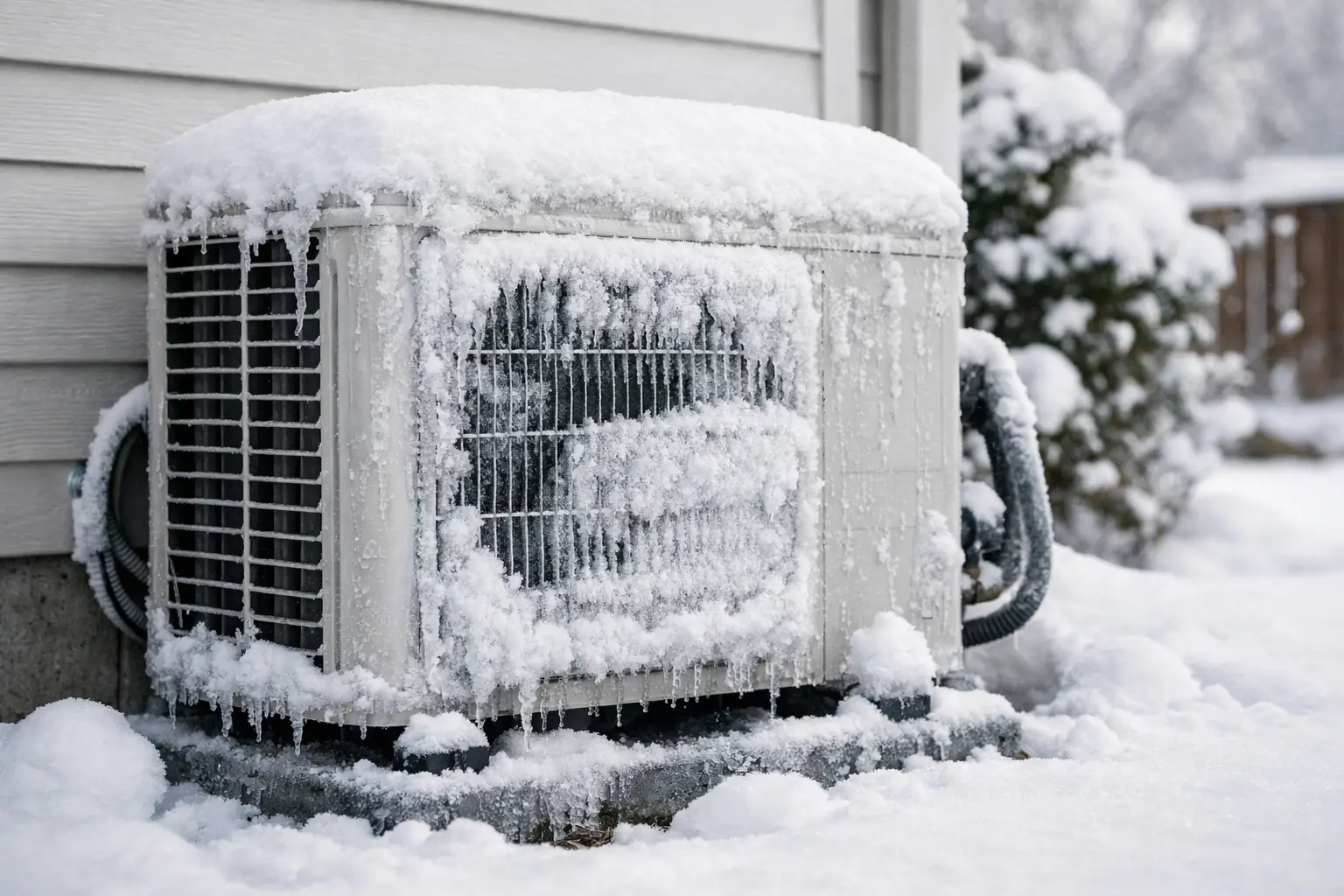
A heat pump can look alarming on a cold, damp Charlotte morning. You walk outside and see frost or a layer of ice covering the outdoor unit, then wonder, why does my heat pump ice over when it is supposed to be heating the house? The honest answer is that a little frost can be normal. Thick ice that stays put, blocks airflow, or leaves your home cold is not.
Knowing the difference can save you from an unnecessary replacement recommendation – and from letting a repairable problem turn into a larger one.
Why Does My Heat Pump Ice Over During Heating Season?
In heating mode, your heat pump pulls heat from outdoor air and moves it inside. Even when the air feels cold, it still contains some heat energy. As the outdoor coil gets colder than the surrounding air, moisture in that air can condense on the coil and freeze.
A light, even coating of frost is common when temperatures are cool and humidity is high. This is especially common in the Charlotte area during damp winter weather, when temperatures hover near freezing. Frost alone does not mean your system is failing.
The unit is designed to deal with this through a defrost cycle. Every so often, it temporarily switches operating modes to warm the outdoor coil and melt the frost. You may hear a change in the unit’s sound, see steam rising from it, or notice the outdoor fan stop briefly. Those are usually normal signs that defrost is working.
The concern starts when the unit cannot clear the ice. If the entire cabinet is encased, the fan is frozen in place, or ice returns immediately after a defrost cycle, something needs attention.
Normal Frost vs. a Heat Pump Problem
Normal frost is generally thin and limited to the coil. It should disappear after a defrost cycle, often within several minutes. Steam during defrost can look dramatic, but it is simply warm water vapor meeting cold outdoor air.
Problem ice is thicker, more persistent, and often extends beyond the coil. Ice may build around the fan guard, refrigerant lines, base pan, or lower portion of the unit. Your heat pump may run for long periods without warming the building, make unusual noises, or switch to expensive auxiliary heat more often than it should.
Do not chip ice off the coil with a screwdriver, knife, or other sharp tool. Coil fins and refrigerant tubing are easy to damage. Do not pour hot water over a frozen unit either. The sudden temperature change can cause problems, and the water may simply refreeze around the equipment.
If ice is heavy, turn the thermostat to emergency heat or auxiliary heat if your system has that setting, then schedule service. This allows the backup heat source to warm the home while preventing the outdoor unit from continuing to run under damaging conditions.
Common Reasons a Heat Pump Freezes Up
A defrost system issue
A failed defrost control board, sensor, thermostat, or reversing valve can prevent the system from entering defrost when it should. This is one of the most common reasons frost becomes solid ice. The outdoor fan may also continue running when it should stop during defrost, making it harder for the coil to warm up.
This is not something that can be diagnosed by looking at the ice alone. A technician needs to check the system’s controls, temperatures, electrical readings, and operating sequence. Replacing parts without testing may waste money and still leave the real fault behind.
Restricted airflow around the outdoor unit
Your outdoor unit needs open airflow to collect heat. Leaves, pine straw, mulch, ice, snow, and overgrown shrubs can restrict that airflow and contribute to freezing. A blocked coil cannot exchange heat efficiently, which makes the coil colder and more likely to ice over.
Check for obvious debris around the unit and keep at least a couple of feet clear on all sides. Do not cover the unit while it is operating. If the coil itself is packed with dirt or debris, professional cleaning is the safer choice. High-pressure washing can bend delicate fins and create another problem.
Low refrigerant from a leak
A heat pump does not use up refrigerant under normal operation. If the refrigerant charge is low, there is usually a leak somewhere in the system. Low refrigerant can make the coil excessively cold, which leads to icing and weak heating performance.
A proper repair means locating and fixing the leak, then charging the system to manufacturer specifications. Simply adding refrigerant may improve performance for a while, but it does not solve the reason the charge became low in the first place.
Indoor airflow problems
Although ice is visible outside, the cause can begin indoors. A severely clogged air filter, dirty indoor coil, failing blower motor, or blocked return can reduce airflow across the system. Poor airflow changes refrigerant pressures and can contribute to freezing issues.
Start with the filter. If it is loaded with dust, replace it with the correct size and type. Avoid using an overly restrictive filter if your system was not designed for it. A high-efficiency filter can be helpful for indoor air quality, but it must still allow adequate airflow.
Drainage and base-pan problems
During defrost, melted frost needs a place to go. If the unit’s base pan or drain openings are blocked, water can collect and refreeze. This often creates ice around the bottom of the cabinet and can eventually interfere with the fan.
The fix may be as straightforward as clearing debris, but a cracked base pan, poor unit leveling, or damaged drain path can also be involved. The right repair depends on what is actually preventing water from leaving the unit.
What You Can Safely Check Before Calling for Service
A homeowner or facility manager can rule out a few simple issues without taking the equipment apart. Confirm that the thermostat is set to heat and that the outdoor unit has room to breathe. Clear loose leaves, branches, and snow from around it, but do not force anything out of the coil.
Then inspect the indoor air filter and replace it if it is dirty. Make sure supply and return vents inside the building are open and not covered by furniture, boxes, or rugs. For commercial spaces, check that recently moved inventory or displays have not blocked return grilles.
Watch what happens next. If the unit starts a defrost cycle and clears the frost, it may be operating normally. If it remains covered in ice, makes grinding noises, trips a breaker, or fails to heat the building, stop relying on it to correct itself.
When Ice Means You Need a Technician
Call for a professional diagnosis when the ice is thick, returns repeatedly, or affects comfort indoors. You should also schedule service if you see damaged wiring, hear the fan striking ice, notice reduced airflow, or find that auxiliary heat is carrying the load for days at a time.
For businesses, an iced-over heat pump can mean more than an uncomfortable office or retail space. It can increase operating costs, put equipment under strain, and create downtime if the system fails during a cold snap. Early diagnosis is usually less expensive than waiting for a compressor, fan motor, or control failure.
A technician should not jump straight to recommending a new system based only on ice. Many freeze-ups come down to a repairable defrost component, airflow restriction, drainage issue, or refrigerant leak. At DDL Services, the goal is to identify the actual cause, explain the repair clearly, and recommend replacement only when the condition of the equipment truly supports it.
Preventing Repeat Ice Buildup
Preventive maintenance gives a heat pump its best chance of handling winter weather correctly. A seasonal check should include coil condition, electrical connections, refrigerant performance, defrost operation, blower airflow, drain paths, and the condition of the outdoor fan.
Keep the outdoor unit clear year-round, change filters on schedule, and pay attention to changes in sound or performance. A unit that begins needing more auxiliary heat or takes much longer to warm the home is worth checking before the next cold, wet spell.
A little frost is part of normal heat pump operation. Solid ice is your system telling you that it needs help. Treat that signal early, and you are far more likely to get a straightforward repair instead of a preventable winter breakdown.