

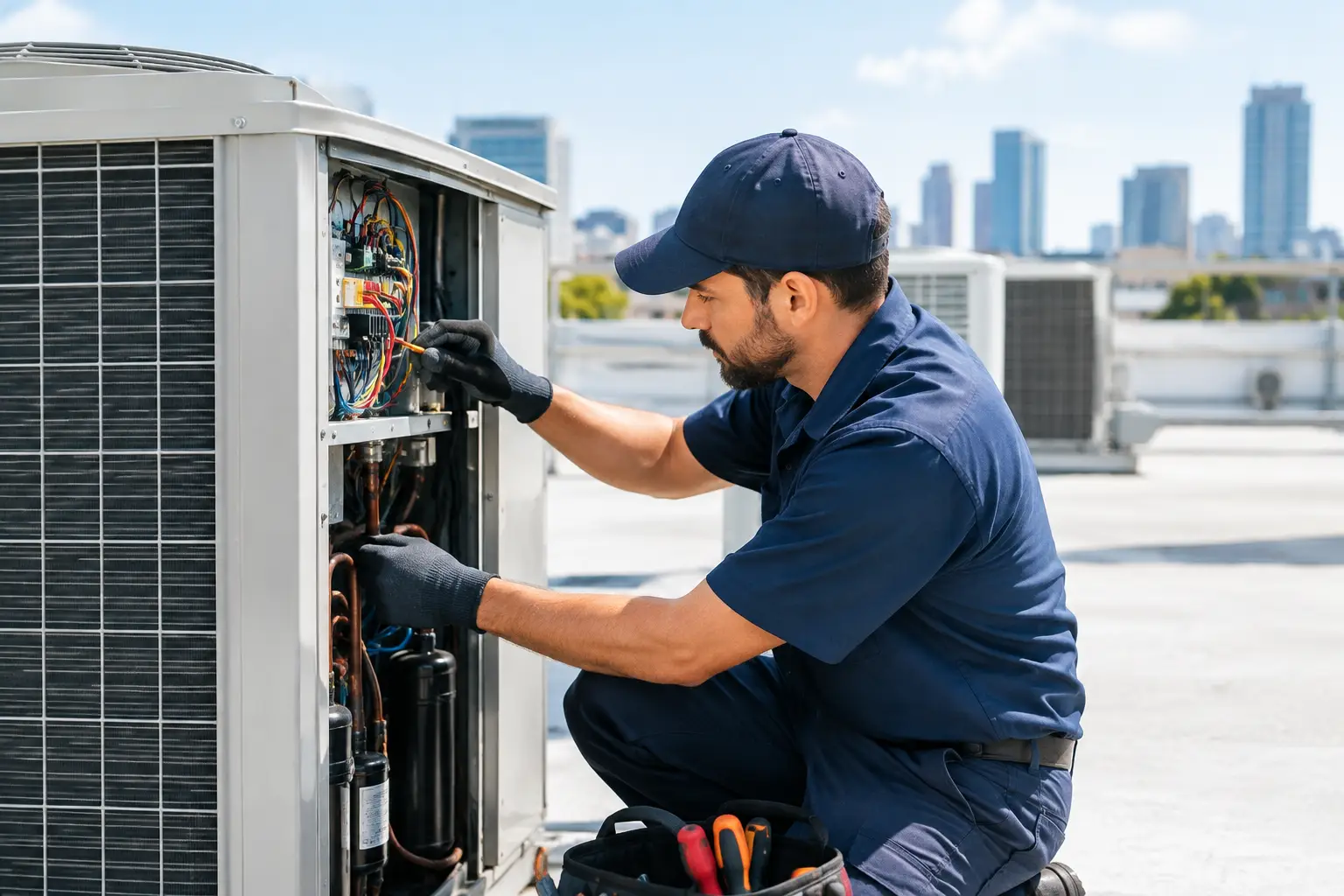
A failing air conditioner can turn a normal workday into a closure decision faster than most office managers expect. In one common commercial scenario, office HVAC repair prevented closure because the real issue was identified early: not a failed system, but a repairable problem that was choking airflow and driving temperatures up floor by floor.
For a Charlotte-area office, the stakes are not limited to comfort. Employees cannot focus in a hot, humid workspace. Customers may leave. Computers, network hardware, printers, and other heat-sensitive equipment can become unreliable. If indoor conditions become unsafe or unbearable, sending people home may be the only responsible option.
That is why a commercial HVAC problem should be treated as an operational issue, not just a comfort complaint. The right response is fast diagnosis, a clear explanation of what failed, and a repair recommendation based on the actual condition of the equipment.
When office HVAC repair prevented closure
The first warning sign is often easy to dismiss. A few offices feel warmer than usual. The system runs longer. Someone notices weak airflow from a supply vent, or the thermostat never reaches its set temperature. By midday, the issue has spread from an inconvenience to a problem affecting the entire building.
A system that is running but not cooling can have many causes. A clogged filter, failed blower component, dirty evaporator coil, low refrigerant charge, electrical issue, blocked condensate drain, or thermostat control problem can all produce similar symptoms. Recommending a new unit before identifying which of those conditions is present is not a diagnosis. It is a guess with a high price tag.
In a repair-first approach, a technician checks the equipment in a logical order. That includes verifying airflow, inspecting filters and coils, testing electrical components, measuring operating pressures and temperatures, checking condensate drainage, and confirming that controls are communicating correctly. The goal is to find the failure that is actually preventing the system from doing its job.
Sometimes the answer is straightforward. A neglected filter can restrict airflow enough to cause an evaporator coil to freeze. Once airflow is restored and the coil is safely thawed, cooling may return. Other situations require a more involved repair, such as replacing a failing capacitor, correcting a blower motor issue, repairing a refrigerant leak, or clearing a drain backup that shut down the system.
The difference matters. A correct repair can restore a workable office environment that same day, avoid lost business hours, and give the property owner time to make a long-term equipment decision based on facts rather than pressure.
Why heat can force an office to close
Office closures do not always happen because the thermostat reads an extreme temperature. They happen because indoor conditions interfere with people, equipment, and business obligations at the same time.
Employees working in an overheated space may experience fatigue, headaches, dehydration, and reduced concentration. This is especially serious in offices with customer-facing staff, call centers, medical administrative teams, or workers who must remain attentive to detailed tasks. Humidity makes the problem worse because the body cannot cool itself as effectively when moisture levels are high.
Heat also affects the building itself. Server closets and communications rooms generate heat continuously. A cooling problem that might be tolerable in a lobby can become an urgent equipment risk in a small enclosed IT room. Excess humidity can contribute to condensation, musty odors, and indoor air quality complaints. In multi-tenant buildings, one malfunctioning rooftop unit or zone can lead to disputes over who is responsible and how quickly the repair must happen.
Closing early can protect employees, but it carries a cost. Missed appointments, interrupted service, lost revenue, employee frustration, and reputational damage can add up quickly. For many small and mid-sized businesses, keeping the office open safely depends on getting an honest answer quickly.
The repair versus replacement decision
Not every commercial HVAC system should be repaired indefinitely. Equipment age, repair history, operating efficiency, refrigerant availability, and the condition of major components all matter. A technician should explain those factors plainly.
But an older system does not automatically mean replacement is the only answer. If the compressor is sound, the cabinet and coil are in reasonable condition, and the immediate failure is a repairable electrical, airflow, or control issue, a practical repair may be the right decision. It can stabilize operations while the owner budgets and plans for replacement on their own schedule.
Replacement makes more sense when repairs are frequent, major components have failed, efficiency is severely declining, or the system is no longer properly sized for the space. A business that has added staff, remodeled offices, changed occupancy, or installed heat-producing equipment may have different cooling needs than it did when the current unit was installed.
The key is that the recommendation should follow the diagnosis. A good contractor can explain both options, including the short-term repair cost and the likely long-term risk. The owner should not be pushed into a full replacement simply because the day is hot and the office needs an answer.
What facility managers should do when cooling drops
The fastest path to a workable solution starts with good information. When calling for service, note which areas are affected, when the problem began, whether the system is running continuously, and whether there are unusual sounds, odors, water near the equipment, or error messages on the thermostat. That information helps the technician arrive prepared.
Do not repeatedly adjust the thermostat lower in hopes of forcing more cooling. If the system has an airflow problem or a frozen coil, lower settings can make the situation worse. Keep interior doors open where practical to encourage air movement, limit heat-producing activities, and move vulnerable electronics away from direct heat if a room is becoming hot.
A building manager should also avoid treating a tripped breaker as a nuisance. If a breaker trips again after being reset, there may be an electrical or mechanical issue that needs professional attention. The same applies to water around an indoor unit. A blocked drain can cause property damage and may trigger a safety switch that shuts the system down.
For offices with multiple HVAC zones, isolate the issue before assuming the entire building has failed. One bad thermostat, air handler, or rooftop unit may affect only part of the office. Temporary workarounds, such as moving staff to cooled areas or shifting customer appointments, can keep essential operations moving while repairs are underway.
Prevention is cheaper than an emergency closure
Most emergency HVAC failures have warning signs. Filters become loaded, coils collect dirt, drain lines begin to clog, capacitors weaken, and electrical connections wear over time. Regular maintenance does not eliminate every breakdown, but it gives technicians a chance to catch small problems before they become a midday emergency.
For commercial properties, maintenance should include more than changing filters. Technicians should inspect electrical components, check refrigerant performance, clean coils as needed, verify airflow, test safety controls, clear condensate drains, and look for signs of wear in motors, belts, and contactors. The exact scope depends on the type of equipment and how heavily the building uses it.
Scheduling matters, too. Cooling maintenance is most useful before the first sustained summer heat arrives, not after the office is already uncomfortable. Businesses with server rooms, high occupancy, extended hours, or older rooftop equipment may need more frequent attention than a lightly used professional office.
DDL Services approaches commercial calls with the same standard that matters most during an urgent outage: find the real problem and fix it when a repair is the sensible solution. Clear findings help business owners protect both their budget and their ability to stay open.
A comfortable office is not a luxury when people, customers, and essential equipment depend on it. If your system starts falling behind, address the warning signs while there is still time to choose a practical repair instead of making a rushed closure decision.