

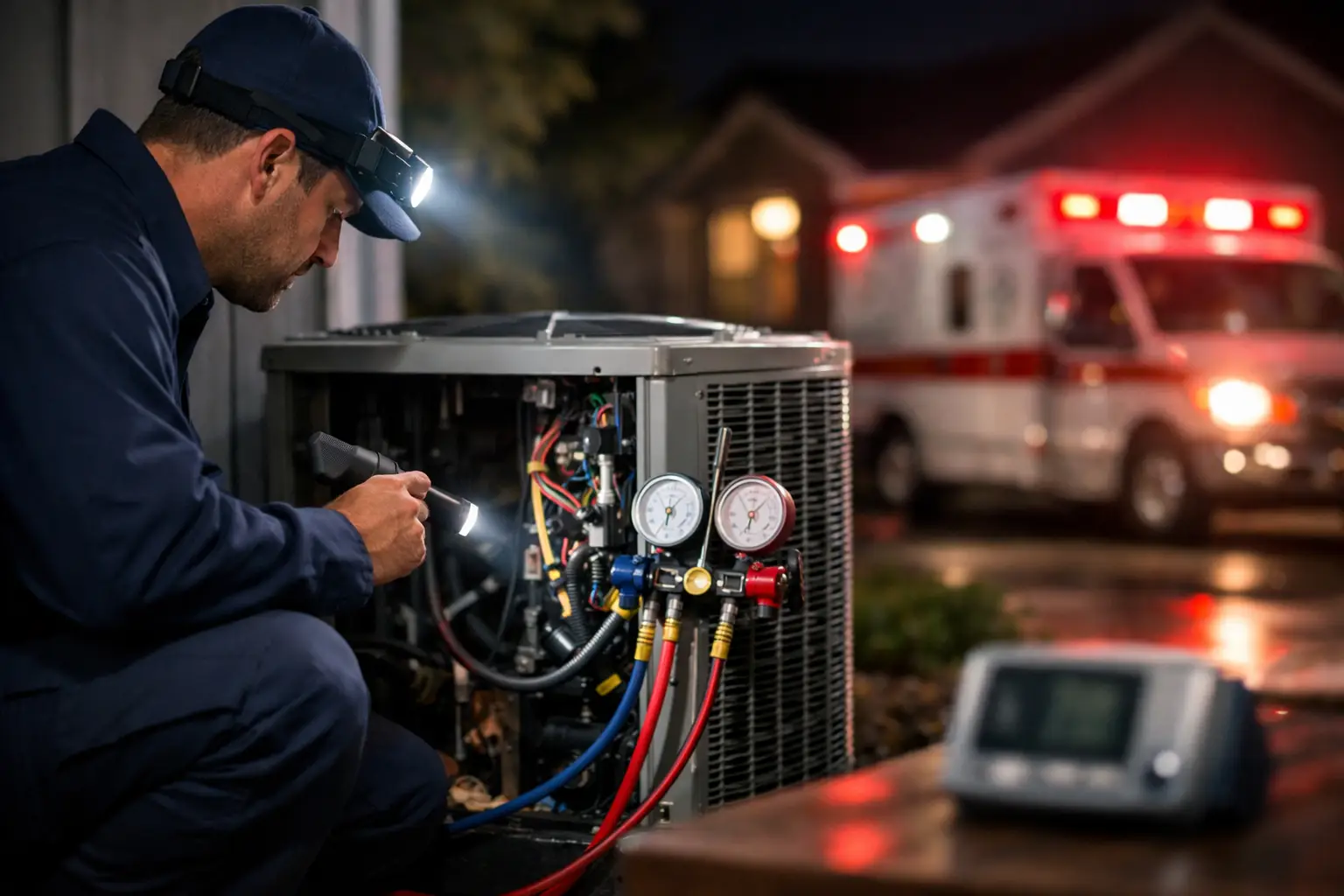
A Charlotte summer night with no air conditioning can get uncomfortable fast. But discomfort alone does not always mean you need a technician at your door at midnight. Is emergency HVAC service worth the added cost and after-hours call? It is when waiting creates a safety risk, can cause more property damage, or puts people, inventory, or a business operation at real risk.
The right answer is not always “call now” or “wait until morning.” A trustworthy HVAC contractor should help you make that decision based on what the system is doing, why it may be happening, and what is at stake – not use an urgent situation to push a replacement you may not need.
Is Emergency HVAC Service Worth It? Start With Risk
Emergency service is worth it when the problem has moved beyond ordinary inconvenience. A system that will not cool on a warm evening may be manageable for a few hours with fans, open interior doors, and a safe place to sleep. A burning smell from the air handler, a carbon monoxide alarm, or water pouring through a ceiling is a different situation.
Think about the cost of waiting, not just the cost of the service call. Waiting could mean more water damage, a failed compressor, spoiled temperature-sensitive inventory, frozen pipes, unsafe indoor conditions, or a family member struggling in extreme heat or cold. In those cases, prompt diagnosis is usually the practical choice.
For homeowners, emergency HVAC service is most valuable when it protects safety and limits damage. For commercial property operators, it can also protect revenue, tenant comfort, equipment, and business continuity. A restaurant with a walk-in cooler issue, an office with water leaking onto electrical equipment, or a retail space that is becoming dangerously hot has more to lose than a single night of inconvenience.
Problems That Should Not Wait Until Morning
Some HVAC symptoms call for immediate action because they may involve fire, electrical, gas, or carbon monoxide hazards. If you smell gas, leave the building, avoid switches and open flames, and contact the gas utility or emergency services from a safe location. Do not wait for an HVAC technician to investigate a suspected gas leak.
You should also seek urgent HVAC help when you notice a burning electrical odor, sparks, smoke, repeated breaker trips, or an HVAC unit that is hot to the touch. Turn the system off at the thermostat and, if it is safe to do so, at the breaker. Continuing to reset a breaker or force a system to run can damage components and create a more serious electrical problem.
Water is another reason to act quickly. A clogged condensate drain can be a straightforward repair, but overflowing water can stain ceilings, damage drywall, ruin flooring, and create conditions for mold. If you have a substantial leak around an indoor unit, turn the system off and contain the water if possible. An emergency visit is often cheaper than repairing the damage caused by letting it continue overnight.
Loss of heating deserves urgent attention when outdoor temperatures are near or below freezing, especially when there are young children, older adults, medically vulnerable residents, or concerns about frozen plumbing. The same goes for a full cooling failure during severe heat when indoor temperatures are becoming unsafe. Health conditions, pets, and the actual indoor temperature matter more than a calendar date.
When Waiting Can Make Sense
Not every failure needs an after-hours repair. If your AC is running but not keeping the house as cool as usual, the thermostat is set correctly, there is no burning smell or water leak, and everyone can stay safe overnight, scheduling service for normal business hours may be reasonable.
Before deciding, check the simple items that do not require taking equipment apart. Confirm that the thermostat is set to cool or heat, replace a severely clogged air filter, make sure supply vents are open, and check that the outdoor disconnect or relevant breaker has not been switched off. If a breaker has tripped, reset it only once. If it trips again, leave it off and call for service.
A frozen evaporator coil is a common example of a problem that may not require an overnight visit if there is no safety concern. Turn cooling off, set the fan to ON if it will run, and allow the coil to thaw. Do not keep operating the system while it is frozen. The underlying cause could be restricted airflow, low refrigerant, a blower issue, or a drain problem, and it still needs proper diagnosis soon.
Waiting is also more reasonable when you have a backup plan. Portable fans, a safe temporary heat source used according to its instructions, a hotel, or another place to stay can give you time to avoid an after-hours fee. Never use an oven, grill, or unvented combustion appliance to heat a home.
The Real Value Is Accurate Diagnosis
Emergency service can feel expensive because it includes immediate availability, travel, and work outside normal hours. That does not make every emergency call a bad value. It means the technician needs to identify the actual problem and explain the repair clearly.
A no-cooling call could be caused by a bad capacitor, a failed contactor, a blocked drain safety switch, a blower motor issue, a dirty coil, or a refrigerant leak. Those are not the same repair, and they do not carry the same cost. Recommending a whole new system before testing the components and confirming the failure is not a diagnosis.
The same standard applies to heating. A furnace that will not start may have a dirty flame sensor, a failed igniter, a pressure-switch issue, a thermostat problem, or a more serious safety-related fault. A technician should tell you what failed, why it matters, what repair options are available, and whether the rest of the system supports repairing it.
That is where emergency service can pay off. A quick, accurate repair may prevent a minor part failure from becoming a weekend-long outage, water-damage claim, or compressor replacement. On the other hand, if the equipment is near the end of its life and has multiple major failures, an honest technician should explain why replacement may be the better long-term decision without turning every repair call into a sales pitch.
A Practical Decision for Homes and Businesses
Ask three questions before requesting 24/7 service: Is anyone unsafe? Is the problem actively damaging the property or equipment? Will waiting significantly increase the cost or disruption? If the answer to any of those is yes, emergency service is likely worth it.
For commercial facilities, add one more question: What does downtime cost? A small office may be able to close early or use fans until morning. A daycare, medical office, server room, restaurant, or tenant-occupied property may not have that flexibility. Fast action can protect the people relying on the space and prevent a manageable repair from becoming a business interruption.
When you call, provide useful details: whether the system is heating or cooling, what the thermostat reads, any sounds or odors, whether there is water present, and whether breakers have tripped. That information helps the technician arrive prepared and helps you get a direct answer sooner.
Preventing the Next After-Hours Call
Many emergency breakdowns begin as smaller warnings. Weak airflow, rising utility bills, short cycling, unusual noises, frequent filter clogging, water around the indoor unit, and rooms that never reach temperature all deserve attention before they become a late-night failure.
Seasonal maintenance helps catch worn electrical parts, drainage problems, dirty coils, airflow restrictions, and performance issues while there is time to plan the repair. It also gives you a clearer picture of your system’s condition, which makes a future repair-versus-replacement decision less stressful.
DDL Services approaches urgent calls the same way it approaches scheduled work: find the real problem, explain it plainly, and repair what makes sense. When your HVAC system fails after hours, make the decision based on safety, damage, and the real cost of waiting – then choose a technician who treats the emergency like a problem to solve, not an opportunity to oversell.