

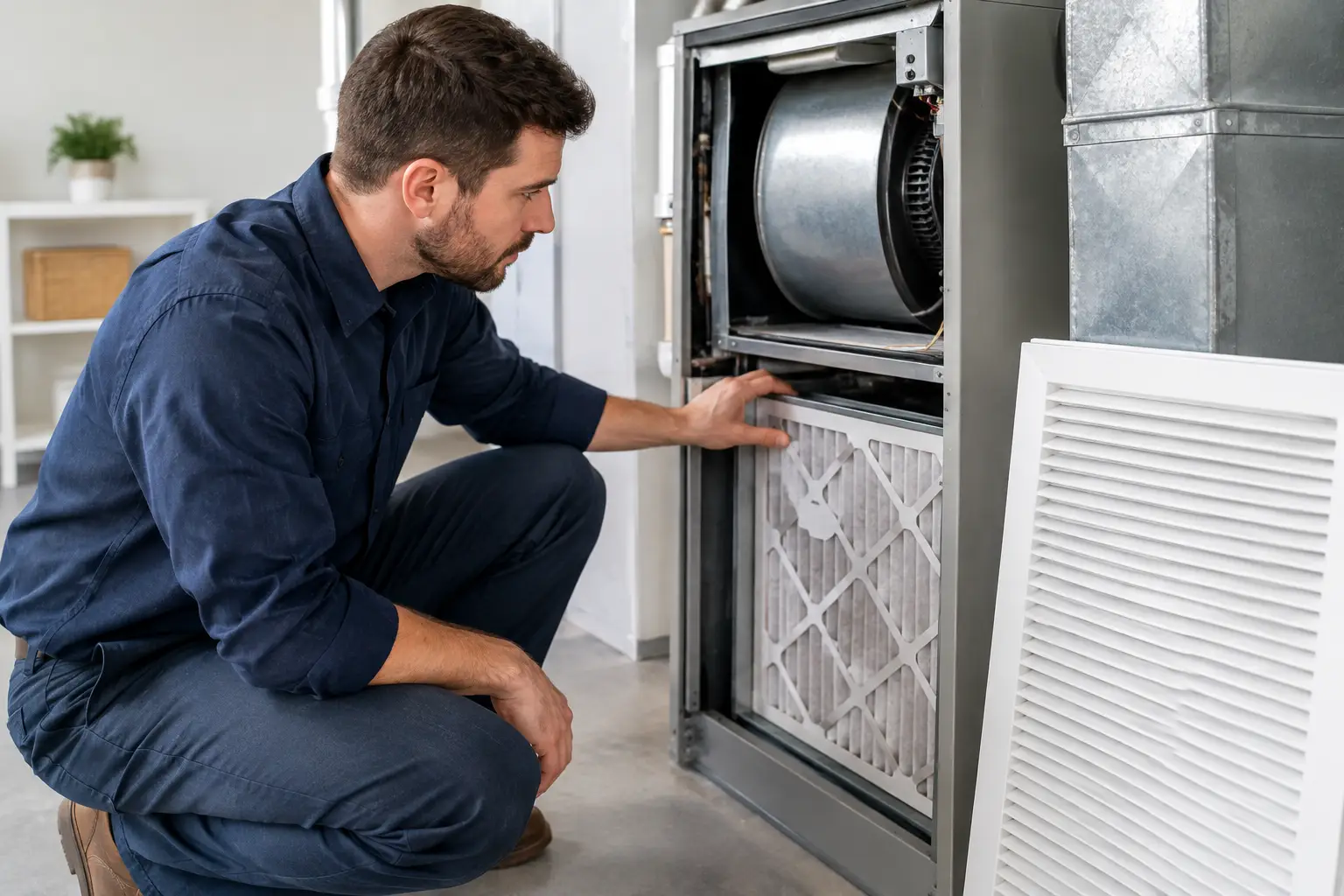
A thermostat can say 70 degrees while the bedroom at the end of the hall feels like a different house. That is often one of the first signs of heating system airflow problems. The furnace or heat pump may be producing heat, but that heat is not reaching each room in the right amount.
Poor airflow is not automatically a reason to replace a heating system. In many cases, the real issue is a restricted filter, a blower problem, a disconnected duct, or a control setting that needs correction. The job is to identify where airflow is being lost, then make the repair that actually fits the problem.
What Poor Heating Airflow Looks Like
Airflow trouble does not always mean no air is coming from the vents. More often, the warning signs are uneven comfort, weak airflow, unusual noise, or a system that runs longer than it should. A home in Charlotte can have a warm living room, cold upstairs bedrooms, and a furnace that seems to run constantly trying to satisfy one thermostat.
For businesses, the issue may show up as complaints from employees or customers, cold offices along an exterior wall, or certain areas that never recover after doors open during a busy day. These comfort problems can also drive up utility costs because the equipment must run longer to overcome the restriction.
Pay attention if you notice:
- One or more rooms are consistently colder than the rest of the building.
- Air barely moves from supply vents, even when the system is running.
- Some vents blow strongly while others have little or no air.
- The furnace or heat pump cycles off on a safety limit, makes whistling noises, or runs for unusually long periods.
- Filters get dirty quickly, rooms seem dusty, or return grilles pull very little air.
These symptoms overlap, which is why guessing can get expensive. A weak vent might be caused by a simple closed damper, but it can also point to a failing blower motor or duct damage in an attic or crawlspace.
Common Causes of Heating System Airflow Problems
A clogged or overly restrictive air filter
A dirty filter is the first thing to check because it is common, inexpensive to address, and capable of causing bigger problems if ignored. The return side of the system needs to pull enough air across the heat exchanger or indoor coil. When a filter is loaded with dust, pet hair, and debris, the blower has to work harder to move air.
Not every high-efficiency filter is right for every system, either. A filter with a high filtration rating may improve particle capture, but it can restrict airflow if the duct system and blower were not designed for it. The right filter balances air quality with the airflow your equipment needs. If airflow changed after switching filter types, that detail matters.
Closed registers, blocked returns, and poor vent settings
Closing off unused rooms may sound like a way to save energy, but central heating systems are designed to move a certain amount of air. Shutting multiple supply registers raises system resistance and can worsen comfort elsewhere. It can also create noise and put unnecessary stress on the blower.
Supply registers should generally be open and clear of furniture, rugs, or curtains. Return grilles need even more attention. A large sofa pushed against a return grille can starve the system for air. In a commercial space, stacked inventory, display fixtures, or office partitions can create the same problem.
Duct leaks, disconnections, and crushed ductwork
Ductwork carries heated air through areas that are often unconditioned, such as attics, crawlspaces, garages, and ceiling cavities. A loose connection can send warm air into those spaces instead of into the room you are trying to heat. Flexible duct can also sag, kink, or get crushed, reducing the path available for airflow.
Duct leakage is especially frustrating because the heating equipment may appear to be working normally. The system makes heat, the blower runs, and energy is being used, but comfort never improves. A proper inspection can reveal disconnected runs, damaged insulation, failed duct seals, or sections that were poorly installed from the start.
Blower motor, wheel, or control problems
The blower is the part of the indoor unit that moves air through the system. A failing motor, weak capacitor, worn bearings, dirty blower wheel, or incorrect speed setting can all reduce airflow. Depending on the equipment, the blower may still run while failing to deliver the volume of air the system needs.
A dirty blower wheel is easy to overlook. Dust buildup changes the shape of the blades and reduces their ability to move air efficiently. Electronic controls and variable-speed blowers add another layer: a setting or control fault may keep the blower from responding correctly to heating demand.
These are not do-it-yourself repairs. Electrical components, moving parts, and furnace safety controls need to be checked carefully. A technician should measure static pressure, inspect the blower assembly, and verify that the system is operating within manufacturer specifications before recommending a major repair or replacement.
Undersized return air or unbalanced duct design
Some airflow issues have been present since the day a system was installed. An addition may have been tied into existing ductwork without enough return air. Upstairs rooms may have long duct runs with too few returns. A replacement furnace or heat pump may be properly sized, but connected to ductwork that cannot support its airflow requirements.
This is where a quick equipment swap does not solve the real problem. Adding or resizing return ducts, correcting branch runs, installing balancing dampers, or making targeted duct modifications may be the right answer. The exact repair depends on the building layout, equipment capacity, duct condition, and measured airflow.
Safe Checks You Can Make Before Calling
Start with the basics. Confirm that the thermostat is set to heat and that the fan setting is on Auto unless a technician has advised otherwise. Check the filter size and condition, then replace a dirty filter with the correct type and size. Make sure supply registers are open and return grilles are not blocked.
Walk through the home or business while the heat is running. Note which rooms have weak airflow and whether the issue is limited to one level or one side of the building. Listen for rattling, whistling, or loud rushing air. Those details help narrow down the source of the restriction.
Do not remove furnace panels, alter wiring, or repeatedly reset a system that is shutting down. If you smell gas, notice a burning odor, see soot, hear a loud mechanical noise, or suspect a carbon monoxide issue, turn the system off if it is safe to do so and seek professional help right away.
Why Accurate Diagnosis Matters
Airflow is measurable. A qualified HVAC technician can check static pressure, temperature rise, blower operation, duct condition, refrigerant-related airflow concerns on heat pumps, and the balance between supply and return air. Those tests separate a dirty filter from a failed blower, a duct restriction, or a design issue.
That distinction protects you from paying for the wrong fix. Replacing a furnace will not repair a crushed duct run. Adding more heat will not solve a blocked return. On the other hand, an aging system with recurring blower failures, major heat exchanger concerns, and poorly performing ductwork may justify a larger conversation. The recommendation should follow the findings, not lead them.
DDL Services approaches airflow complaints that way: inspect the system, explain what is causing the problem, and recommend the practical repair before pushing replacement. For homes and commercial properties, that means clearer decisions and fewer surprises.
When to Schedule HVAC Service
Schedule service when filter changes and clear vents do not restore normal airflow, when one area stays cold despite a running system, or when the equipment is noisy or frequently shuts down. It is also smart to have recurring comfort problems checked before the coldest stretch of winter, when the system is under its greatest demand.
A heating system should deliver comfort without forcing you to keep adjusting the thermostat, closing doors, or relying on space heaters. If it cannot, the answer is usually in the airflow path. Finding that restriction early can protect your equipment, reduce wasted energy, and make every room easier to live or work in.