

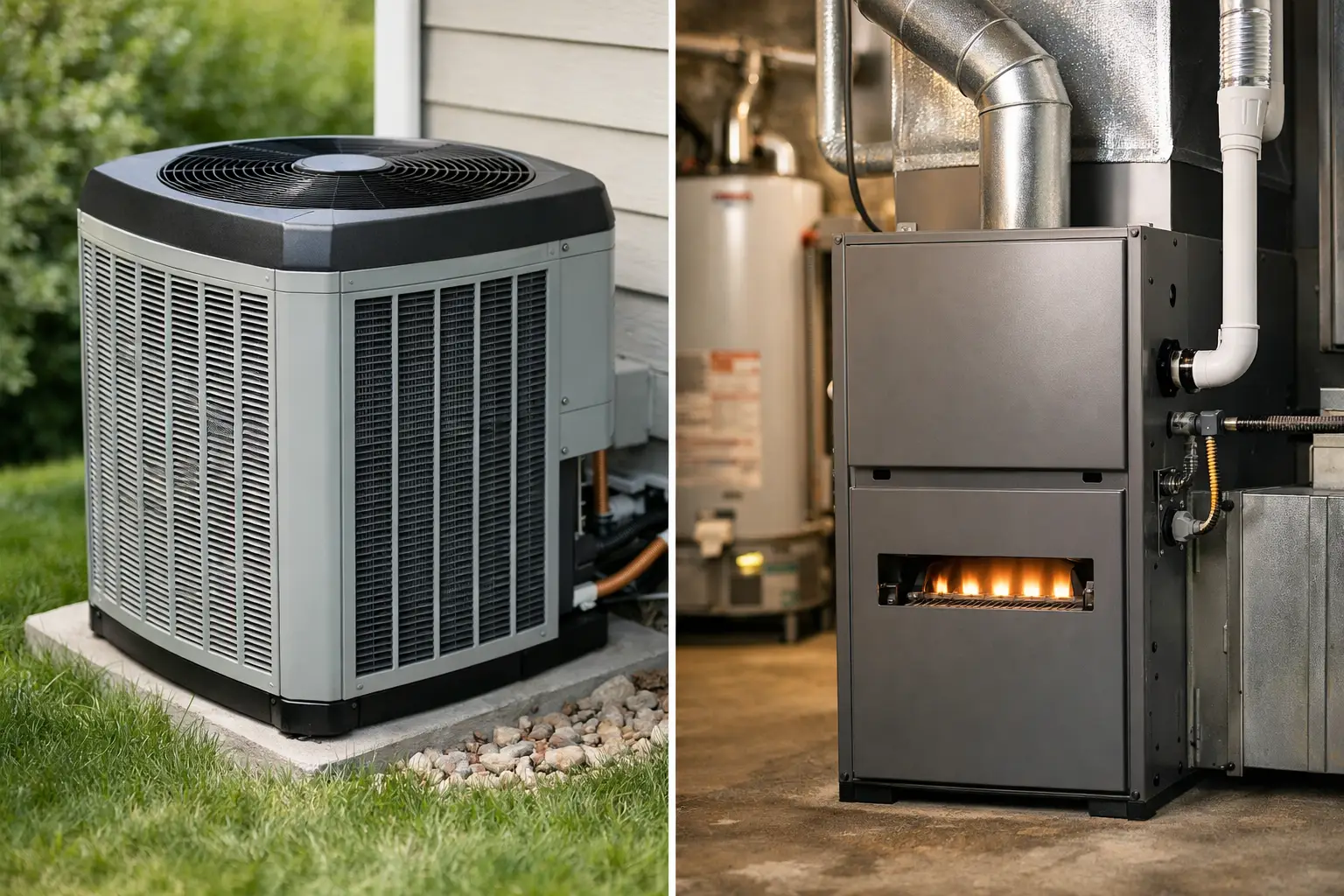
If your heating system is getting unreliable, the question usually comes fast: should you install a heat pump or furnace? For homeowners and property managers around Charlotte, that is not a small decision. The wrong fit can leave you with high utility bills, uneven comfort, and an expensive system that never really matches the building.
The honest answer is that there is no one-size-fits-all winner. A heat pump can be an excellent fit in North Carolina’s climate, but that does not mean every furnace should be replaced. A furnace still makes sense in some homes and some commercial spaces, especially when the ductwork, fuel source, usage pattern, and overall system condition point that way. The right choice comes from how the building actually performs, not from a sales script.
Heat pump or furnace: what is the real difference?
A furnace creates heat. In most homes, that means burning natural gas or propane, or using electric resistance heat, then pushing warm air through the duct system. Furnaces are built for heating only, so they need a separate air conditioning system for summer.
A heat pump works differently. It does not create heat in the same way a furnace does. It moves heat from one place to another. In winter, it pulls heat from outdoor air and brings it inside. In summer, it reverses and cools the building like an air conditioner. That dual role is one reason many property owners look at heat pumps first.
In a climate like Charlotte, where winters are usually moderate with some colder stretches, heat pumps often perform very well. But performance on paper is not the whole story. Installation quality, insulation levels, refrigerant charge, airflow, and duct condition matter just as much as the equipment type.
Why heat pumps are popular in North Carolina
Heat pumps make sense here for a simple reason: our winters are not like the upper Midwest or New England. Most of the heating season falls within the range where modern heat pumps can operate efficiently.
That can mean lower energy use compared to electric resistance heat and, in some cases, lower overall operating costs than older or less efficient equipment. Since one system handles both heating and cooling, a heat pump can also simplify replacement planning if both sides of your current system are aging.
There is also the comfort factor. Heat pumps tend to deliver more even, steady heat instead of the hotter bursts you get from some furnace systems. Some people prefer that. Others feel a furnace gives them that stronger warm-air feel on very cold mornings. Neither reaction is wrong. It depends on what comfort means in your home or building.
Still, a heat pump is not automatically the cheaper answer. If the home has poor insulation, leaking ducts, or a thermostat setup that runs backup heat too often, utility bills can climb fast. That is where careful diagnosis matters. The equipment can be good and the result can still be bad if the system around it is not addressed.
When a furnace still makes sense
A lot of homeowners assume furnaces are outdated. They are not. In the right situation, a furnace is still a practical, reliable heating option.
If a property already has a solid gas line setup and the cooling side of the system is separate and still in good condition, replacing only the furnace can be the smarter move. The same goes for buildings where occupants want stronger heat output during colder weather or where past heat pump performance has been disappointing because of the building layout.
Furnaces can also be appealing for customers who want a straightforward heating system with familiar operation. Gas furnaces, in particular, are often chosen for fast heat delivery and dependable cold-weather performance.
That said, a furnace is not always the lower-cost long-term option. Fuel prices matter. The condition of the AC paired with it matters. If the air conditioner is also near the end of its life, replacing the whole setup with a properly matched heat pump system may be more sensible than putting money into half of an aging system.
The cost question is not just about installation
Most people start with the upfront number, which is understandable. But choosing a heat pump or furnace based only on installation price can lead to the wrong decision.
The better way to look at it is total value over time. That includes equipment cost, expected repair needs, utility usage, maintenance demands, and how long you plan to stay in the property.
A heat pump may save money over time in a mild climate, especially if it replaces older electric heat and an outdated AC at once. A furnace may be less expensive to install in a home that already has the right fuel source and a cooling system with useful life left.
There is also a point many contractors skip over: not every system that struggles needs to be replaced right now. Sometimes the real problem is a failed component, airflow issue, control problem, dirty coil, undersized return, or neglected maintenance. If the equipment still has life in it, honest diagnostics can save you from buying a full system before it is truly necessary.
Heat pump or furnace for comfort and performance
This part is more personal than most sales presentations admit.
A furnace usually produces hotter supply air. That stronger blast of warmth can feel better if you are used to traditional gas heat. In a house with drafty rooms or poor insulation, homeowners often notice that difference.
A heat pump usually runs longer cycles with gentler air temperatures. That can create more stable indoor conditions and fewer temperature swings. For some buildings, that is a major improvement. For others, especially where the envelope is not tight, occupants may say it does not feel as warm even when the thermostat says otherwise.
Humidity control can also play a role because a heat pump handles cooling in summer too. If the system is sized correctly and airflow is dialed in, it can do a very good job. If it is oversized, comfort can suffer. Bigger is not better in HVAC, and that applies whether you choose a heat pump or a furnace-based system.
What matters before you replace anything
Before deciding on a new system, the building should be looked at as a whole. That means more than checking the model number and offering a quote.
The condition of the ductwork matters. So does insulation, return air design, thermostat placement, and whether the current equipment was properly sized in the first place. We have seen systems blamed for poor heating when the actual issue was restricted airflow or major duct leakage.
For commercial spaces, usage pattern matters even more. A small office, retail suite, or mixed-use property may have occupancy schedules and internal heat loads that change the best answer. The right equipment for a family home is not always the right equipment for a business trying to control operating costs and avoid downtime.
This is where an honest contractor earns trust. If the recommendation comes before the diagnosis, you are probably hearing a sales pitch, not a solution.
How to decide between a heat pump and furnace
If you are trying to make the call, start with a few practical questions. Is your current issue really a full system failure, or is it a repairable problem? Is your cooling system also aging, or just the heat side? Do you already have gas service? How well is the home insulated? Are your utility bills already higher than they should be? Do you plan to stay in the property long enough to benefit from efficiency gains?
In the Charlotte area, heat pumps are often a strong option because the climate supports them well. But that does not mean every homeowner should rush to replace a furnace. If the furnace is properly sized, in repairable condition, and matched to the property’s needs, keeping or replacing it can still be the right move.
At DDL Services, the better approach is simple: find the real problem first, then recommend the fix that fits the property. Sometimes that means a repair. Sometimes it means replacing one part of the system. Sometimes it means a full upgrade. What it should not mean is pushing a replacement just because it is the biggest ticket.
If you are stuck between a heat pump or furnace, do not let anybody turn it into a generic yes-or-no answer. The best heating system is the one that matches your building, your budget, and the way you actually use the space.