
A furnace that stops heating on a cold Charlotte-area night can make replacement sound like the only responsible option. But in many cases, furnace repair avoided full system replacement because a qualified technician took the time to identify the failed part, verify the system’s condition, and explain the findings before discussing new equipment.
That distinction matters. A furnace is a system of connected safety controls, electrical components, airflow parts, and combustion equipment. When one component fails, the entire unit may shut down by design. That does not automatically mean the heat exchanger is bad, the furnace is worn out, or a replacement is necessary.
When a Furnace Failure Looks Worse Than It Is
Homeowners usually see the same frustrating symptoms: the thermostat is calling for heat, the blower may run, but the burners never light. Or the furnace starts, shuts off after a few seconds, and repeats the cycle. Sometimes there is no heat at all, even though power and gas service appear normal.
Those symptoms can be caused by a serious issue, but they can also come from repairable problems such as a failed igniter, a dirty flame sensor, a pressure switch issue, a weak inducer motor, a blocked condensate drain, a loose electrical connection, or restricted airflow. A clogged filter can contribute to overheating and limit switch trips. A damaged vent pipe or intake obstruction can prevent a high-efficiency furnace from completing its safety sequence.
The point is not that every no-heat call has a cheap fix. The point is that symptoms are not a diagnosis. Recommending a new furnace before checking the sequence of operation, safety controls, combustion conditions, and the condition of major components skips the work that protects the customer.
How Furnace Repair Avoided Full System Replacement
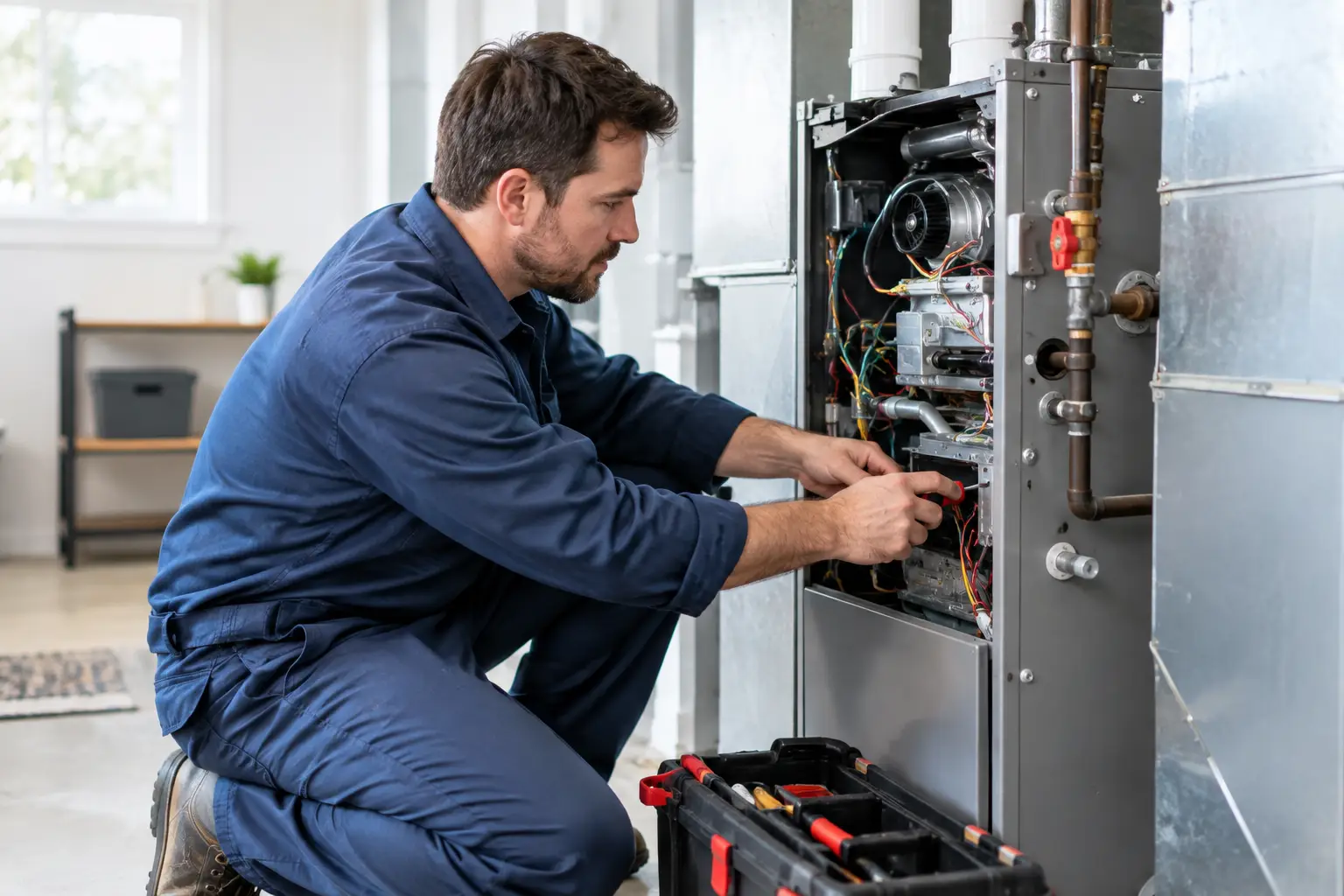
A proper diagnosis starts with the basics, then follows the furnace’s operating sequence. The thermostat calls for heat. The inducer starts. The pressure switch proves venting. The igniter heats or sparks. The gas valve opens. The flame sensor confirms a stable flame. Then the blower distributes warm air through the home.
If that sequence stops at one stage, the technician has a path to investigate. For example, a furnace that lights briefly and then shuts down is often blamed on an aging unit. In reality, a contaminated flame sensor may not be reading the flame correctly. The furnace turns the gas off as a safety measure. Cleaning or replacing that sensor, while confirming proper grounding and burner operation, can restore heat without replacing the furnace.
Likewise, a furnace that will not ignite may have a failed hot surface igniter. These parts wear out over time, much like a light bulb filament. Replacing an igniter is not the same as ignoring the furnace’s age. A good technician should still inspect the overall system. But if the heat exchanger is sound, the blower and inducer are operating properly, and there are no major safety concerns, a targeted repair can be the practical choice.
This is how furnace repair avoided full system replacement in many real service situations: not by applying a temporary patch, but by correcting the actual failed component and confirming that the rest of the equipment can operate safely and reliably.
The heat exchanger is a major dividing line
The heat exchanger deserves special attention because it separates combustion gases from the air your family breathes. A cracked or compromised heat exchanger can create a safety concern and may make replacement the right recommendation. It should never be dismissed or guessed at.
However, a furnace’s age alone does not prove that the heat exchanger has failed. It needs to be inspected using appropriate diagnostic methods. If it is intact and the issue is isolated to a serviceable component, the conversation changes from “you need a new furnace” to “here is what failed, here is what it will take to fix it, and here is what we found about the rest of the system.”
That is the kind of information a homeowner needs to make a clear decision without sales pressure.
Repair or Replacement: What Should Drive the Decision?
An honest recommendation considers more than the immediate repair price. The condition of the furnace, its repair history, efficiency, expected remaining life, safety, and parts availability all matter. So does how the system has performed in the home.
Repair often makes sense when the problem is isolated, the furnace is operating safely, replacement parts are available, and the repair cost is reasonable compared with the value of the equipment. A newer or middle-aged furnace with a failed igniter, capacitor, control board, flame sensor, or blower component may have years of useful service left.
Replacement may be the better long-term choice when there is a failed heat exchanger, repeated major breakdowns, obsolete parts, extensive corrosion, serious safety issues, or a repair that approaches a meaningful portion of a properly matched new system. A furnace that has been poorly sized from the beginning, has chronic comfort problems, or is paired with failing air conditioning equipment may also justify a broader replacement discussion.
There is no responsible one-size-fits-all rule. “Replace it because it is old” is not enough. A 15-year-old furnace in good mechanical condition may be worth repairing. A younger furnace with severe damage or a manufacturing-related defect may not be. The details decide it.
Why Accurate Diagnostics Save More Than Money
The immediate benefit of repair is obvious: it can prevent an unnecessary large expense. But correct diagnosis also protects comfort, safety, and time.
Replacing equipment without correcting the underlying issue can leave the real problem behind. If a furnace is overheating because of restricted return airflow, undersized ductwork, a dirty evaporator coil, or a failing blower, installing a new furnace alone may not solve the cause. The new equipment can inherit the same operating stress.
A careful service visit looks beyond the failed part when the symptoms call for it. That may include checking filter condition, static pressure, temperature rise, venting, drain lines, wiring, gas pressure, ignition performance, and safety switch operation. Not every call requires every test, but a technician should be able to explain what was checked and why.
For commercial property operators, this approach is especially valuable. A rushed replacement recommendation can mean unnecessary capital spending and downtime. A documented repair, paired with a realistic assessment of the unit’s remaining condition, helps managers plan rather than react.
What to Ask Before Approving a Furnace Replacement
If you are told your furnace needs to be replaced, ask a few direct questions. What specific component or condition makes repair impractical? Has the heat exchanger been inspected? Is there a safety issue? What is the repair option, and what are the risks of choosing it? Are replacement parts available? Is the proposed new furnace sized for the home or building rather than simply matched to the old unit?
A trustworthy contractor should answer in plain language. You do not need to become an HVAC technician to understand the recommendation. You should be shown the problem when possible, told what the repair would accomplish, and given a clear explanation of why replacement is or is not justified.
Be cautious with anyone who treats a diagnostic fee as a quick path to a sales presentation. Furnaces do reach the end of their useful life, and replacement is sometimes the safest, smartest answer. But it should be based on evidence, not urgency created by a sales script.
Preventing the Next No-Heat Call
Preventative maintenance cannot stop every component from failing, but it makes surprise breakdowns less likely and helps catch small concerns early. During heating season, keep filters clean and correctly sized, keep supply and return vents open, and make sure outdoor combustion air or vent terminations are not blocked by leaves, debris, or snow.
An annual professional heating check is also a good time to inspect the burners, ignition system, condensate drain on high-efficiency units, venting, electrical connections, and safety controls. If your furnace begins short cycling, makes new noises, produces unusual odors, or has trouble holding a steady temperature, schedule service before the next cold snap turns a minor issue into an emergency.
DDL Services approaches furnace problems the way they should be approached: find the real fault, explain the options, and repair what can be repaired safely. When the evidence supports replacement, you deserve that same straight answer. Until then, a no-heat call should lead to a diagnosis first, not a predetermined sale.