

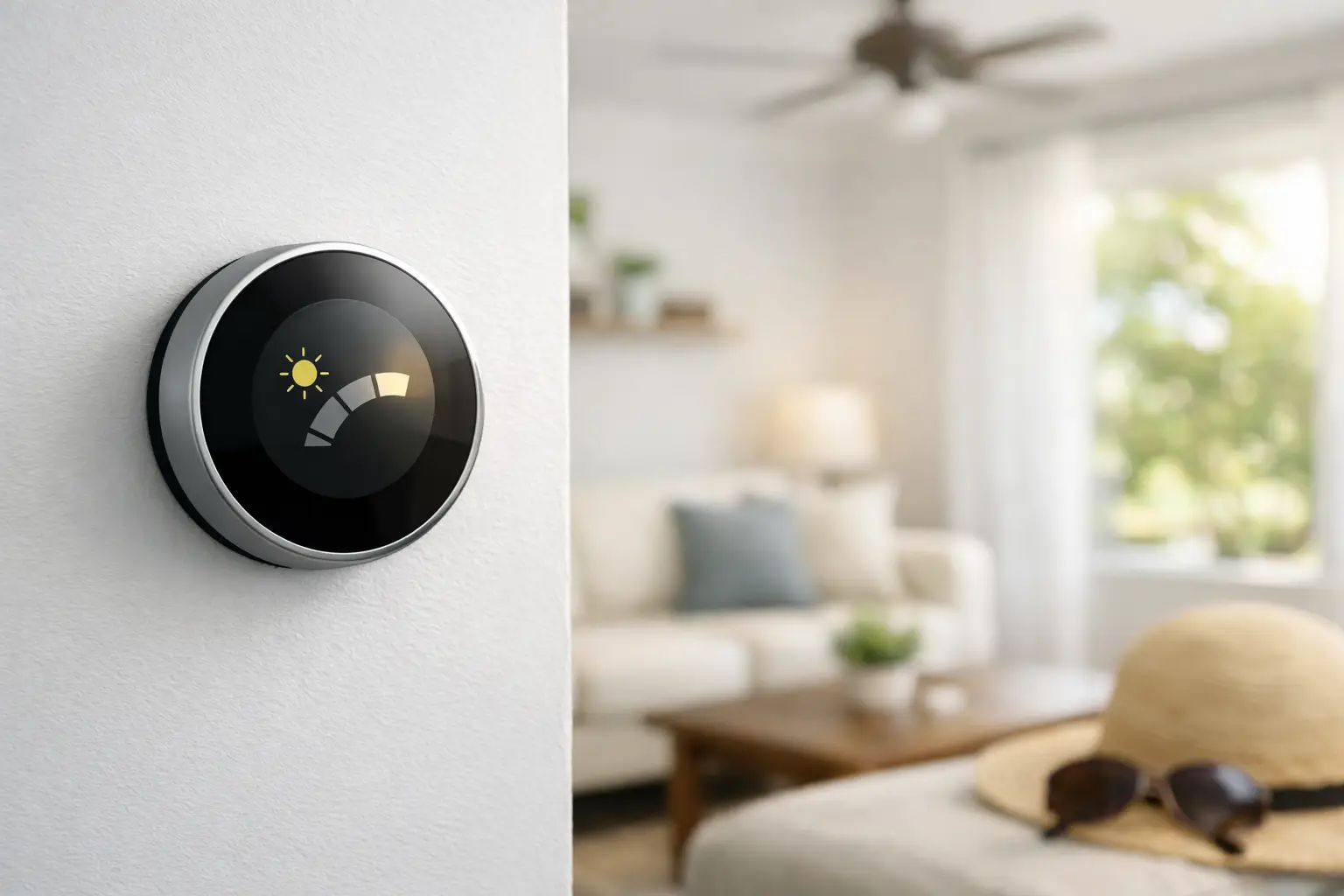
If your AC seems to run nonstop every July, the problem is not always the unit itself. A lot of comfort and cooling cost comes down to choosing the best thermostat settings for summer and adjusting them around how you actually live and work.
There is no single magic number that fits every house, every business, or every family in Charlotte. Insulation, humidity, ceiling height, sun exposure, how many people are in the building, and how often doors open all matter. But there are smart starting points that help you stay comfortable without making your system work harder than it needs to.
What is the best thermostat setting for summer?
For most homes, 78 degrees when you are home and need cooling is a solid starting point. It balances comfort and efficiency better than cranking the thermostat down into the low 70s. When you are away, many households do well setting it around 82 to 85 degrees, then lowering it before they return.
At night, some people sleep fine at 78, while others need 74 to 76 to stay comfortable. That does not mean anything is wrong with your system. It usually means your comfort preferences, home layout, and humidity levels are different.
For small businesses, the best setting often lands between 74 and 78 during occupied hours. Retail spaces, offices, and buildings with a lot of foot traffic may need a lower setting than a home because people generate heat, equipment adds load, and doors open more often.
The key is this: the best thermostat setting for summer is the highest temperature that still keeps the space comfortable. That gives your AC a more reasonable workload and helps control utility bills.
Why lower is not always better
A common mistake is dropping the thermostat way down to cool the house faster. Your AC does not work like a car accelerator. Setting it to 68 instead of 74 usually does not make the house cool faster. It just tells the system to keep running longer until it reaches that lower temperature.
That longer run time can mean higher energy use, more wear on components, and rooms that start to feel too cold while still feeling a little damp. In the Charlotte area, humidity matters almost as much as temperature. If the air feels sticky, people often assume they need lower thermostat settings when the real issue may be humidity control, airflow, insulation, or equipment performance.
If you are constantly lowering the temperature and still do not feel comfortable, it is worth looking beyond the thermostat. Dirty filters, low refrigerant, duct leaks, poor attic insulation, and thermostat placement can all make a system seem less effective than it should.
Best thermostat settings for summer when you’re home, away, and asleep
Most people do best with a simple schedule instead of constant manual changes. For homeowners, a practical setup looks like 78 degrees when you are home, 82 to 85 when you are out for several hours, and 74 to 78 while sleeping, depending on comfort.
If the house is empty all day, raising the temperature while you are gone makes sense. Your system will not have to fight heat gain the entire time, and you can still return to a comfortable house if you use a programmable or smart thermostat to bring the temperature back down before you arrive.
For people who work from home, the answer is less about a setback schedule and more about zoning your comfort. If one room gets afternoon sun and stays hotter than the rest of the house, dropping the whole-home thermostat may not be the smartest fix. Fans, blinds, air balancing, or checking airflow to that room may solve the issue without forcing the entire system to overcool.
At night, there is more personal preference involved. Some people sleep hot. Some homes hold upstairs heat longer. If you need a lower overnight setting to sleep comfortably, that is reasonable. The goal is not to chase a perfect number. The goal is to avoid unnecessary strain while still being comfortable.
How humidity changes the answer
In North Carolina summers, indoor humidity can make 78 feel fine one day and miserable the next. That is why thermostat advice without any mention of moisture misses half the problem.
Your AC helps remove humidity as it cools, but only if the system is operating properly and sized correctly. An oversized system can cool the air too quickly without running long enough to remove enough moisture. On the other hand, a struggling system may run constantly and still leave the house clammy.
If your home feels cool but sticky, lowering the thermostat may give temporary relief, but it is not always the right fix. You may need better airflow, a system check, duct improvements, or a dedicated dehumidification solution. Honest HVAC service starts with diagnosing that difference instead of jumping straight to expensive replacement talk.
Smart thermostat tips that actually help
A smart thermostat can be useful, but only if it is set up in a way that matches your routine. It is not a cure-all. If your schedule is predictable, use it to automatically raise the temperature when the building is empty and lower it before people return.
If your routine changes a lot, geofencing can help, but it is worth checking how the settings are behaving in real life. Some systems end up cycling too aggressively because of overly complex schedules or comfort settings that fight each other.
Keep the setup simple. Use a realistic home temperature, a realistic away temperature, and make small adjustments over a few days. If you change five things at once, it becomes hard to tell what is actually helping.
Also, make sure the thermostat itself is in a good location. If it is near a sunny window, a kitchen, or another heat source, it can read warmer than the rest of the house and cause unnecessary cooling.
When your thermostat setting is not the real problem
If you have to set the thermostat lower every summer just to get the same comfort, that usually points to an underlying issue. It could be reduced system performance, restricted airflow, duct leakage, low refrigerant, a weak capacitor, a dirty outdoor coil, or poor insulation.
This is where accurate diagnostics matter. Too many people are told they need a full new system before anyone has taken the time to identify what is actually wrong. Sometimes replacement is the right call. Sometimes the fix is much smaller and much more affordable.
The thermostat becomes the messenger. If the house is uncomfortable at normal summer settings, listen to that signal. Do not assume the only answer is turning it down lower and lower.
A practical summer range for Charlotte homes and businesses
For most homeowners in the Charlotte area, a good summer target is 76 to 78 during occupied hours. If energy savings is the priority and humidity is under control, 78 is usually a strong place to start. If comfort is the priority, especially in older homes or upstairs spaces, 76 may be more realistic.
For away periods, 82 to 85 works for many homes, especially if no pets, elderly family members, or heat-sensitive electronics are affected. If someone is home during the day, that range may be too warm.
For businesses, comfort expectations vary more. Offices may do well around 74 to 76. Warehouses, service spaces, or lightly occupied commercial buildings may tolerate warmer settings. Customer-facing spaces often need cooler temperatures simply because people are coming and going and comfort affects the experience.
The right number is the one that fits the building, the people in it, and the way the system performs. If your settings seem reasonable but the place still feels off, the next step is not guessing. It is having the system checked by someone focused on the actual problem.
Small changes that support better thermostat performance
Your thermostat setting works best when the rest of the system has a fair chance to do its job. A clean filter, closed blinds during peak sun, sealed air leaks, and ceiling fans can all help you stay comfortable at a higher setting.
Ceiling fans are especially useful because they make people feel cooler without changing the actual air temperature. That means you may be comfortable at 78 instead of 75. Just remember that fans cool people, not empty rooms, so turn them off when spaces are unoccupied.
Regular maintenance matters too. If your system is dirty or worn down, even the best thermostat settings for summer will only do so much. A well-maintained AC has a better shot at keeping temperature and humidity under control without running longer than necessary.
If you are trying to find the right setting this summer, start with 78 when occupied, adjust based on sleep and comfort, and pay attention to how the house feels, not just what the thermostat says. If something still seems off, there is usually a reason, and a good HVAC company should help you find it without turning every service call into a sales pitch.