

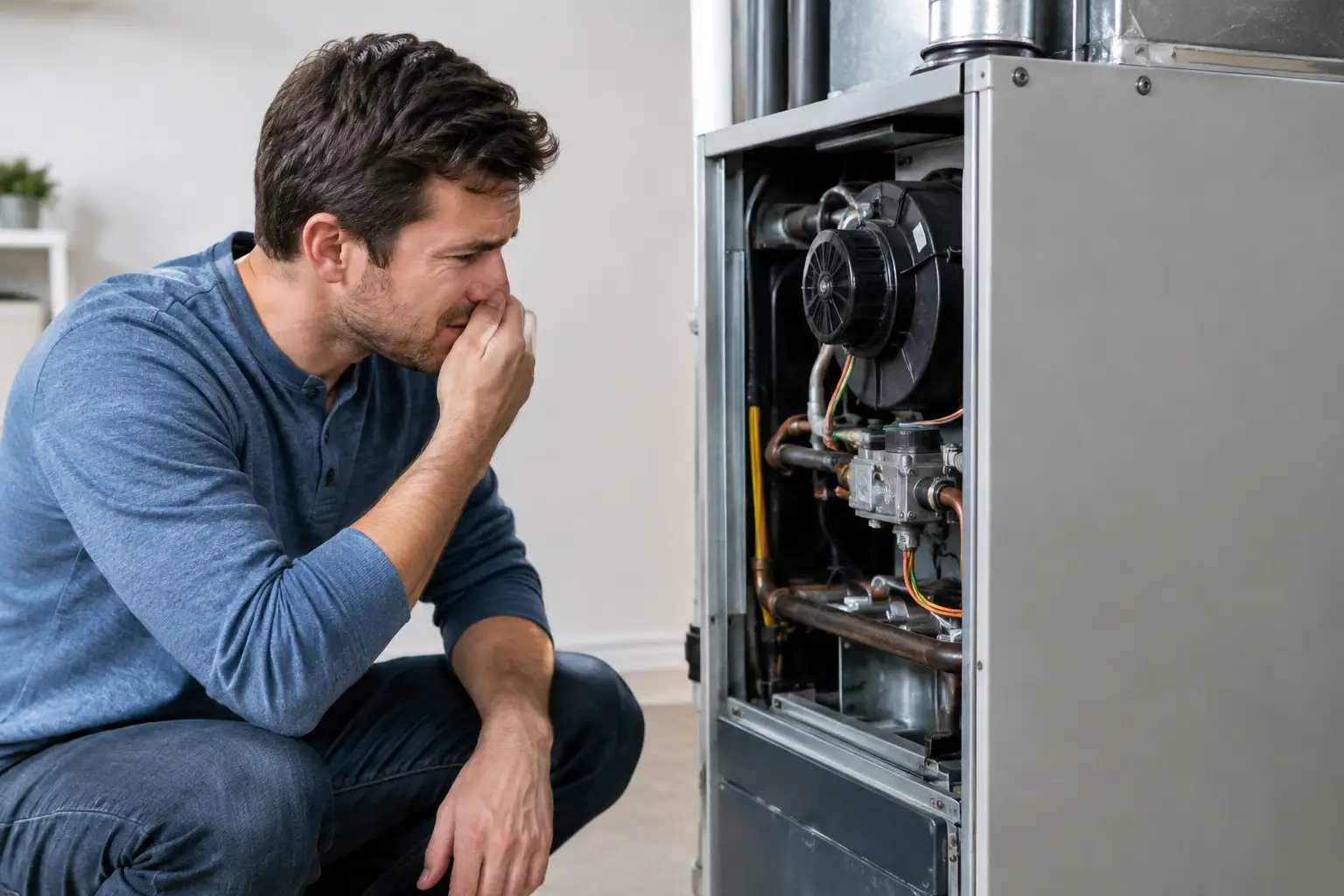
A furnace that smells like something is burning gets your attention fast – and it should. If you are asking, why does furnace smell burning, the answer may be as harmless as dust on the heat exchanger or as serious as an electrical problem, overheated motor, or blocked vent. The key is knowing which is which before a small repair turns into a safety issue or an unnecessary replacement conversation.
Why Does a Furnace Smell Burning When It First Turns On?
A light burning-dust smell is common when you first run your heat for the season. During a Charlotte-area summer, dust settles on burners, the heat exchanger, and nearby metal surfaces. When the furnace warms up, that dust burns away and can create an odor for a short period.
This should fade within 15 to 30 minutes of normal operation. Open a window if needed, replace a dirty filter, and let the system complete a heating cycle. If the smell is gone after that, there is usually no cause for concern.
The situation changes if the odor is strong, returns every time the furnace runs, lasts longer than one or two cycles, or comes with smoke, unusual noises, or poor airflow. A recurring burning smell is not seasonal dust. It needs a proper diagnosis.
Burning Smells That Mean You Should Turn the Furnace Off
Not every furnace odor smells the same. The details matter, and they can help determine whether you need routine service or an urgent repair.
Electrical or burning plastic smell
A sharp electrical odor, hot plastic smell, or smell similar to melting wire is a warning sign. It can point to overheated wiring, a failing blower motor, a damaged circuit board, a loose electrical connection, or an overworked capacitor.
Turn the thermostat off. If the smell continues, turn off power to the furnace at the switch or breaker only if you can do so safely. Do not keep resetting the system to see if it will clear. Electrical components can overheat intermittently before they fail completely, and continued operation can damage more than the original part.
Burning rubber smell
A rubber-like odor can come from a slipping belt in an older belt-driven blower system. Most modern furnaces do not use this setup, but older equipment may. It can also come from an overheating blower motor or another moving component under strain.
The furnace may still produce heat, but that does not mean it is safe to keep running. Restricted airflow, a seized bearing, or a failing motor can cause the system to overheat and shut down on its safety limit.
Smoke or a strong hot-metal odor
Visible smoke is never a wait-and-see situation. Shut the system down, leave the area if smoke is heavy, and call for service. If you suspect an active fire, call emergency services first.
A strong hot-metal smell without smoke can also indicate overheating. A clogged filter, closed supply vents, blocked return grilles, dirty blower wheel, or malfunctioning blower can trap heat inside the furnace. The furnace’s safety controls may shut it off temporarily, but those controls are not a repair.
Fuel, exhaust, or rotten-egg smell
Natural gas itself has little odor, so utility companies add a sulfur-like scent often compared with rotten eggs. If you smell gas, do not operate light switches, appliances, phones, or anything that could create a spark near the building. Leave the home or business, then contact your gas utility or emergency services from a safe location.
An exhaust-like smell can be just as concerning. Gas furnaces create combustion byproducts that must vent outdoors. A cracked heat exchanger, venting issue, blocked flue, or combustion problem can create unsafe conditions. Carbon monoxide has no smell, so do not rely on odor alone. Working carbon monoxide detectors are essential anywhere fuel-burning equipment is used.
Common Reasons a Furnace Overheats
Most furnace problems do not start with a failed furnace. They start with a part, airflow issue, or maintenance item that was ignored until the system had to work too hard.
A dirty air filter is one of the most common causes. When airflow is restricted, the furnace cannot move enough air across the heat exchanger. Heat builds up, components run hotter, and the high-limit switch may shut the burners down. Replacing the filter is simple, but it is not always the full answer. If a clean filter does not restore normal operation, the blower, ductwork, return-air design, or controls may need attention.
Closed vents can create a similar problem. It is fine to make minor comfort adjustments, but closing several supply registers to force heat into one room can restrict system airflow. Keep return grilles clear of furniture, rugs, storage boxes, and other obstructions as well.
Blower problems are another common source of burning odors. A weak motor, worn bearings, failing capacitor, or dirty blower wheel can reduce airflow and cause overheating. You might notice weak air at the vents, loud humming, rattling, or the furnace cycling on and off too quickly.
On gas furnaces, dirty burners, an ignition issue, or a flame-sensing problem can also affect safe operation. These are not DIY cleaning projects. Combustion and electrical repairs should be handled by a qualified HVAC technician who can test the system after the repair, not just swap a part and hope the problem is solved.
What You Can Check Safely Before Calling
Start with basic observations, not disassembly. Check whether the smell is only present during the first heating cycle of the year or whether it continues. Notice whether airflow feels weak and whether the furnace is making new noises. Look at the filter and replace it if it is visibly dirty or overdue.
Make sure supply vents are open and return grilles are unobstructed. Confirm that the thermostat is set correctly and that no one has stored boxes, paint, chemicals, or fabric near the furnace. Items too close to heating equipment can create odors and, in some cases, a fire hazard.
Do not remove furnace panels, touch wiring, reset a tripped breaker repeatedly, or try to inspect burners while the system is operating. Those steps can hide the symptom without addressing the cause. A reliable repair begins with finding why the component overheated or failed in the first place.
When to Schedule Furnace Repair
Schedule service promptly if the burning odor lasts beyond the first seasonal startup, comes back repeatedly, or is paired with short cycling, weak airflow, unusual noise, or breaker trips. For homeowners, addressing the problem early can prevent a no-heat call on a cold night. For a business, it can prevent comfort complaints, lost productivity, and avoidable downtime.
A technician should inspect the filter and airflow, blower assembly, electrical connections, safety switches, burners, venting, and heat exchanger as appropriate for the system. The right recommendation depends on what testing shows. Sometimes the answer is a filter, motor component, cleaning, or wiring repair. Replacement may make sense for an unsafe or repeatedly failing unit, but it should follow a clear explanation of the actual condition, not a sales pitch.
DDL Services approaches furnace concerns that way: diagnose the root cause, explain the repair options plainly, and recommend replacement only when the equipment and repair history justify it.
Prevent the Next Burning Smell
Annual heating maintenance is the practical way to catch overheated connections, weak blower components, dirty burners, and airflow restrictions before they announce themselves with an odor. Filter changes matter too, but maintenance is more than changing a filter. A proper visit checks how the system operates under heat, not just whether it turns on.
Keep the area around the furnace clean and clear, change filters on schedule, and test smoke and carbon monoxide alarms regularly. If your furnace smells burning and the odor does not quickly disappear like normal startup dust, trust that warning. Shutting it down and getting a straight answer is the safer, less expensive move.